Friday, November 13, 2020

Why Do Dogs Eat Sticks?

The post Why Do Dogs Eat Sticks? by Sassafras Lowrey appeared first on Dogster. Copying over entire articles infringes on copyright laws. You may not be aware of it, but all of these articles were assigned, contracted and paid for, so they aren't considered public domain. However, we appreciate that you like the article and would love it if you continued sharing just the first paragraph of an article, then linking out to the rest of the piece on Dogster.com.

Many of us think of sticks as natural dog toys that are fun to play with when we are out on a walk, but are they dangerous for our dogs? Turns out depending on what your dog likes to do with sticks, they might not be as safe for our pups as we thought!

Why do dogs like sticks? 

Many dogs seem to be magnetically drawn to sticks, playing with them, fetching them, even carrying them around.

“Some dogs love sticks while others are uninterested. Just like with any type of toy, our dogs have personal preferences,” says Tory Waxman, DVM, a small-animal veterinarian and co-founder of human-grade dog food brand Sundays.

Dogs that are drawn to sticks may find the taste, smell, or texture stimulating.

Kirk Herrmann, DVM  in the Dentistry and Oral Surgery department of NorthStar VETS Veterinary Emergency, Trauma, and Specialty Center notes that “young dogs may chew more commonly due to their playful nature and potentially to soothe their mouths during the eruption of their dentition. Less commonly, nutritional deficiencies or systemic health concerns can play a role” in dogs being attracted to chewing or eating sticks

Can chewing sticks be dangerous for dogs?

Dogs might be having fun playing with sticks but depending on how your dog engages with sticks there may be some serious health dangers.

“Sticks can definitely be dangerous and you should always supervise your pup when he is playing with sticks. Pups can injure their mouths on the sticks and they can cause an upset stomach if ingested. Additionally, some sticks may have mold or other substances on them that might upset your dog’s stomach if ingested” advises Dr. Waxman.

Oral health issues such as injuries to teeth, lips, tongue and gums are a primary concern for dogs who chew sticks. Dr. Herrmann says that in these dogs  “tooth fractures, lacerations, and complications secondary to oral and gastrointestinal foreign bodies can be seen. Some of these conditions can lead to life-threatening consequences or severe oral health concerns.”

Dr. Herrmann encourages dog guardians to make sure that their dogs have appropriate canine-safe chew toys available  and advises that “dogs should not be allowed to chew on items that are not soft enough to be dented by the human fingernail or that can be accidentally ingested.”

Dogs are chewing on sticks they can become lodged in the roof of a dog’s mouth – sometimes requiring sedation to be removed. For dogs who eat the sticks that they chew, those sticks can “cause irritation when passing through the gastrointestinal tract, which could lead to vomiting, diarrhea and reluctance to eat,” says Dr. Waxman. After chewing sticks dogs may also have a difficulty passing those bits of wood which can lead to irritation or injury to the dog’s colon or rectum.

If your dog has been chewing on sticks, keep an eye on your dog to monitor for any kind of oral injuries or gastrointestinal upsets. Symptoms to watch for include vomiting, bloody bowel movements, diarrhea or straining to defecate. Watch for lethargy and reluctance to eat. If your dog displays any of these symptoms or if you notice any tooth injuries or bleeding from the mouth, your dog should be seen by your veterinarian.

When to stop your dog from chewing on a stick: 

“If your dog has a history of injuring himself from chewing sticks, then it’s best to not let himm chew or eat sticks,” says Dr. Waxman.

If you know that your dog is prone to chewing on sticks,always supervise your dog when outside. To discourage your dog from taking sticks and running off, play a game of “trade” where instead of scolding or just taking the sticks away from your dog you “trade” them a stick for a treat (or an appropriate toy). This will build value for your dog in making the trade, and prevent your dog trying to keep the stick from you and trying to eat it quickly.

Featured photo: Capuski/Getty Images

Read Next: Does Your Dog Find ‘Snacks’ on Walks? Here’s What You Should Do


The post Why Do Dogs Eat Sticks? by Sassafras Lowrey appeared first on Dogster. Copying over entire articles infringes on copyright laws. You may not be aware of it, but all of these articles were assigned, contracted and paid for, so they aren't considered public domain. However, we appreciate that you like the article and would love it if you continued sharing just the first paragraph of an article, then linking out to the rest of the piece on Dogster.com.

Via Dogster https://www.dogster.com

Thursday, November 12, 2020

This Organization is Making Sure Senior Dogs Enjoy Golden Years Filled with TLC

The post This Organization is Making Sure Senior Dogs Enjoy Golden Years Filled with TLC by Marybeth Bittel appeared first on Dogster. Copying over entire articles infringes on copyright laws. You may not be aware of it, but all of these articles were assigned, contracted and paid for, so they aren't considered public domain. However, we appreciate that you like the article and would love it if you continued sharing just the first paragraph of an article, then linking out to the rest of the piece on Dogster.com.

Senior dogs find themselves homeless for numerous reasons — most of which have nothing to do with their capacity for loving. Chicagoland-based Young at Heart Senior Pet Adoptions is a 501(c)(3) organization making sure these loyal companions enjoy golden years filled with TLC.

Adopt a Senior Dog

Photo: Young at Heart

Related: Activities for Senior Dogs

Young at Heart currently works with shelters across multiple states to help rescue homeless older canines. Founder and Executive Director Dawn Kemper says her team is focused on highlighting “how special each senior pet is — helping people get to know them and see beyond their age.”

The organization spearheads nurturing programs like Furever Loved, which gives aging pups a safe haven if their owners become seriously ill or pass away. It also performs various health-related exams to provide more comprehensive adoption snapshots.

Dawn created Young at Heart in 2005. At that time, she recalls, “there were zero options” for homeless senior dogs in her immediate region. She recruited local animal lovers, got licensed and started spreading the word. These efforts eventually culminated in the Young at Heart sanctuary and adoption center, which opened in 2019.

Young at Heart works with shelters to help rescue homeless, older dogs and find them loving homes. Photo: Young at Heart

According to Dawn, this unique refuge reflects years of research into senior pet needs. The cage-free environment gleams with natural light. Mature pooches enjoy comfy couches, play areas and a cozy fireplace. At the holidays, canine residents unwrap their own gifts during a special pet-themed party.

Dawn’s team is intentional about providing home-like comforts. “But our ultimate goal,” she explains, “is to place every senior pet that walks through our door with a loving family.” That’s why most dogs are available for adoption. To avoid creating undue canine stress, Dawn says that all meet-and-greets “are done by appointment” once an application is approved. Young at Heart even helps match prospective pet parents with a pooch well-suited to their lifestyle.

Dawn estimates that she and her dedicated volunteers care for “approximately 24 senior dogs at any given time,” plus several elderly cats. Even more hounds reside with hand-selected foster families. The organization relies exclusively on donations, grants and fundraisers in lieu of government assistance. Event-based initiatives have rapidly adapted to COVID-19, becoming virtual where necessary.

Dawn predicts that the pandemic will cause even more senior canines to wind up at shelters, when guardians “can no longer afford care due to loss of income or housing.” That’s why she reveres her organization’s animal-loving supporters. “Rescue work,” she emphasizes, “doesn’t stop.”

For more info, visit: adoptaseniorpet.com

Featured photo: Young at Heart

Read Next: 6 Things to Love About Senior Dogs

The post This Organization is Making Sure Senior Dogs Enjoy Golden Years Filled with TLC by Marybeth Bittel appeared first on Dogster. Copying over entire articles infringes on copyright laws. You may not be aware of it, but all of these articles were assigned, contracted and paid for, so they aren't considered public domain. However, we appreciate that you like the article and would love it if you continued sharing just the first paragraph of an article, then linking out to the rest of the piece on Dogster.com.

Via Dogster https://www.dogster.com

Wednesday, November 11, 2020

Dog Walking to Podcasting

The post Dog Walking to Podcasting by Annie Butler Shirreffs appeared first on Dogster. Copying over entire articles infringes on copyright laws. You may not be aware of it, but all of these articles were assigned, contracted and paid for, so they aren't considered public domain. However, we appreciate that you like the article and would love it if you continued sharing just the first paragraph of an article, then linking out to the rest of the piece on Dogster.com.

Dan’s Dog Walking & Pet Sitting, an industry-leading dog walking and animal care company has taken on a new project: the Let’s Talk About Cool Animals podcast. Hosts Daniel Reitman and Mauro Carignano tell extraordinary stories about cool, heroic and amazing animals throughout history

The first episode was released back in May, and stories have included: Romeo, a wild wolf who befriended a number of dogs and their people in Alaska — which included a guest appearance by Nick Jans who wrote the New York Times bestseller A Wolf Called Romeo; Balto and his lesser-known counterpart Togo — two sled dogs who helped save thousands of lives during a diphtheria epidemic; and Buddy, the star of Air Buds. Episodes air every Monday on all major podcast platforms.

They also launched a shorter episode called “Wiped Out Wednesday,” where they discuss animals that are now extinct — like the 20-foot long giant ground sloth, the 2,500-pound titanoboa and the 10-foot tall terror bird (yikes!). These episodes also include a video version on their YouTube Channel.

They started the podcast out of their love of science, all-things animal and entertainment. “We aim to entertain and educate people with interesting stories about the incredible animals that have made an impact on the world’s history or been lost to it,” Daniel says. “There is no end of material, and we look forward to a long run of talking about cool and wiped out animals.”

Learn more at animalspodcast.com, on Facebook @dansdogwalkingandpetsitting, and on Twitter and Instagram @danspetcare.

Read Next: Wag Podcast Offers Pet Programming

The post Dog Walking to Podcasting by Annie Butler Shirreffs appeared first on Dogster. Copying over entire articles infringes on copyright laws. You may not be aware of it, but all of these articles were assigned, contracted and paid for, so they aren't considered public domain. However, we appreciate that you like the article and would love it if you continued sharing just the first paragraph of an article, then linking out to the rest of the piece on Dogster.com.

Via Dogster https://www.dogster.com

Tuesday, November 10, 2020

Potty Training 101

The post Potty Training 101 by Audrey Pavia appeared first on Dogster. Copying over entire articles infringes on copyright laws. You may not be aware of it, but all of these articles were assigned, contracted and paid for, so they aren't considered public domain. However, we appreciate that you like the article and would love it if you continued sharing just the first paragraph of an article, then linking out to the rest of the piece on Dogster.com.

Some puppies are easy to potty train. Others can pose a bit of a challenge. No matter what your dog’s personality, the key to successful potty training is knowledge and consistency.

Related: A Solid Feeding Schedule Will Help With Potty Training

Canines of all species are naturally inclined to avoid going to the bathroom in their “den.” In the case of domestic dogs, they can learn to see your entire house as that den. It’s not hard to help a puppy make that connection if you are diligent and persistent. The trick is to create a habit where the only place your puppy eliminates is outdoors.

Here is a step-by-step approach to teaching your puppy not to potty inside the house:

puppy potty training

Photo: damedeeso | Getty Images

1 Find a potty spot

Before bringing your puppy home, designate a place in your yard where you want him to go potty. A back lawn is a good spot, because dogs love to go to the bathroom in grass. If you live in an apartment or condo and don’t have a yard with live grass, try a patch of artificial turf as your designated potty spot. Pet product manufacturers make artificial grass just for this purpose.

2 provide praise

Help your puppy learn to potty outdoors by praising him whenever he goes outside the house. Take him outside on a leash, and when he squats to urinate, say “Good dog,” in a calm but happy voice. You can also start teaching him to potty on command from Day One. When you see him start to go, say “Go potty!” Pretty soon, he will learn that “Go potty!” means he needs to do his business.

puppy potty training

DON’T EVER punish your dog for going to the bathroom in the house. Smacking him with a rolled-up magazine, rubbing his nose in the mess or other harsh tactics are cruel and outdated. Photo: damedeeso | Getty Images

3 Consider age

Because young puppies’ brains and bodies are still developing, you can’t expect them to hold their pee and poo for very long. Puppies ranging from 8 to 16 weeks or more, depend ing on the puppy, will need frequent opportunities to go outside — maybe as often as every two hours, and certainly right after they eat. In between visits to the outdoors, keep your puppy in a crate that’s big enough for him to stand up and turn around in, but not much larger. The puppy will see the crate as his den, and will avoid pottying inside it. This is how he will learn to control when and where he goes to the bathroom. (In situations where your puppy has to stay indoors for more than a few hours, set up a small exercise pen lined with puppy pads where he can eliminate if he can’t hold it until you can let him out.)

When you want to give your puppy a break from the crate, spend that time outside. If you want to play with him in the house, first make sure he has just relieved himself outside.

4 Provide gradual freedom

Once your puppy is a bit older and can hold it for longer, give him some supervised freedom in the house. Continue to take him outside to potty right after meals, every few hours and right before bedtime. Keep a close eye on him when he’s not confined, and stop him with a loud “No!” if you see him start to relieve himself in the house. Immediately take him outside and praise him when he finishes his business in the yard.
If you catch him in the act indoors more than once, or find accidents he’s left behind, you are giving him too much freedom, too soon. Go back to confining him in his crate in between potty breaks, or set up an exercise pen with pee pads where his freedom indoors will be limited.

Photo: Courtesy Teresa Blosio | @ilovelucyaussie

5 Teach a cue

Once your puppy is reliably potty trained, he will likely figure out his own way to let you know he needs to go out. But if you want to teach him to ring a bell on the door as a signal, start by hanging a bell from the doorknob and putting a little peanut butter on it (make sure it does not have xylitol in it). When your dog unintentionally rings the bell while trying to get at the peanut butter, say “Bell!” and give him a treat.

Do this over and over until he makes the association to the word “bell.” You’ll know he’s figured it out when you say “Bell!” and he touches the bell with his nose without the use of peanut butter.

Once he’s got this down, next time you say “Bell!” and he touches the bell with his nose, say “Yes!” Then, open the door to let him out. Do this over and over, and he will eventually learn to ring the bell whenever he wants to go outside. Want to try it? There are a variety of potty bells available both online and in pet stores.

Are you a hi-tech type of person? Then try a wireless product like the Paws2Go Wireless Dog Doorbell. You just teach your dog to touch the square doorbell — much like teaching your dog to ring the bell — and your voice (from a pre-recorded message) comes out alerting you that your dog needs to go out. Plus, it also lights up and notifies you through an app on your smartphone.

Featured photo: gollykim | Getty Image

Read Next: How to Survive a Puppy


The post Potty Training 101 by Audrey Pavia appeared first on Dogster. Copying over entire articles infringes on copyright laws. You may not be aware of it, but all of these articles were assigned, contracted and paid for, so they aren't considered public domain. However, we appreciate that you like the article and would love it if you continued sharing just the first paragraph of an article, then linking out to the rest of the piece on Dogster.com.

Via Dogster https://www.dogster.com

Denver Voters Give Dog Lovers a Win

The post Denver Voters Give Dog Lovers a Win by Sassafras Lowrey appeared first on Dogster. Copying over entire articles infringes on copyright laws. You may not be aware of it, but all of these articles were assigned, contracted and paid for, so they aren't considered public domain. However, we appreciate that you like the article and would love it if you continued sharing just the first paragraph of an article, then linking out to the rest of the piece on Dogster.com.

When voters went to the polls this November, dog lovers in Denver overwhelmingly passed  Ballot Measure 2J which overturns key parts of the more than  30-year ban in the city on Pit Bulls.

The fight against Breed-Specific Legislation (BSL) in Denver is long and complicated. This past February, the Denver City Council voted 7 to 4 to repeal the ban with a probation style ordinance that will restrict but allow Pit Bulls and Pit Bull mixes to live in the city. However, the Mayor of Denver vetoed the ordinance saying the dogs still posed a risk to residents. After the Mayor’s veto, the legislation was put before voters and this November the ballot measure to overturn the BSL passed with a vote of 64.5 percent.

On the surface, this is a tremendous victory for dogs and dog lovers in Denver, but the passage of the ballot measure is complicated.

Related:  6 Ways You Can Fight Breed-Specific Legislation in Your Community 

Although the ballot measure passed, it is not completely legal for Pit Bulls and Pit Bull type dogs to live in Denver. According to Stacey Coleman, Executive Director of Animal Farm Foundation, which provides legal support and advocacy to fight for the rights of dogs and dog guardians being targeted by these discriminatory laws, the new regulations allow guardians to apply for “provisional permits” to own a Pit Bull within the city. Essentially even after the ballot measure certain Pit Bulls and mixes who appear to resemble  Pit Bulls are still being unfairly targeted based on how they look. Requirements include that the dog must be microchipped and kept in compliance with requirements put in place by Denver Animal Protection, which Coleman explains includes an annual fee the amount of which has yet to be determined. The city will keep records about each dog and has reserved the right to inspect the home and dog at any time. No other dogs in the city of Denver are subjected to these restrictions.

Pit Bulls are often the targets of Breed-Specific Legislation.

Pit Bulls are often the targets of Breed-Specific Legislation. Photography by Colten Tognazzini.

What is Breed Specific Legislation (BSL)? 

BSL are laws or regulations put in place that ban or limit the ownership of certain dogs within a location. Though most people think of Pit Bull type dogs when they hear breed bans, many breeds of dogs and mixed breeds are impacted. In various areas breeds that have been banned or restricted include Chows, German Shepherd Dogs, Dobermans, Rottweilers, Staffordshire Bull Terriers, American Staffordshire Bull Terriers, Akitas and often large breeds of dogs.

BSL is ineffective

BSL is widely recognized to be an ineffective way to protect communities and has been discredited by veterinary experts.

“Dog bite statistics are not really statistics, and they do not give an accurate picture of dogs that bite. Invariably the numbers will show that dogs from popular large breeds are a problem. This should be expected because big dogs can physically do more damage if they do bite, and any popular breed has more individuals that could bite. Dogs from small breeds also bite and are capable of causing severe injury. There are several reasons why it is not possible to calculate a bite rate for a breed or to compare rates between breeds,” explains the American Veterinary Association in its opposition to Breed-Specific Legislation.

There is no scientific data to back the idea that a dog is dangerous or a risk to the community simply because of the breed. In addition, research has shown that visual identification of mixed breeds is often inaccurate, which poses additional challenges of dogs being targeted based on looks.

“Behavior isn’t nature or nurture, it is an ever-changing non-static combination of both,” notes Stacey, who encourages municipalities that are concerned about community safety around risks of dog bites to adopt policies that are breed-neutral. These breed-neutral policies look at dogs and their guardians based on incidents that happen on a case-by-case basis instead of punishing innocent dogs of a specific breed.

BSL is unjust

One of the biggest challenges of BSL is the way unfair and unjust laws are applied in communities across the United States. “We’re at a very sensitive time where we are starting to understand how oppressive laws have been misapplied and inconsistently applied and depending on the person who is responsible for applying them,” notes Coleman.

Specifically, Stacey explains “breed-specific legislation is steeped in racism and classism and it is enforced more often with lower-income neighborhoods and neighborhoods of color” regardless of how well-loved and cared for dogs are. Although BSL claims to make communities safer it doesn’t actually or prevent dog bites, but it does place unnecessary hardship and stress on families trying to keep their dogs from being able to get homes.

Where is BSL? 

Unfortunately, Denver isn’t the only city in the United States that has active Breed-Specific Legislation or anti-breed ordinances. There are currently more than 700 areas across the United States that legally allow for the discrimination of certain breeds or mixed breeds.

“We found one town that has BSL but they didn’t even know it was on the books in some areas. In many places, it wasn’t being enforced” Staceyn said. In some areas BSL  takes the form of a requirement to obtain special permits for certain breeds of dogs, in other cases, it’s an outright ban on dogs living in the area where dogs can be seized and permanently removed from their families. Animal Farm Foundation maintains an interactive map of municipalities across the country that have BSL in place which can be accessed here.

Featured Photo: Nevena1987/Getty Images

Read Next: Ending Breed Discrimination

The post Denver Voters Give Dog Lovers a Win by Sassafras Lowrey appeared first on Dogster. Copying over entire articles infringes on copyright laws. You may not be aware of it, but all of these articles were assigned, contracted and paid for, so they aren't considered public domain. However, we appreciate that you like the article and would love it if you continued sharing just the first paragraph of an article, then linking out to the rest of the piece on Dogster.com.

Via Dogster https://www.dogster.com

Monday, November 9, 2020

Tail Biting in Dogs — What Are the Causes?

The post Tail Biting in Dogs — What Are the Causes? by Melvin Peña appeared first on Dogster. Copying over entire articles infringes on copyright laws. You may not be aware of it, but all of these articles were assigned, contracted and paid for, so they aren't considered public domain. However, we appreciate that you like the article and would love it if you continued sharing just the first paragraph of an article, then linking out to the rest of the piece on Dogster.com.

Since dogs cannot talk, they cannot make their needs or desires plain to us in any simple or intelligible way. It’s easy to get frustrated when our dogs engage in behaviors that are repetitive, troubling or destructive. We all take some degree of pleasure, on the other hand, when we see a dog chasing her tail. When an occasional canine tail chase turns into a habit, though, and when that habit ends in tail biting or tail chewing, it can signal a range of potential issues.

What’s even more troubling is the sheer volume of people who not only ask, “Why does my dog keep biting her tail and whining?” but also end that question with “for no reason?” Just because we cannot immediately isolate the source of the odd behavior doesn’t mean that it is purposeless or without foundation. Obsessive or compulsive canine behaviors, like chasing and gnawing at the tail, always have a root cause.

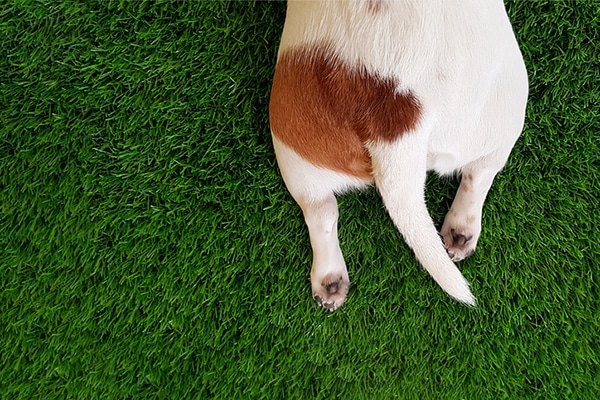
Closeup of a dog tail.

What are the most common reasons for dog tail biting or tail chewing? Photography ©ulkas | Thinkstock.

The most common causes of tail biting and tail chewing in dogs are:

  1. Parasites: fleas, ticks, or worms
  2. Environmental and skin allergies
  3. Hot spots and other secondary infections
  4. Stress, boredom, or confinement
  5. Injury
  6. Impacted anal glands

Let’s take a closer look at each of these issues below.

1. Parasitic infestations

Fleas and ticks are common enough seasonal afflictions for dogs. We’ve all seen a dog scratch at a spot on his body where fleas are bouncing around or a tick has attached itself. With medicated collars, regular baths, and prescriptions, these pests are fairly easy to treat. In the same way that humans are allergic to the saliva of cats or dogs, so too are some dogs allergic, not to the presence of ticks and fleas, but to the saliva in their bites.

A dog with an undiagnosed flea allergy may bite repeatedly at the site of an allergic reaction until they break their own skin to find relief. Tapeworms can also cause such physical discomfort in the area surrounding the anus that a dog feels compelled to gnaw at the base of her tail. Ultimately, it’s the pain she’s causing herself by constant chewing that leads her to whine as well.

2. Allergies

Inflammation of the skin, or dermatitis, caused by fleas and ticks is not the only allergy that can lead a dog to chew at her tail. Environmental allergies — anything from pollen outside to household chemicals inside — can give rise to allergic reactions. Whether the source of your dog’s allergy is mites, mold or contact with other animals, the reactions are most severe in a dog’s early years, between 3 months and 6 years old.

A human’s first instinct to a skin allergy is to scratch at it, and it’s the same for a dog. Interestingly, trying to treat one allergy can lead to the discovery of a different one. If your dog has sensitive skin, something as simple as the shampoos or soaps you use to bathe her can also spur an allergic response.

3. Hot spots

A hot spot is an area on a dog’s body where repeated scratching or chewing leads to the creation of an open wound. Warmth and moisture are the optimal conditions for hot spots to form. Should a stray bacteria find its way to the site before it is properly treated, a secondary infection is a typical result. Recognize a hot spot by the presence of blood, pus, and matted hair.

If your puppy or dog is biting at the base of her tail so frequently that she draws blood, then secondary infections are not the root cause of her problem, only another symptom. A veterinarian can help you determine whether the true reason has to do with hygiene, nutrition, or another factor.

4. Stress and anxiety

Stress, anxiety and boredom can lead dogs into a host of destructive and repetitive behaviors: tearing up your favorite shoes, your most comfortable couch pillows, and so on. Out of necessity, some people crate their dogs when they leave for the day. If dogs spend too much time confined, they may turn their attentions inward and seek relief where they can.

The same applies to dogs who do not get sufficient exercise, interactive play or mental stimulation. Some people may think a dog turns to self-destructive activities like tail biting as ways to get attention, and in these cases, who can blame them?

5. Injury

Any kind of rear or hindquarters injury — a broken or fractured tail bone, for instance — is something a dog cannot inform his owner of, and may go unnoticed under normal circumstances. The intensity of the dog’s pain may lead her to act on or draw attention to it by excessive chewing, biting, or licking at the affected area. Only veterinary X-rays will be able to properly diagnose such an issue.

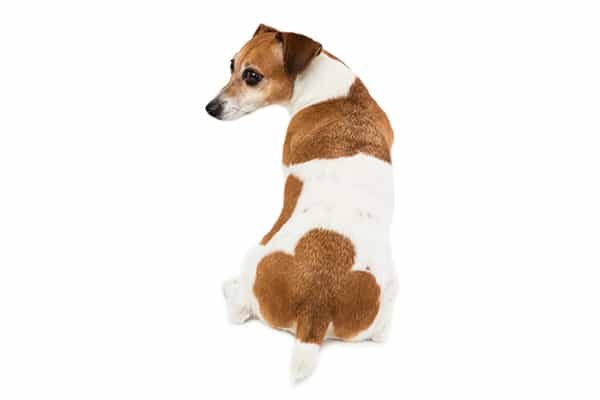
A dog sitting and looking back.

Anal gland issues may cause dog tail biting. Photography ©Fly_dragonfly | Thinkstock.

6. Impacted anal glands

Finally, another common reason why a dog may be biting at the base of her tail until it’s bleeding is an impacted anal gland. A dog’s anal glands are as important to a dog as our hands are to us, and, socially, they fill similar needs. Just as we shake hands when we meet folks, canine anal glands secrete interesting fluids that dogs smell when they meet each other. This is one reason why dogs are so intent on sniffing at each other’s rear ends at any opportunity.

One obvious sign that a dog is having an anal gland issue is scooting, when he sits up and drags his butt across the ground. Other symptoms include a fouler-than-normal smell originating from a dog’s behind, trouble defecating (you call it constipation), and, in severe cases, blood or pus in the feces.

How have you been dealing with your dog tail biting?

As you can tell, dogs who are giving a lot of attention to chewing their tails — particularly the base of the tail — may be afflicted with a wide variety of problems. Really, it’s quite a rich tapestry of causes that can lead to compulsive tail biting.

But, good news! Whether it’s practicing better hygiene with your dogs, discovering whether they are allergic to some thing or creature around the home, addressing small wounds before they develop secondary infections or simply making sure they get out more, all of these issues are treatable.

Tell us: Have you ever had a puppy or a dog who seemed to fixate on her tail area? Were you or your veterinarian able to isolate the key problem and address it successfully? Share your experiences with dog tail biting in the comments!

This post was originally published on May 1, 2018. 

About the author: Melvin Peña trained as a scholar and teacher of 18th-century British literature before turning his research and writing skills to puppies and kittens. He enjoys making art, hiking, and concert-going, as well as dazzling crowds with operatic karaoke performances. He has a one-year-old female Bluetick Coonhound mix named Idris, and his online life is conveniently encapsulated here.

Thumbnail: Photography ©Mike Watson Images | Thinkstock. 

Read more about dog behavior on Dogster.com:

The post Tail Biting in Dogs — What Are the Causes? by Melvin Peña appeared first on Dogster. Copying over entire articles infringes on copyright laws. You may not be aware of it, but all of these articles were assigned, contracted and paid for, so they aren't considered public domain. However, we appreciate that you like the article and would love it if you continued sharing just the first paragraph of an article, then linking out to the rest of the piece on Dogster.com.

Via Dogster https://www.dogster.com