Friday, July 17, 2020

When a Beloved Dog Dies

The post When a Beloved Dog Dies by Sassafras Lowrey appeared first on Dogster. Copying over entire articles infringes on copyright laws. You may not be aware of it, but all of these articles were assigned, contracted and paid for, so they aren't considered public domain. However, we appreciate that you like the article and would love it if you continued sharing just the first paragraph of an article, then linking out to the rest of the piece on Dogster.com.

Late last year, my beloved dog Charlotte passed away after a very fast but intense battle with cancer. Charlotte started her life living on the streets before being rescued. Over the years we spent together, not only was she responsible for me making a dog-centric career change, but she taught me invaluable lessons about dogs and myself. There isn’t a day that goes by that I don’t miss her. Charlotte lived her life in my books, articles and columns, and I have continued to write about her and the lessons she taught me.

Charlotte’s ashes are in my living room along with her collar, and in my garden surrounded by flowers sits a statue that looks like her. I am also a walking memorial to my dogs — my body is covered in tattoos for each dog that has ever been part of my life. Seeing Charlotte’s portrait tattoo helps me feel like each day I’m continuing to bring her with me. Life isn’t the same without her, but memorializing her both publicly and privately helps.

Why we grieve

Mourning the death of a dog can easily feel all-consuming, and it can sometimes feel hard to know the right way to grieve. Coleen A. Ellis knows a lot about pet loss as the founder and past co-chair of the Pet Loss Professionals Alliance, past president of the International Association of Animal Hospice and Palliative Care and founder of Two Hearts Pet Loss Center.

“Wherever you are right now is exactly where you should be,” Coleen says. “The death of a beloved pet and the emotions associated with that loss will not just magically go away. We never ‘get over’ death. We get through it with our active mourning, but we won’t get over it.”

Photo: John Tsotras | Getty Images

There is no right or wrong way to grieve, but sometimes it’s hard to know where to begin to process this loss. Ann Rooney of NorthStar Veterinary Hospital provides individual and group support for the guardians of pets being treated at the clinic hospital. Her services focus on anticipatory grief as well as pet loss. She explains that grief over a dog can be so acute because a guardian is suffering four different losses, that of:

1. A protégé: We are responsible for their life, much like being a parent.
2. A life witness: They’ve been there for us in good and bad times and the major and we share with them the secrets that we wouldn’t share with another human being.
3. Routine and related relationships: Our pets sometimes generate relationships, like at agility clubs or the people met at dog parks or dog shows.
4. Unconditional love: In some cases, they are the only companion in the life of the person who cares for them.

As we grieve, it’s important to accept the loss as we honor the life of our beloved dog. Don’t expect things to go back to normal right away. As much as we miss our dogs in their passing, they continue to shape our lives. “Learn from the most amazing teacher we have, the animals, and ‘just be.’ Let those emotions happen, and be kind to yourself,” Coleen says.

Things you can do

The hardest and most important thing that any of us can do after the death of a dog is to be gentle with ourselves. Many people find solace during the grieving process by:
♥ Writing stories or poetry about their dog
♥ Painting or creating some other kind of art or memorial art piece
♥ Getting a tattoo of a dog’s portrait or paw print
♥ Creating scrapbooks, photo albums or other memory journals
♥ Planting a memorial garden

Finding permanent ways to honor the memory of a beloved dog can be extremely helpful forms of self-care and opportunities to process your dog’s passing. There are a variety of companies that can help you with this by creating everything from personalized portraits to turning ashes into a wearable stone or having them fused into a piece of glass art to creating life-like plush toys or nose print jewelry.

Funerals & memorials

Finding ways to have a ritual around your dog’s passing can help to provide closure to the death of a dog. “Do what you need to do to honor the life that was shared with a special pet,” Coleen says. “For some families this might look like a memorial service, a funeral service or some sort of ritual. Those events might be more public in nature with friends and family members involved, or it might be more private, such as a designated time in the evening to light a candle and spend some time in quiet reflection.”

For some guardians, grieving with family, friends and community feels important and helpful. If you are considering some kind of public service or memorial for your dog, Coleen offers the following suggestions for unique options for remembering:

♥ Do a bubble release
♥ Have a funeral
♥ Create a permanent memorialization piece
♥ Invite family and friends over to say their good-byes
♥ Establish a charity fund in the pet’s honor
♥ Create a memorial tribute video
♥ Share a eulogy on a social platform, your own social sites or the various places online to publicly share the life story of the pet and the human

If you and your dog had a favorite park, contact your city or the local parks department about the possibility of purchasing a plaque or memorial bench in your dog’s memory. It’s also possible to make a temporary DIY memorial for your front yard or local park. If your dog was a ball lover you might consider a favorite park or beach as a good location to leave a bucket of new dog-safe balls with a sign with your late dog’s photo explaining that other dogs should take a ball in her memory.

Just in the last month in my own neighborhood I’ve seen neighbors put out a large bowl of water with a handwritten sign tacked to the tree next to it saying that the bowl is in the memory of their beloved dog. Your dog’s memorial doesn’t have to be fancy or expensive; anything that brings you comfort is a good idea. Coleen also suggests bringing toys to donate to homeless dogs living in a shelter, or having a backyard service with a BBQ “complete with everything ‘dog’ — hot dogs, tofu-dogs, pigs in a blanket, PupCakes.”

Professional support

If at any point you feel overwhelmed by grief and need additional support, reach out to a professional pet loss and bereavement counselor or other therapist. Many humane societies or large veterinary hospitals offer support groups for people struggling with the death of a beloved dog or who are looking to connect with others who are experiencing that same loss. There are also peer-run support groups online and on social media.

There is no timetable for grieving. Coleen says, “In my work with families, I also want to bring to light the year following the pet’s death. This ‘year of firsts’ could possibly have the most elevated emotions because so many seasons, events and family rituals will happen for the first time without the animal being present. The emotions just show up and sometimes so unexpectedly: The first snowfall when the big goofy Golden Retriever is not there to roll around in the snow. The first springtime when the smell of flowers is intoxicating, but the fact that your pooch is not there to take that walk is paralyzing.” You don’t have to just get over the loss; instead continue to find ways to honor and remember your dog as you experience different seasons of grief.

Supporting friends

Grieving the death of a dog can be unique compared with other, more stay-at-home pets. Our dogs often have relationships with lots of other people outside of our immediate families — groomers, vets, trainers, and neighbors and strangers in the park who know our dog’s name but not ours.

Kaleel Sakakeeny, ordained animal chaplain and credentialed pet loss and bereavement counselor, encourages bringing friends and community into the grieving process. “I strongly believe close friends and family who know the pet or the love the person has for her pet should be part of any ritual or mourning event.

At the simplest level, if they’re asked to read a poem, tell a story, recall a moment about the pet and his relationship to his guardian, it makes the memorializing richer, deeper, more memorable because of the sharing.”

Friends, especially those who knew your dog, can be a huge support during the grieving process. Some employers have started to offer employees the opportunity to take paid bereavement time after the death of a dog, but the practice is still not particularly common, and there’s a larger cultural expectation that people will just return to life as usual despite grieving. Knowing that friends are there to listen can be supportive and meaningful to people who are struggling with that grief.

If a friend has just experienced the death of a dog, one of the most meaningful things you can do is be present and supportive regardless of if your friend wants to plan an elaborate memorial for their dog or just needs someone to talk to. Try not to make the grieving person do the outreach. Call, text, email, offer to bring over a meal, or send a condolence card. Make a donation in the memory of your friend’s late dog to a rescue group or other dog charity/organization. If you knew your friend’s dog well, offer support with planning a group or community memorial.

“If the dog and his humans belonged to an agility group, get together as the agility team members, and create a service unique to these talents and members,” Coleen says. “If the dog participated in dock-diving events, have the service there. While it seems like this is some ‘creative’ thinking as to what can be done, it’s really thinking organically as to ‘what did the pet and the family like to do together?’”

Something I’ve learned every time one of my dogs has passed is that grief comes in waves, even when I least expect it. “Love and grief will be equal, most certainly,” Coleen says. “Permission to own that grief and permission to do what their broken heart needs to do to heal by honoring the life they shared, the chapter they shared, together. Our life story is made up of so many elements of these amazing creatures and their love they gave to us, allow that love to weave into the fabric of YOUR life story without shame and with abandon!”

Although the sadness of your dog’s passing can feel overwhelming — be gentle with yourself and seek out support. Through rituals and memorials, private or public, we can keep the memory of our dogs alive for ourselves and others even if our beloved dogs are no longer physically walking beside us.

Read Next: How Do You Memorialize Your Dog?

The post When a Beloved Dog Dies by Sassafras Lowrey appeared first on Dogster. Copying over entire articles infringes on copyright laws. You may not be aware of it, but all of these articles were assigned, contracted and paid for, so they aren't considered public domain. However, we appreciate that you like the article and would love it if you continued sharing just the first paragraph of an article, then linking out to the rest of the piece on Dogster.com.

Via Dogster https://www.dogster.com

How Do You Memorialize Your Dog?

The post How Do You Memorialize Your Dog? by Sassafras Lowrey appeared first on Dogster. Copying over entire articles infringes on copyright laws. You may not be aware of it, but all of these articles were assigned, contracted and paid for, so they aren't considered public domain. However, we appreciate that you like the article and would love it if you continued sharing just the first paragraph of an article, then linking out to the rest of the piece on Dogster.com.

We asked Dogster readers to share stories about how they have honored a dog’s passing:

I have a nose print necklace of his, a tattoo of his paw on my hip where he liked to dig his feet in for neck scratches, and his cremated remains are on a memorial shelf with his collars, bandanas, favorite toys and a photo. Along with a memorial mug with his and my other late dogs’ pictures drawn on, as well as my favorite poem (e.e. cummings’ “I carry your heart with me.” “He’s also the reason I became a dog trainer, so every dog I help in my practice is an ode to him.” — Ettel Edshteyn, New York

Mac was special friends with Rocky the horse. They died within months of each other, and Mac’s urn sits atop Rocky’s.

Mac passed away at 2 years old, due to being born with a diaphragmatic hernia. Mac traveled everywhere with me and would often be found gently picking up baby mice and bringing them back into the barn. He would then lie down with his “babies,” and I would often find them curled up in his belly hair. Mac also loved frogs of all kinds. He loved everyone he met and was loved by everyone. He was “mine” and glued to my hip — everywhere I went.

When he passed, we had him cremated. My boy loved my gelding, who passed away a few short months before him (pictured right) and we had him cremated as well. Mac’s urn sits atop Rocky’s with photos along with his collars (he was a fashionable dude). We talk about him daily, and never talk of him with sorrow. Instead, we always rejoice and laugh about all our times we had with our sweet Mac. When we see a mouse in the barn or a random frog, we smile and think of our boy. — Kaley Pannone, Pennsylvania

My dog Harley passed shortly before I moved from upstate New York back home to California. I had his ashes and knew I wanted to have a custom box made for them. Before I sold my New York home, I took down two pieces of the cedar fence to the yard that he loved so much and put them in the moving truck. When I got to California, I commissioned an artist and woodworker to use them to make a custom box. The artist used a laser to etch Good Boy into the wood and also used the titanium plates and screws from Harley’s knee surgery as part of the design. It is very special. — Colten Tognazzini, California

I attended a Memorial Art Therapy class at DoveLewis and made some fused glass art with a bit of Zoë’s ashes inside. The art hangs on a small tree-shaped display in my living room, along with her dog tag and a favorite photo. — Melanie Altaras, Oregon

Tennessee passed in October 2015. We got an urn and used a tiny amount of her ashes for Artful Ashes memorial heart. I also have her collar and a tag around the urn. The urn reads: Tennessee April 1, 2003 — October 26, 2015 Beloved Friend and Companion Dog of my Heart. And the back says: If love could have saved you, you would have lived forever.” — Candice Gray, Georgia

Photo: amedeeso | Getty Images

My mom got me Pal, a rescued Cairn and Yorkshire Terrier mix, from the shelter when I turned 17. My mom had hopes that he would help me with my anxiety and depression. He did. I can say this dog saved my life several times as I found my way in the world as a queer trans guy. When he passed at the age of 14, we had him cremated, and he currently sits on our mantle.

Each year, in October when we set up an altar to honor our ancestors, we include him. His image, his ashes, his favorite toys and special treats sit among the items that were so special to our human loved ones. We spend three days telling stories about those we have lost, including our furry family members. We also tell these stories year-round to our living pups. There is rarely a day that goes by that we don’t say something like “Your older brother loved that particular toy, too” to our living pups. He remains in our hearts, our physical space and in our language.” — Cameron Whitley, Washington

Read Next: When A Beloved Dog Dies

The post How Do You Memorialize Your Dog? by Sassafras Lowrey appeared first on Dogster. Copying over entire articles infringes on copyright laws. You may not be aware of it, but all of these articles were assigned, contracted and paid for, so they aren't considered public domain. However, we appreciate that you like the article and would love it if you continued sharing just the first paragraph of an article, then linking out to the rest of the piece on Dogster.com.

Via Dogster https://www.dogster.com

Thursday, July 16, 2020

What to Know About Your 10-Week-Old Puppy

The post What to Know About Your 10-Week-Old Puppy by Audrey Pavia appeared first on Dogster. Copying over entire articles infringes on copyright laws. You may not be aware of it, but all of these articles were assigned, contracted and paid for, so they aren't considered public domain. However, we appreciate that you like the article and would love it if you continued sharing just the first paragraph of an article, then linking out to the rest of the piece on Dogster.com.

The age of 10 weeks is a magical time for most puppies. It’s when they find themselves in a new — and hopefully forever — home. While pups are old enough to leave their mothers and siblings by 8 weeks, many breeders and rescues prefer to wait until a pup is 10 weeks old before sending him to live with a new human family. A 10-week-old puppy has more time to develop canine social skills with his birth family.

When my Pit Bull-mix Mookie came to live with us, he was 9 weeks old. Within a week, his little personality was more than obvious. He was affectionate but mouthy, and full of energy. He was at the perfect age to learn how to act around our cats, as the 9- to 12-week period is an important time for puppy socialization. Our wonderful kitties seemed to understand he was a baby, and they agreed to play with him. If he got too rough, they let him know, and he quickly got the message. Not surprising, considering that a 10-week-old puppy is ripe for learning.

Puppy with toy.

Puppy with toy. Photography ©Holly Hildreth Photography

Here are some things you can expect from your 10-week-old puppy.

A 10-week-old puppy is going through a critical fear period

Many puppies go through a fear period between the age of 8 to 10 weeks. This may alarm you if you don’t expect it. Your 10-week-old puppy may suddenly act overly afraid of new people, animals or objects, or new situations. If you see this behavior, remember that it’s normal in a pup’s development, and don’t panic. Instead, show your puppy there is nothing to fear by acting upbeat and happy. Resist the urge to scoop him up and soothe him; this will only serve to reward his fearful response. The best way to get him through this period is to set a good example with your own confident behavior.

Bite inhibition

If your puppy spent time with his siblings until at least 8 weeks of age, he should have learned how to inhibit his bite. Brother and sister puppies are great at teaching each other how much bite pressure is too much. That said, a 10-week-old puppy is constantly putting things in his mouth. This will include your hands if you’re not careful. Even though playfulness and teething are the reasons behind this kind of biting behavior, don’t allow it. When your puppy gets mouthy, give him a toy to chomp on. He will eventually learn that only toys are for biting — not people.

Read Next: When Do Dogs Stop Teething? What to Know About Puppy Teething and Dog Teeth

Curiosity about his surroundings

A 10-week-old-puppy is learning as much as he can about his surroundings. They are eager to discover the world and will want to explore with their senses of sight, hearing, smelling and tasting.

Provide a safe environment for your puppy to discover. Puppy-proof your house and yard by removing objects and situations that can get him into trouble: anything he can chew on, swallow, fall in or get stuck in. Supervise him at all times, and limit his freedom when you can’t watch him.

Expose him to the outside world in a safe way by keeping him away from strange dogs and areas they frequent until he has received his last set of vaccines. In the meantime, provide him with plenty of companionship in the form of humans (both adults and children) and safe animals, like the other puppies he will meet at a puppy kindergarten class. Remember that at this age, your puppy needs socialization. The key is to give it to him in a way that gives him positive experiences that are both enjoyable and safe.

Doggy Toy

Doggy Toy. Photography ©Kameleon007 | Getty Images

Peak playfulness.

Puppies are super playful at this age and need lots of safe toys they can chew on and chase. A 10-week-old puppy is also at the perfect age for puzzle toys designed to stimulate his little brain. Puzzle toys work by rewarding the puppy with a treat when he figures out a simple puzzle. As your pup gets better at a basic puzzle, you can introduce him to more complicated puzzles until he becomes a real whiz at solving them.

Read Next: Training Your Puppy and Dealing with Puppy Problems

The bottom line on your 10-week-old puppy

A 10-week-old puppy is at a great age. Your puppy will be active, curious and quick to learn at this stage in his life. He will also be incredibly cute at 10 weeks and will grow quickly, so be sure to take plenty of pictures!

Top photograph: AndreaObzerova | Getty Images

Read Next: How to Survive a Puppy


The post What to Know About Your 10-Week-Old Puppy by Audrey Pavia appeared first on Dogster. Copying over entire articles infringes on copyright laws. You may not be aware of it, but all of these articles were assigned, contracted and paid for, so they aren't considered public domain. However, we appreciate that you like the article and would love it if you continued sharing just the first paragraph of an article, then linking out to the rest of the piece on Dogster.com.

Via Dogster https://www.dogster.com

Wednesday, July 15, 2020

What is Resource Guarding and What Should You Do About It?

The post What is Resource Guarding and What Should You Do About It? by Sassafras Lowrey appeared first on Dogster. Copying over entire articles infringes on copyright laws. You may not be aware of it, but all of these articles were assigned, contracted and paid for, so they aren't considered public domain. However, we appreciate that you like the article and would love it if you continued sharing just the first paragraph of an article, then linking out to the rest of the piece on Dogster.com.

Has your dog ever had a bone or something that didn’t belong to him and when you go to take it away, he tries to keep it, growls, or even snaps? This frustrating and even frightening behavior is known as resource guarding. It’s natural for dogs to want to keep things. Some dogs will guard toys or food from their guardians, while others are inclined to guard high-value items like toys, food, beds or even their guardians from other dogs or pets in the home.

What is resource guarding

Dr. Laurie Bergman, a board-certified veterinary behaviorist with NorthStar Vets, advises that “given the right set of circumstances, any dog can guard resources. Typically, this happens with a very high value — delicious, special — food item.”

Although it is widely understood that old-school ideas about “dominance” and “alpha” have no place in dog training, many people still have the misconception that a dog who is resource guarding is trying to assert dominance. In reality, as Dr. Bergman explains that dogs are “more inclined to guard things if they are nervous about their interactions with people or other pets (dogs and cats).”

Essentially, dogs resource guard because they want to keep whatever desirable thing they have, which makes sense!

Related: Dealing with Food Aggression in Dogs

Photo: alexei_tm/ Getty Images

How to recognizing resource guarding behavior 

Resource guarding occurs on a scale of seriousness from warnings to bites of various levels of intensity. Here are a few signs of resource guarding:

  • Hunching down over an item or picking it up and moving if someone approaches or interacts with (even talks to) the dog
  • Looking anxious (eyes darting around, ears back, tail down, furrowed brown)
  • A low growl plus or minus lip lift
  • A louder growl
  • An air snap or inhibited bite (makes contact but no injuries)
  • A bite
  • Multiple bites

Not all dogs will show every step of escalation, for example, in some extreme cases a dog could go directly from a look to a bite. Most importantly, although it may feel counterintuitive, “you never want to punish the growl or behavior your dog displays with the dog or person.  It’s your warning sign,” advises Khara Schuetzner, MA, CPDT-KSA, CNWI,  Chair of The Association of Professional Dog Trainers (APDT).

How to manage resource guarding

For dogs that are serious resource guarders, there is no quick fix. Managing your dog’s environment to prevent situations that will inspire guarding is important. “Treatment for anxiety, especially if the anxiety results in aggression, ALWAYS starts with avoidance. If you prevent the dog from getting in the problem situations, you do three things: First, you keep everyone safe. Second, you set up the dog to be able to start learning new responses.Finally, if you keep your dog from getting anxious and aggressive you lower your own stress. This makes everything a bit easier,” advises  Dr. Bergman.

Related: What to Do If Your Dog Won’t Share His Toys

Getting help 

Although resource guarding comes naturally to some dogs, if your dog suddenly begins resource guarding it can be a sign of an underlying health condition. Anytime your adult dog shows a behavior change it’s a good time to schedule an appointment with your veterinarian.

Similarly, If you have tried prevention strategies and your dog isn’t showing improvement or is guarding things not in his possession (like food on a counter or an area of the house where food and treats are kept) or is guarding randomly and out of scale things like a paper towel or piece of paper, Dr. Bergman says seek support from a veterinary behaviorist. She notes that for dogs with significant anxieties that accompany the resource guarding medication that lowers anxiety can be a helpful component of a larger comprehensive behavioral treatment plan, which will involve management and behavior modification training.

Top photograph: Iuliia Zavalishina/ Getty Images

Read Next: Teach your dog to Make A Wish


The post What is Resource Guarding and What Should You Do About It? by Sassafras Lowrey appeared first on Dogster. Copying over entire articles infringes on copyright laws. You may not be aware of it, but all of these articles were assigned, contracted and paid for, so they aren't considered public domain. However, we appreciate that you like the article and would love it if you continued sharing just the first paragraph of an article, then linking out to the rest of the piece on Dogster.com.

Via Dogster https://www.dogster.com

Tuesday, July 14, 2020

How to Stop Hot Summer Emergencies

The post How to Stop Hot Summer Emergencies by Dr. Catherine Ashe appeared first on Dogster. Copying over entire articles infringes on copyright laws. You may not be aware of it, but all of these articles were assigned, contracted and paid for, so they aren't considered public domain. However, we appreciate that you like the article and would love it if you continued sharing just the first paragraph of an article, then linking out to the rest of the piece on Dogster.com.

Summer is a great time to be a dog owner! Long days, water activities and outdoor sports make for wonderful times with your companion. However, be aware of hot weather risks. With a little planning, it’s possible to head off even the worst emergencies and make the most of the sunny days.

How to prevent your dog from becoming dehydrated

Always have fresh water available to your dog, both inside and outside of the house. Dogs cool by panting rather than sweating and can lose large amounts of body water quickly. Dehydration may be hard to recognize until it is severe, so it is best to completely avoid it with free access to water.

Related: How Much Water Should a Dog Drink a Day?

How to prevent heatstroke in dogs

This is a common emergency in veterinary medicine. Overexertion, no access to fresh water and shade, and being confined in an unventilated vehicle are all possible causes. Heatstroke can be lethal. The symptoms include heavy panting and shaking, drooling, nausea, vomiting, diarrhea, weakness, stupor and collapse.

If you suspect your dog is overheating, immediately cool her with cold water and head to the nearest veterinary clinic. Emergency care can make the difference between life and death.

This care will usually include rapid cooling with IV fluids, fans and cold water baths. Aggressive treatment and monitoring post-heatstroke is critical, and patients will often be hospitalized for two to three days. Prognosis depends on how rapidly the heatstroke was noticed and treatment started.

There are easy ways to prevent overheating. Do not walk or exercise your dog during the hottest part of the day. Aim to exercise in the morning or around dusk. Always have fresh water available for your dog. Never, ever leave a dog in an unventilated car. If the temperature is over 65 degrees Fahrenheit, dogs should be left at home.

Related: Summer is Upon Us! This is Your Official Primer on Dealing with Dogs with Heatstroke

During the summer, surfaces like pave- ment and asphalt absorb heat from the sun and can burn those dog paws! Photo: Boogich | Getty Images

Be careful of dogs and hot asphalt

While dogs do have tough paw pads, their feet can be sensitive to hot asphalt. If the ground is too hot for you to walk comfortably on, the same is likely true of your canine companion. Avoid the hottest parts of the day for walks, and stick with grass or gravel surfaces when possible. If you suspect burns, check the paw pads and between the toes, then consult with your veterinarian. Often, treatment is rest, pain control, boots and a salve to coat the pads while they heal.

Watch out for stagnant water

Swimming is great exercise and physical therapy for older dogs with arthritis. Dogs can drink too much water, however, so while playing and swimming, monitor your dog to ensure she isn’t ingesting large amounts of water. Swallowing too much will lead to dilution of electrolytes in the blood and sudden onset of neurological abnormalities like tremors, stupor and coma. Drinking stagnant water can carry a risk of algae intoxication, which can be deadly, so avoid any still water that has algal growth. When in doubt, stay out!

Related: Beware Blue-Green Algae Poisoning

Lessen exposure to fleas, ticks and mosquitoes

These parasites carry many diseases, including heartworms and Lyme disease. They are more active in the spring and summer. Making sure that your dog is current on all preventives is essential to preventing diseases. In many parts of the country, year-round, broad-spectrum coverage is recommended. Check with your veterinarian to make sure that you are protecting against all regional parasites appropriately.

Yes, dogs can get sunburns

You might be surprised, but yes! Dogs can get sunburns. This typically happens to dogs with thin hair coats and pale skin or underlying endocrine disorders like Cushing’s disease. Heavily furred dog breeds are at less risk. Sunburns can be avoided by avoiding the outdoors when the sun is at its peak (12 p.m. to 3 p.m.). Dog sunscreen is available, as well. Check with your veterinarian when choosing a brand and type. Do not use human sunscreen.

Some good, general tips to remember for summertime fun include being cautious with exercise, always having water available and, when possible, keeping your dog indoors. This is especially true if your dog is older, overweight or has other health problems. Exercise in the morning and evening. If your dog wants to be outside, make sure there is ample shade and keep a close watch. With these preparations, summer can be fun and safe for everyone!

Top photograph: marcoventuriniautieri | Getty Images

Read Next: 10 Fun Things to Do With Your Dog This Summer


The post How to Stop Hot Summer Emergencies by Dr. Catherine Ashe appeared first on Dogster. Copying over entire articles infringes on copyright laws. You may not be aware of it, but all of these articles were assigned, contracted and paid for, so they aren't considered public domain. However, we appreciate that you like the article and would love it if you continued sharing just the first paragraph of an article, then linking out to the rest of the piece on Dogster.com.

Via Dogster https://www.dogster.com

Monday, July 13, 2020

10 Fun Things to Do With Your Dog This Summer

The post 10 Fun Things to Do With Your Dog This Summer by Heather Marcoux appeared first on Dogster. Copying over entire articles infringes on copyright laws. You may not be aware of it, but all of these articles were assigned, contracted and paid for, so they aren't considered public domain. However, we appreciate that you like the article and would love it if you continued sharing just the first paragraph of an article, then linking out to the rest of the piece on Dogster.com.

Summer is like a dog learning recall: We wait for him to come, but he’s gone again in a flash. After months of freezing their butts off, our dogs want us to make the most of these warm temperatures. Moving their heads from left to right as they watch us mow the lawn for the 10th time isn’t exactly summer fun, so try these 10 ideas.

1. Hit the beach

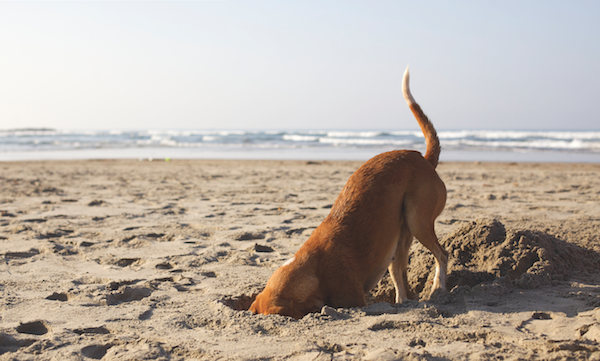
Unlike humans who fret over tan lines and pudgy tummies, canines enjoy a day in the surf. Watch your pup bounce down the beach like a Baywatch beauty, saving all the sticks from drowning. Sprinting in the sand is a great workout for pooches carrying extra pounds — twice as fun as a regular run, and it burns more calories.

dig

Dog digging on beach by Bormozaya.

2. Let your diggers dig

They may not be great at sandcastle construction, but dogs sure do make great excavation crews. Just like human kids, dogs love to dig during a beach day. Follow along to fill in their potentially ankle-twisting masterpieces, and have poop bags ready so you can remove any buried treasure.

3. Dip your feet and paws in the pool

You may prefer to lounge poolside with your pup. Chlorinated water won’t leave your dog smelling like Eau de Seaweed, and you won’t have to spend hours removing sand from your car and furry friend. Schedule a potty break before diving in, though — dogs will pee in a pool if the urge hits (they’re no different than people that way).

4. Sprinkle where they tinkle

If you’re landlocked or don’t have a pool, frolick through the sprinkler in your own backyard. Chances are your dog will love sprinkler time just as much as you did as a kid — and any yellow pee patches on your lawn will love it, too.

5. Don’t chase the ice cream truck

Ice cream cones may be a summer memory from childhood but not one you’ll want to replicate for your dog. They’re full of tummy-troubling lactose and refined sugar. Instead of running after that annoyingly musical vehicle, maybe you and your dog could have some frozen berries and chase each other.

Related: DIY Recipe: How to Make Fill-and-Chill Dog Treats

6. Stay in the shade

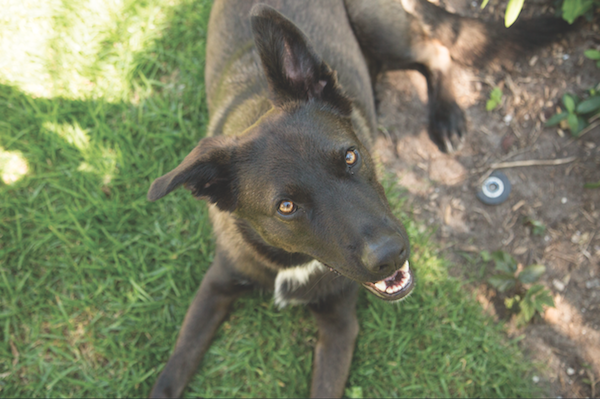
Our dogs love to mark on trees, but during hot summer walks, these pee posts serve another great purpose for our pups: shade! Ideally, you want to find a tree casting enough shadow for you both, but if there’s only enough shade for one, let your dog take it. After all, you’re not the one wearing a fur coat.

Dog in the shade by Gina Cioli/Lumina Media.

Dog in the shade by Gina Cioli/Lumina Media.

7. Chill outdoors after dark

When breaks in the shade aren’t enough, it’s OK to stay indoors until the sun calms down. Sunset strolls lead to nights spent roasting wieners around the bonfire. This way you’ll have a cool canine by your side, begging for a hot dog instead of being one.

8. Head out for a hike

Some dogs are more ambitious than others when it comes to outdoor adventures. One might be ready to head out into the wild wearing his own backpack, while another would prefer to ride in a backpack. If you have the second type, stick to the easy trails, or call your chiropractor ahead of time.

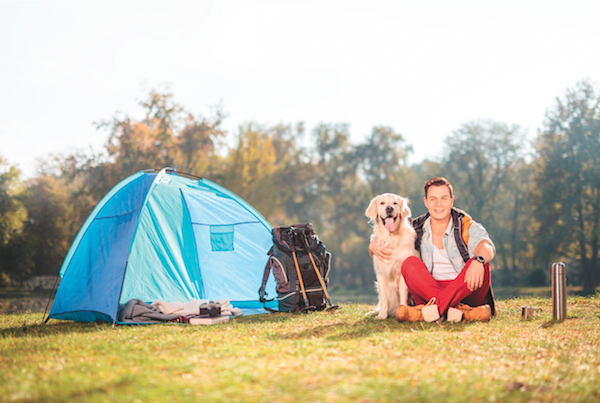
Man and dog camping by Shutterstock.

Man and dog camping by Shutterstock.

9. Pop up the pup tent

Why not give camping a try? Most dogs wouldn’t mind giving up their usual spot on your king-sized bed in exchange for nearly instant nighttime access to premium outdoor potty spots.

10. Bask in the glory of air conditioning

If you’ve got AC at home, consider yourself one lucky dog. If you don’t, buckle up your pooch, and go for a ride in a car that does. Perhaps it’s time to stock up at the (coincidentally air-conditioned) pet store.

Read Next: How Much Water Should a Dog Drink a Day?

The post 10 Fun Things to Do With Your Dog This Summer by Heather Marcoux appeared first on Dogster. Copying over entire articles infringes on copyright laws. You may not be aware of it, but all of these articles were assigned, contracted and paid for, so they aren't considered public domain. However, we appreciate that you like the article and would love it if you continued sharing just the first paragraph of an article, then linking out to the rest of the piece on Dogster.com.

Via Dogster https://www.dogster.com

Friday, July 10, 2020

4 Books to Read This Summer

The post 4 Books to Read This Summer by Melissa L. Kauffman appeared first on Dogster. Copying over entire articles infringes on copyright laws. You may not be aware of it, but all of these articles were assigned, contracted and paid for, so they aren't considered public domain. However, we appreciate that you like the article and would love it if you continued sharing just the first paragraph of an article, then linking out to the rest of the piece on Dogster.com.

The Finders
Being a big fan of mysteries and dogs, I happily dug into author Jeffrey B. Burton’s new series, starting with The Finders. Mason “Mace” Reid is a dog lover’s protagonist — a dog trainer who also trains human remains detection. It all starts when he takes in Golden Retriever Vira from Chicago Animal Care and Control — a puppy with her own challenging beginnings — who has a sniff gift and brings her home to his furry family — German Shepherd Sue ( a boy named …) and Collies Delta Dawn and Maggie May. On Vira’s first case, nothing goes as expected and puts a serial killer’s sights right on Mace and Vira. With a cast of likeable characters, wonder dog Vira and Mace — who is more comfortable with dogs than people — I enjoyed every minute of this serious thriller interspersed with humor. It’s got dogs, the fascinating world of scent detection and a mystery with lots of twists and turns. What more could a dog lover want? Can’t wait for book two in the Mace Reid K-9 Mystery series. Published by Minotaur Books.

books for dog lovers

Paw of the Jungle
The latest book in Diane Kelly’s Paw Enforcement series finds police officer Megan Luz and her K-9 partner, Brigit, solving their latest Lone Star mystery. What starts as a fun field trip to the Fort Worth Zoo turns serious when a pair of rare hyacinth macaws goes missing. Is the new custodian (who also happens to be an ex-convict) to blame or is there something more sinister going on? There’s a long list of people on the premises who might have stolen the birds, who are worth thousands of dollars, and other animals have started disappearing. But when a rare black rhino is taken (possibly for its black-market-friendly horn), there’s no time to waste to find out who’s behind the mystery. Published by St. Martin’s Paperbacks.

books for dog lovers

Bite Club
Dog show maven Melanie Travis has formed a new crime fiction book club in the 23rd installment of Laurien Berenson’s mystery series. The aptly named Bite Club reading group has book lovers all over town reading thrilling murder mysteries. But another project emerges when Melanie reluctantly agrees to train a Bulldog puppy for member Evan Major, an introverted and elusive man who just can’t seem to dodge trouble. It sends him to an early grave and lands Melanie in the hot seat for homicide when she’s caught at the wrong place at the wrong time. To prove her innocence, Melanie delves into Evan’s past, uncovering a scandal that cost Evan his marriage — and maybe his life. She gathers her pack of suspects at the next Bite Club meeting but doesn’t realize that another member has been hiding explosive secrets that could pit Melanie against an unpredictable killer. Published by Kensington Books.

books for dog lovers

The K Team
Bestselling mystery author David Rosenfelt gives fans a new series — a spinoff of his beloved Andy Carpenter mystery series, which focuses on his wife, Laurie. Before she married Andy, Laurie built a reputation as a smart and tenacious cop. Now she helps on Andy’s cases while also raising their son, but she’s been anxious to get back into investigating on her own. So when former policeman Corey Douglas and his German Shepherd, Simon Garfunkel, approach her with a proposal, she jumps at the chance. A local judge is the target of what appears to be a long-running blackmail scheme, but the blackmailer’s demands aren’t obvious, and the judge’s upcoming cases aren’t the types of things that would invite extortion. Laurie, Corey and Simon G. have to figure out the scheme before things turn deady. Published by Minotaur Books.

Tell us about YOUR favorite dog books! Email us at dogstermag@belvoir.com

Top photograph: wundervisuals/Getty Images

The post 4 Books to Read This Summer by Melissa L. Kauffman appeared first on Dogster. Copying over entire articles infringes on copyright laws. You may not be aware of it, but all of these articles were assigned, contracted and paid for, so they aren't considered public domain. However, we appreciate that you like the article and would love it if you continued sharing just the first paragraph of an article, then linking out to the rest of the piece on Dogster.com.

Via Dogster https://www.dogster.com