Tuesday, February 18, 2020

24 Must-Have Products for Dogs

The post 24 Must-Have Products for Dogs by Dogster Admin appeared first on Dogster. Copying over entire articles infringes on copyright laws. You may not be aware of it, but all of these articles were assigned, contracted and paid for, so they aren't considered public domain. However, we appreciate that you like the article and would love it if you continued sharing just the first paragraph of an article, then linking out to the rest of the piece on Dogster.com.

Dog products. We’re passionate about them, and we’ve been writing about them, testing them and purchasing them for years. So, we’re really excited to bring back the Editors’ Choice awards that Dogster did for years (as Dog Fancy). With a trio of judges possessing more than 25 years of experience each, we’ve pawed and dug our way through more than 60 products in the categories of gear, toys, clothing, housewares, cleaning and tech to find the ones we believe are at the top of their game in originality, ease of use, attractiveness to both pet and human and usefulness. Here, in no particular order, are the winners.

Stumptown Jacket: The word “love” was thrown around by the judges when describing this dog jacket. Everyone was impressed with the design, durability, attractiveness, weight and the leash peephole for harnesses. It also includes a latch instead of a Velcro closure for a better fit. It’s water repellent, has a reflective trim, comes in two colors and six sizes. $64.95. Ruffwear; ruffwear.com

Restcyble Bed: The judges wagged about this sturdy dog bed that retains its shape and is made from recyclable materials — perfect for using in the house or outside on the porch. The remov- able, machine-washable, recycled micro-suede sleeping surface is soft and long-wearing with a built-in pillow topper. The foam is made from repurposed, post-manufac- turing closed cell foam. Comes in Cloudburst Gray or Huckleberry Blue. $99.95. Ruffwear; ruffwear.com

Impact Harness: The Impact Harness is built to Federal Motor Vehicle Safety Standards created for child restraints. All the furry judges found the harness comfortable to wear, and their humans loved that it was crash tested and easily integrates into the cars’ seatbelt systems. Has four adjustment points and comes in S, M, L and XL. $84.99. Kurgo; kurgo.com

SureFeed Microchip Pet Feeder Connect: A clever product that works great for feeding pets that need frequent meals, say our human judges. This automatic feeder works for both wet and dry food, has an LED guide to help you portion food correctly and removable parts for easy cleaning. Get the Hub ($62), so the feeder connects to the Sure Petcare app, where you can monitor when and how much your dog eats. $179.99. Sure Petcare; surepetcare.com

LickiMat Soother & LickiMat Buddy:  “Easy to use,” “easy to clean,” “works great” are words the judges used to describe these two boredom busters. These mats promote calm behavior by distracting your pet during a stressful time. Just spread a tasty treat on them and let the repetitive licking soothe your dog, releasing calming endorphins. Freeze for cold treats on hot days. $6 to $10.99. Hyper Pet LLC.; hyper-pet.com

Baxter Dog Backpack: Our furry judges wore these backpacks hiking and at the beach. Easy to put on, good fit and right size were used to describe it, and one human found it nice to have her dog carry some of her own stuff. This durable saddlebag has eight adjustment points, ergonomic spine support and perfect balance. Also has a large handle on the back. Comes in three colors and two sizes: the Baxter and the Big Baxter. $57.99. Kurgo; kurgo.com

PupRug Faux Fur Orthopedic Dog Bed: All dogs loved it right away, agree the judges. It’s filled with
premium, long-lasting memory foam, and the soft faux fur cover is removable and washable. Has
a non-skid bottom. Comes in two styles — curve white and rectangle gray — and three sizes — S/M, L/XL and Giant. $119-$199. Paw.com; paw.com

Evercare Stickey Roller Pet Collection: “These sticky rollers work great — better than any other roller I have tried when it comes to removing pet hair,” says one judge. And, although the judges sat up and begged for the entire collection, their favorites were the Evercare Giant Extra Sticky T-Handle Roller (70 layer) and the Evercare Mega Extra Sticky Roller (25 layer). The Giant worked great on furniture, and the Mega’s roller with the long handle was perfect for rugs. The whole collection has extra sticky adhesive and each sheet is razorcut, so it’s easy to tear. Available at Target. $4.49/Giant and $12.99/ Mega. Evercare; evercare.cleanerhomeliving.com
Crazy Crew Toys: We tested both the Super Squeaking Deploraball and the Treat Dispensing Punky Ballster in this line of interactive and durable dog toys that roll, squeak, bounce and/or can be stuffed with goodies. Both received major tail wags from our judges — dogs and humans; the words “love them” and “tough” were used a lot. Available at amazon.com. $12.99/Punky Ballster and $6.99/Deploraball. Hyper Pet LLC; hyper-pet.com

Pet Driver’s License ID Tags: These customizable Pet ID tags look like real driver’s licenses. The collar tags are lightweight. The human judges thought they were fun and cute and great conversation starters about making sure your dog always has ID. Fill out the information and send in a photo, and the company sends you the license and three smaller versions for tags/keychains. Available for all U.S. states plus Canada. $19.95. MyPetDMV;mypetdmv.com

Car-Go Pop-Up Portable Kennel: Need comfortable, quick and safe containment in your home, car, hotel, RV or for waiting between dog events? You’ll love this popup kennel as much as the judges. It’s really easy to set up and take down. Just remove from the carrying case with its padded shoulder strap and give it a shake. Made to fit on the seats of most vehicles. Available in many sizes, shapes and a multitude of colors and prints. $110-$240. Sturdi Products Inc.; sturdiproducts.com

Everence Bracelet: What’s not to love about a handcrafted custom-beaded bracelet with semi-precious stones and sterling silver accents? And Everence takes it one step further — the bead is made from your pet’s DNA. Order the kit for your pet, and swab his mouth or order a kit to take DNA from your passed pet’s cremains. “I love the idea of carrying a little bit of my dog with me when I wear it,” says one judge. Customize the stones, bead colors and clasp styles. $129/one bead, $159/two beads and $199/three beads. Everence; everence.life

HPZ Pet Rover Prime Stroller & XL Stroller: Four paws up for these strollers. Great for daily use, plus they are wonderful for injured or senior dogs. Two of the judges had dogs with health issues and used the strollers so the dogs were still able to get outside for fresh air and mental stimulation. We loved the XL’s cup hold- er, expandable front and rear compart- ments, soft handles and how easy it is to put together. The Prime version has its own perk as a three-in-one product that also serves as a car seat and carrier. $196.86/XL and $209.86/Prime. HPZ; petroverusa.com

Petsafe Drinkwell 2-Gallon Pet Fountain: The judges loved how much fresh, flowing water the fountain held. All the dogs enjoyed it and, appar- ently, one of the cats, too! Another plus: There’s an adjustable flow control over the water stream where you can choose from nearly silent circulation on the lowest setting to a tranquil stream on the highest. $69.99. PetSafe; petsafe.com

Piddle Pads: Style, colors, usability, excellent, say our judges. Poured a whole glass
of water on it to see if it would go through. It didn’t. Washes perfectly. Great if you have a puppy, an older dog or just want to protect furniture from a little leakage. Eco-friendly, the soft microfleece has an absor- bent middle layer that wicks mois- ture. 29 x 29 inches in size. $14.95. Dr. Judy Morgan Naturally Healthy Pets; drjudymorgan.com

Klimb Dog Training Platform: “I love this for training, and the dogs love it, too,” says one of our judges. “They jump on it because they have so much fun getting trained.” This platform is crafted to be just large enough for a dog. To remain perched on it, a dog must have “quiet feet,” which requires a focused mind for effective training. It’s easy to put together and can be used to train a variety of things — just watch the video that walks you through it. $159.95. Blue-9 Pet Products; blue-9.com


Blaze Cross Dog Shoes: These are some protective dog shoes — made of water-resistant, tightly woven nylon mesh and breathable synthetic leather upper, plus a sole designed to mimic the structure of the dog’s pads. They have a great fit due to the double closure around the ankle. Judges found them well-made, easy to put on and perfect for hiking long distance in rugged terrain. Sizes XS to XL. $63.99/set of four. Kurgo; kurgo.com

Andis Cordless Nail Grinder: The Cordless Nail Grinder has six different speeds to take on your dog’s nail job, no matter the size. It runs for three hours on a single charge. Comfortable and easy to use, the judges like that it was cordless, not too loud and makes doing nails at home so much easier. $54.99. Andis Company; andis.com

Up Country Collars: Great colors, patterns and fit — all the judges agree that Up Country’s collars are something to bark out loud about. The judges tested the Funky Fish, Pink Madras and Evil Genius patterns. All ribbon collars come in a variety of lengths and in three widths. Stain and fray resistant; the collar ribbons are designed to last a lifetime. $23. Up Country; upcountryinc.com

Spina Organics All-Natural Grooming Products: While our human and furry judges enjoyed Spina Organics’ whole line of grooming products, these three in particular wowed. The Miracolo Oil Hot Spot Treatment works great, and the judges loved that it was organic. The Fur Detangler Leave-In Conditioner was amazing in how it left the fur so smooth and smelling great. The Daily Facial Cleanse really cleaned plus was easy to use. $17.50/9 ounce and $3/2.2 ounce for Daily Facial Cleanse; $16/9 ounce and $3/2.2 ounce for Fur Detangler Leave-In Conditioner; $25/1-ounce Miracolo Oil Hot Spot Treatment. Spina Organics; spinaorganics.com

Metro Balls: “Held up well with our chewer,” describes one of our human judges. “Tough with a good bounce … Holds up to his constant chomping,” says another. Made with nontoxic felt, these fun and bright dog balls contain no toxic gas. Size is 21⁄2 inches and available colors are pink, orange, black, seafoam and yellow. (Mini balls at 2 inches for smaller dogs are also available). $12.99/pack of three. Metro Paws; metropaws.com

Dog Med Laser: The only home-use certified Low Level Laser that can be used on dogs (and cats) suffering from osteoarthri- tis, hip and elbow dysplasia, spinal disk conditions and patellar luxation. This laser does not burn, does not generate heat and there are no risks to the eyes. “After reading and fol- lowing the directions carefully, the laser was easy to use and my dog seemed to really enjoy the soothing motion of the brush while using the laser,” says one of the judges. $499. Remedia Laser Systems Ltd.; dogmedlaser.com

Honorable mentions …

Two products we loved enough to give them a special mention.

Bergan by Coastal Backpack Style Carrier
Have you ever been on a long hike where your dog gets tired or perhaps he’s getting up in years and needs a little help? You’ve probably looked for a backpack just like this — with padded straps for comfortable carrying and mesh windows for your dog to look out and expandable pockets for all your pup’s stuff. Our judges liked it for its ease of portability and use, plus its soft, machine-washable base. Comes in one size and one color. $69.99. Coastal Pet Products, Inc.; coastalpet.com

The Pet Gazebo
Looking for something pretty different to a traditional crate or kennel solution? The portable Pet Gazebo can fit into a home, outdoor entertaining area or even go camping. It comes with a neutral Earth Taupe canopy (although five additional canopy styles are available) and four sizes (3, 4, 5 or 8 foot). The canopy is also available in a reversible weather-resistant canopy. Judges liked that it was sturdy, attractive, easy to use and tall enough to go in and clean. $129-$459. The Pet Gazebo; petgazebo.com

Meet This Year’s Editors’ Choice Judges


Jill Breitner, an animal advocate and dog body language expert/dog trainer, has been helping people help their dogs for over 40 years. The opportunity to test these products with her companions offered delight for her and for them. Their thrill couldn’t be contained. Enrichment abounded with each package. What fun!


Melissa L. Kauffman has worked in the pet world for more than 25 years in a variety of magazines and websites from Pet Product News, Aquarium Fish, Ferrets, Rabbits and Bird Talk to Catster and Dogster. Her dogs Justice and Tampa have been modeling for said magazines since they were puppies and are amazing, experienced pet-product testers. Also, let’s give a shout-out to Boston Terrier Boomer, Morkie Karma and Cockapoo Baby for lending a paw testing out products, too.


Audrey Pavia is a former managing editor of Dog Fancy magazine and former senior editor of the American Kennel Club Gazette. A member of Dog Writers Association of America, she has written hundreds of articles on dogs for a variety of publications and is the author of The Labrador Retriever Handbook (Barrons). Audrey lives in Norco, California, with her rescue dogs Candy and Mookie, who had a great time testing this year’s fun and innovative products.

The post 24 Must-Have Products for Dogs by Dogster Admin appeared first on Dogster. Copying over entire articles infringes on copyright laws. You may not be aware of it, but all of these articles were assigned, contracted and paid for, so they aren't considered public domain. However, we appreciate that you like the article and would love it if you continued sharing just the first paragraph of an article, then linking out to the rest of the piece on Dogster.com.

Via Dogster https://www.dogster.com

Friday, February 14, 2020

Pet Insurance for Dogs — Should You Have It?

The post Pet Insurance for Dogs — Should You Have It? by Jackie Brown appeared first on Dogster. Copying over entire articles infringes on copyright laws. You may not be aware of it, but all of these articles were assigned, contracted and paid for, so they aren't considered public domain. However, we appreciate that you like the article and would love it if you continued sharing just the first paragraph of an article, then linking out to the rest of the piece on Dogster.com.

You might be surprised to learn how common pet insurance is outside North America. “In Sweden, about 60 percent of cats and dogs have medical insurance,” says Darryl Rawlings, chief operating officer of Seattle-based Trupanion. “In the U.K., 27 to 28 percent of pets have medical insurance.” But in the United States and Canada, less than 1 percent of pet dogs and cats have medical insurance. But is pet insurance a good investment or not? Many people don’t understand how it works and are confused about the different policies, options and companies. Each company’s policies are different, and it isn’t always easy to wade through the “insurance speak” to understand your best option.

What is pet insurance for dogs?

A happy dog on a computer.

What exactly is pet insurance for dogs in the first place? Photography ©ImageDB | Thinkstock.

Pet insurance reimburses you if your pet becomes sick or injured with something that is covered under your policy. Some insurance plans exclude things like cancer or hip dysplasia, but you might be able to pay extra to add a rider to your policy. Other plans cover everything, as long as the condition is not pre-existing.

Pet insurance does not reimburse you for well-pet services like spay or neuter, annual bloodwork, vaccines or dental cleanings, unless your provider offers a wellness add-on (an additional cost). For instance, pet insurance provider Embrace offers an option called Wellness Rewards, which you can add on to any insurance policy. It acts like a health-savings account, reimbursing you for wellness care like dental cleanings, vaccines, spaying and neutering, grooming, nail trimming, flea, tick and heartworm prevention, and more.

“One of the reasons we offer it is because we want to encourage pet parents to have their pets seen for their routine care,” says Dawn Pyne, marketing manager for Embrace, which is based in Cleveland, Ohio. “Typically, that’s where veterinarians will find illness. Preventive care is good for us but it’s also good for the pet. There are no preset limits on how much of your routine care allowance you can spend toward any particular item. The pet parent is not limited on what wellness services they want to have completed.”

Pet insurance for dogs might make financial sense if you have a new healthy puppy. Puppies are the least expensive to insure, and we all know how much trouble they can get into (good thing they’re cute!). One major accident or illness could make a policy worthwhile.

The older a dog is, the more expensive it is to insure him. Financially, it might not make sense to buy new insurance for a senior dog — any preexisting health conditions will be excluded. Some insurers even decline coverage to dogs over a certain age. If your dog is a young adult and healthy, you should be able to find a policy with a reasonable premium.

Why get pet insurance for dogs?

If you have pet insurance for your dog, you might do less hemming and hawing when it comes time to decide if your dog needs to see the vet. “A lot of people don’t have a lot of disposable or discretionary money left at the end of the month,” Rawlings says. “Pet owners (without insurance) aren’t going to the vet because it’s nerve-wracking, and they don’t know if it’s going to be $3,000 or $5,000.” But if you have insurance, you don’t have to worry about being able to afford the care.

It’s easier for a lot of pet owners to pay a small amount every month rather than be faced with a huge vet bill all at once. “We as Americans all live month to month,” says Carol McConnell, D.V.M., MBA, chief veterinary officer for Nationwide (formerly Veterinary Pet Insurance). “When you’re faced with that random unforeseen event that could have significant financial consequences for you, you don’t have to worry about it (if you have insurance).”

It’s no secret that veterinary prices have gone up over the years. Insurance can help bridge the gap for many pet owners. “If you look at the cost of services from 10 or 20 years ago compared to now and the availability of specialty care,” Dr. McConnell says. “The medicine has evolved, and the prices have gotten higher.”

You don’t have to worry about whether your veterinarian accepts a certain type of insurance or not. “Pet insurance isn’t regulated like human healthcare, so there are no networks,” Pyne explains. “Pet insurance is a relationship strictly between the pet parent and the pet insurance company. You can basically go to any veterinarian, including emergency and specialty clinics, and use your policy.”

How much does pet insurance for dogs cost?

Annual premiums are based on several factors, including your dog’s breed and age, whether he is fixed, and where you live. Sometimes you may choose from varying tiers of deductible: low, mid-range and high. The higher the deductible, the lower the annual premium will be. Pay close attention to the deductible. Your best option is a lifetime deductible — once you reach it, you never have to pay it again, no matter how many times your dog sees the vet. Your next best option is an annual deductible — once you reach it, you’re set for the year. Some deductibles are “per condition/incident,” meaning you pay the deductible just once in a year for the same problem. Avoid plans with “per visit” deductibles — every time your dog sees the vet, you must pay the deductible before anything will be covered.

You might be able to select different tiers of payout for claims after meeting your deductible: low (for instance, 80 percent), mid-range (90 percent) and high (100 percent). The higher the payout, the higher your annual premium.

Some insurance providers offer discounts if you pay online or insure multiple pets. For instance, Embrace offers multiple ways to save, including discounts for paying your premium annually rather than monthly or if your pet is spayed or neutered, and military discounts.

“We are also the only pet insurance company that offers a Healthy Pet deductible,” Pyne says.“The pet’s annual deductible automatically goes down by $50 each year that the pet parent doesn’t receive a claim reimbursement. For example, pet parents who may have a $200 deductible and healthy pet who doesn’t receive either an accident or illness claim reimbursement for four years could potentially have no deductible when it’s time to go and claim.”

Pet insurance for purebred dogs

A beagle dog barking or howling.

Got a purebred dog? Be mindful of which dog insurance you choose! Photography by Holly Hildreth Photography.

If you have a purebred dog, you must be extra cautious about the dog insurance you buy. Some policies exclude hereditary diseases and conditions that are genetically linked to certain breeds. If, for instance, your German Shepherd Dog develops hip dysplasia or your Golden Retriever gets cancer, it might not be covered. Luckily, a few dog insurance providers proudly advertise that they never exclude hereditary conditions for purebreds.

Common dog insurance claims

PetPlan Pet Insurance, based in Newtown Square, Pennsylvania, shared some typical claims and average payouts:

  • Gastrointestinal (vomiting/ diarrhea): $353.36
  • Cancer: $533.42
  • Skin allergies: $175

“Remember, gastrointestinal issues tend to reoccur so  several of these claims can add up,” says Elyse Donnarumma, CVT, veterinary manager for PetPlan. “Cancer unfortunately is never a single visit. There are often expensive diagnostics, chemotherapy appointments, and consultations with the oncologist. Skin allergies are chronic in nature, so several visits for skin allergies can add up quickly.”

Final decision: Is pet insurance for dogs worth it?

So is pet insurance for dogs really “worth it”? The answer is different for everyone and every dog. You might buy an insurance policy for your puppy and never need to use it. On the other hand, one major medical issue can cost into the thousands. For example, a California pet owner was glad for the Trupanion policy when his 3-year-old Newfoundland had to be treated for eating seven baby pacifiers. The payout? $5,397.30.

“Pet insurance provides peace of mind and takes the thought of cost away from taking care of furry family members,” says Elyse Donnarumma, CVT, veterinary manager for PetPlan Pet Insurance. “It allows everyone to focus primarily on quality of veterinary care and makes cost of care secondary. Whether it’s for yourself, your pet or your car, buying insurance is always a gamble. You might never need it, but if you do, you’ll be happy to have it.”

Popular Pet Insurance Plans

Take a look at this list of pet insurance providers for a brief comparison of some of the most important items to consider when selecting pet insurance. Always read (and re-read) the fine print before choosing a plan for your dog.

ASPCA

·         Payouts: Up to 90 percent reimbursement depending on the plan you choose.

·         Deductible: Annual.

·         Hereditary/congenital conditions: Coverage available (not all plans cover these conditions).

·         Multiple pet discount: Yes.


Embrace

·         Payouts: 70 percent, 80 percent or 90 percent reimbursement depending on the plan you choose.

·         Deductible: Annual.

·         Hereditary/congenital conditions: Covered if they are not pre-existing.

·         Multiple pet discount: Yes.


Figo

·         Payouts: 70 percent, 80 percent, 90 percent or 100 percent reimbursement depending on the plan you choose.

·         Deductible: Annual.

·         Hereditary/congenital conditions: Covered if they are not pre-existing.

·         Multiple pet discount: Yes.


Healthy Paws

·         Payouts: 70 percent, 80 percent or 90 percent reimbursement depending on the plan you choose (exam fees not covered). Unlimited payouts.

·         Deductible: Annual.

·         Hereditary/congenital conditions: Covered if they are not pre-existing.

·         Multiple pet discount: No.


Nationwide (formerly Veterinary Pet Insurance/VIP)

·         Payouts: 90 percent reimbursement with the most expensive plan option (Whole Pet with Wellness). For all other plans, reimbursement is capped at a set amount for each condition, regardless of the actual treatment cost.

·         Deductible: Annual.

·         Hereditary/congenital conditions: Only covered under the most expensive plan option (Whole Pet with Wellness).

·         Multiple pet discount: No.


ODIE Pet Insurance

·         Payouts: 70 to 90 percent reimbursement depending on the plan you choose.

·         Deductible: Annual deductible, customizable by the customer.

·         Hereditary/congenital conditions: Provides coverage for both hereditary and congenital conditions, however, pre-existing conditions are not covered.

·         Multiple pet discount: Yes. Up to 10 percent.


PetFirst

·         Payouts: 70 percent, 80 percent, 90 percent or 100 percent reimbursement depending on the plan you choose.

·         Deductible: Per incident.

·         Hereditary/congenital conditions: Covered if they are not pre-existing.

·         Multiple pet discount: Yes.


PetPlan

·         Payouts: May choose 70 percent, 80 percent or 90 percent payouts. Unlimited coverage available.

·         Hereditary/congenital conditions: Covered if they are not pre-existing.

·         Deductible: Annual.

·         Multiple pet discount: No.


Pets Best

·         Payouts: May choose 70 percent, 80 percent or 90 percent payouts. Unlimited coverage available with most expensive plan option. Exam fees not covered under least expensive plan option.

·         Deductible: Annual.

·         Hereditary/congenital conditions: Covered if they are not pre-existing.

·         Multiple pet discount: Yes.


Trupanion

·         Payouts: 90 percent payouts (exam fees not covered). Unlimited payouts.

·         Hereditary/congenital conditions: Covered if they are not pre-existing.

·         Deductible: Once per condition for the lifetime of the pet (not an annual deductible). May choose $0 to $1,000 deductible.

·         Multiple pet discount: No.


Thumbnail: Photography ©Kerkez | Thinkstock. 

Jackie Brown is a freelance writer, editor and pet-industry consultant. She lives in sunny Southern California with her Miniature Poodle, Jäger. Reach her at jackiebrownwriter.wordpress.com

Editor’s note: This article appeared in Dogster magazine. Have you seen the new Dogster print magazine in stores? Or in the waiting room of your vet’s office? Subscribe now to get Dogster magazine delivered straight to you

Read more about dog health on Dogster.com:

The post Pet Insurance for Dogs — Should You Have It? by Jackie Brown appeared first on Dogster. Copying over entire articles infringes on copyright laws. You may not be aware of it, but all of these articles were assigned, contracted and paid for, so they aren't considered public domain. However, we appreciate that you like the article and would love it if you continued sharing just the first paragraph of an article, then linking out to the rest of the piece on Dogster.com.

Via Dogster https://www.dogster.com

Help for Dogs with Chagas Disease

The post Help for Dogs with Chagas Disease by Jackie Brown appeared first on Dogster. Copying over entire articles infringes on copyright laws. You may not be aware of it, but all of these articles were assigned, contracted and paid for, so they aren't considered public domain. However, we appreciate that you like the article and would love it if you continued sharing just the first paragraph of an article, then linking out to the rest of the piece on Dogster.com.

Vida Pharmacal announced the first cure for canine Chagas disease, also called American Trypanosomiasis, which is a zoonotic disease caused by Trypanosoma cruzi, a protozoal parasite spread by bloodsucking insects (kissing bugs).

The disease, which causes heart failure and death, has long been common in Latin America, although it has recently been identified in the Southern United States. The results of a multicenter field study, which were published in August in the Journal of the American Veterinary Medical Association, detailed a treatment protocol that significantly increased improvement of symptoms and ability to survive infection with the disease.

Top photograph: Getty Images

Read Next: How to Tell If Your Dog Has a Cold


The post Help for Dogs with Chagas Disease by Jackie Brown appeared first on Dogster. Copying over entire articles infringes on copyright laws. You may not be aware of it, but all of these articles were assigned, contracted and paid for, so they aren't considered public domain. However, we appreciate that you like the article and would love it if you continued sharing just the first paragraph of an article, then linking out to the rest of the piece on Dogster.com.

Via Dogster https://www.dogster.com

Dogster’s Rescue Dog of the Week: April

The post Dogster’s Rescue Dog of the Week: April by Melissa L. Kauffman appeared first on Dogster. Copying over entire articles infringes on copyright laws. You may not be aware of it, but all of these articles were assigned, contracted and paid for, so they aren't considered public domain. However, we appreciate that you like the article and would love it if you continued sharing just the first paragraph of an article, then linking out to the rest of the piece on Dogster.com.

Let’s help find forever homes for rescue dogs who need special help like April. Please share her story in hopes of finding her the perfect forever home and human.

“April is spending her 5th Christmas with me,” says Stacey Studier, April’s fosterer. She was rescued from living out side all-year round with very little to fend for herself for the first couple years of her life. Rescue dog April was used as a breeder, plus she was heartworm positive when she came into rescue.

About April

April is about 7 to 8 years old and needs to be the only pet in the house.

“She needs to be an only animal in the home and needs to trade treats for the toys she likes to play with,” says Stacey. “She loves walks, riding in the car and playing fetch. She also loves snuggling with her people.” Rescue dog April is about 7 to 8 years old. Because of some unexpected life changes, April won’t be able to foster April much longer. “April is the sweetest girl,” says Stacey, “and deserves an amazing house where she can have full love and run of the home.”

About the rescue

April loves walks and playing fetch.

Rescue dog April is available for adoption through It’s a Pittie Rescue (rescueapittie.org) out of Peotone, Illinois. Email is itsapittierescue@gmail.com. The rescue is dedicated to rescuing, re-habbing and re-homing Pit Bull breeds. The organization also educates people about this loyal and kind dog breed.


Have a dog or puppy looking for a forever home? If your rescue has a dog or puppy waiting too long for a forever home, email us at dogstermag@belvoir.com to possibly be featured as Dogster’s rescue of the week on Facebook and on our website dogster.com. Please put Rescue Dog of the Week in the subject line. We are looking to showcase dogs that have waited more than nine months for their forever home or have special needs that make finding the perfect home more challenging. Include the dog(s) name, age, short history and several good photos. Include all contact information for your rescue.

The post Dogster’s Rescue Dog of the Week: April by Melissa L. Kauffman appeared first on Dogster. Copying over entire articles infringes on copyright laws. You may not be aware of it, but all of these articles were assigned, contracted and paid for, so they aren't considered public domain. However, we appreciate that you like the article and would love it if you continued sharing just the first paragraph of an article, then linking out to the rest of the piece on Dogster.com.

Via Dogster https://www.dogster.com

Wednesday, February 12, 2020

Yellow Dog Poop — Should You Worry About It?

The post Yellow Dog Poop — Should You Worry About It? by Jackie Brown appeared first on Dogster. Copying over entire articles infringes on copyright laws. You may not be aware of it, but all of these articles were assigned, contracted and paid for, so they aren't considered public domain. However, we appreciate that you like the article and would love it if you continued sharing just the first paragraph of an article, then linking out to the rest of the piece on Dogster.com.

A dog’s poop can tell you a lot about what’s going on inside his body by both its consistency and its color. For instance, red or black poop can indicate that your dog is bleeding from somewhere in his gastrointestinal tract. But what does yellow dog poop mean?

Yellow dog poop — is it serious?

A puppy pooping on green grass and looking scared or stressed.

Uh-oh — is that yellow dog poop you see? Photography ©gemredding | iStock / Getty Images Plus.

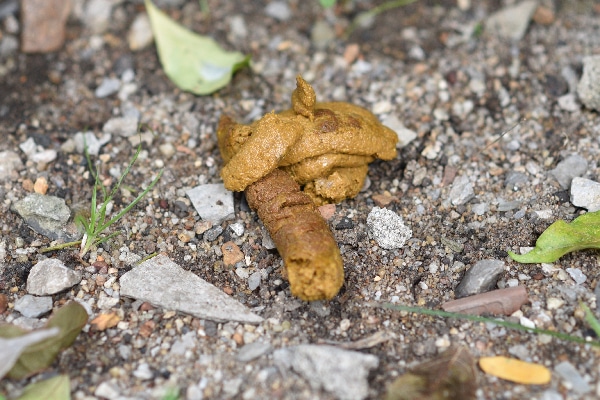
Seeing yellow dog poop can be a little surprising. Sometimes, yellow dog poop happens because of something your dog ate, like yellow Crayons or chalk that’s just passing through. A clue that your dog might have eaten something containing yellow dye is if the yellow color in the poop appears in blotches or only in parts of the poop.

If the yellow dog poop is uniformly yellow in color, however, the reason might be more concerning. “That is bile pigment that has not been reabsorbed and is passing through the feces and turning it yellow,” says Tracey Jensen, DVM, Dipl. ABVP, medical director at Wellington Veterinary Hospital in Wellington, Colorado. “It’s not normal. Basically, it means that the transit time in the GI tract is increased.”

What does ‘GI transit time’ have to do with yellow dog poop?

“GI transit time” refers to the amount of time it takes for food to travel through the entire gastrointestinal tract as it’s digested and finally eliminated from the body as waste. “The intestinal tract is in a constant state of digesting and reabsorbing things for reuse, everything from fluid to bile pigment,” Dr. Jensen explains. “When that transit time is too quick, then you get liquid feces and you will see those yellow bile pigments. If the transit time is prolonged and the patient is dehydrated, that’s when we see constipation.”

The GI transit time can increase for a variety of reasons, including parasites, cancer, inflammatory bowel disease, issues with the liver, gallbladder or pancreas. For this reason, it’s best to schedule an appointment with your veterinarian if you notice some yellow dog poop.

Is yellow dog poop a medical emergency?

Yellow dog poop.

So, is yellow dog poop a cause for concern? Photography ©NUKUL2533 | iStock / Getty Images Plus.

“It’s not an emergency necessarily, as long as the pet is still feeling all right and there are no other symptoms, but it’s urgent enough that you do need to seek veterinary assessment,” Dr. Jensen advises, regarding yellow dog poop. “If [your dog is] not feeling well, or if there are other gastrointestinal signs, such as vomiting or any other color changes to the feces, it would warrant a call to the emergency room.”

When you go to the vet, bring a stool sample with you so the veterinarian can look at it under a microscope to check for any evidence of parasites. If the fecal test reveals no parasites, your vet will likely want to check your dog’s bloodwork and possibly perform some imaging tests like x-rays or ultrasounds to look for abnormalities in the gastrointestinal tract.

The bottom line on yellow dog poop

Unless you think your dog just chewed up some yellow crayons, yellow dog poop is not something to ignore. If you see this color in your dog’s poop, get him checked out just to be sure nothing serious is going on.

Thumbnail: Photography ©MachineHeadz | iStock / Getty Images Plus.

This piece was originally published in 2018. 

Have more questions about your dog’s stool? Check out these articles on Dogster.com:

The post Yellow Dog Poop — Should You Worry About It? by Jackie Brown appeared first on Dogster. Copying over entire articles infringes on copyright laws. You may not be aware of it, but all of these articles were assigned, contracted and paid for, so they aren't considered public domain. However, we appreciate that you like the article and would love it if you continued sharing just the first paragraph of an article, then linking out to the rest of the piece on Dogster.com.

Via Dogster https://www.dogster.com

Afghan Hound

The post Afghan Hound by Allan Reznik appeared first on Dogster. Copying over entire articles infringes on copyright laws. You may not be aware of it, but all of these articles were assigned, contracted and paid for, so they aren't considered public domain. However, we appreciate that you like the article and would love it if you continued sharing just the first paragraph of an article, then linking out to the rest of the piece on Dogster.com.

A clown to his loved ones, a silky-coated aristocrat to the world, the Afghan Hound is one of those dogs that is seen once and never forgotten. He makes an indelible impression. Here are six fun facts about this regal canine.

Ancient hunter

Those who think the Afghan Hound’s natural terrain is the fashion runway are surprised to hear that he is one of the most ancient breeds of dogs. It is said that Noah brought a pair of Afghans aboard the ark. Under that glamorous coat beats the heart of a powerful hunter, swift enough to bring down gazelles and even snow leopards. The long coat protected him from the harsh elements, and his big feet and thick pads helped him traverse mountainous regions. The Western world became acquainted with the breed when Major Amps from England was stationed in the Kabul region after the Afghan War of 1919. He and his wife, Mary, developed a keen interest in the breed and established their Ghazni Kennels in the hill country of Afghanistan at an elevation of 6,000 feet. Mrs. Amps wrote about the difficulty of acquiring these hounds from the hunting parties, and it took the intervention of officials before the natives reluctantly turned over a few hounds. The Afghan Hounds that eventually arrived on American shores did so by way of Great Britain.

Photo: Getty Images

A comic twist

The Afghan Hound’s American history began in 1931, starring none other than Zeppo Marx, the youngest of the madcap Marx Brothers. While in England shooting a film, Marx first laid eyes on an Afghan, at which point he and his wife insisted on taking a pair back to California for breeding. He reached out to Phyllis Robson, the then editor of English Dog World, who also owned a famous champion from Major Amps’ Ghazni bloodlines. Marx left the decision making to Robson, merely requesting a pair of light-colored hounds with abundant coat. Omar and Asra soon joined them in Hollywood

Dignified and aloof

The first paragraph of the breed standard captures the Afghan Hound’s essence. Under General Appearance, he is described as “an aristocrat, his whole appearance one of dignity and aloofness … with eyes gazing into the distance as if in memory of ages past.” The striking characteristics of the breed include his “exotic, or Eastern, expression, long silky topknot, peculiar coat pattern, very prominent hipbones … [and large feet] … giving the Afghan Hound the appearance of what he is, a king of dogs, that has held true to tradition throughout the ages.”

Photo: Shutterstock

Hair of the dog

The “peculiar coat pattern” mentioned in the standard refers to the arrangement of hair on the dog. The face is smooth but is framed by a topknot of long, silky coat and long ears also adorned with hair. At maturity, the fluffy puppy coat gives way to a strip of short hair down the back, called a “saddle,” while long, silky hair drapes down the sides of the body. The smooth tail is carried high in a ring or a curve, with a bit of feathering on the underside. While the silky coat mats easily and requires regular brushing and bathing, a bonus is that there is little shedding. Some owners prefer to keep the coat clipped down to a more manageable length.

 A rainbow of colors

Few breeds offer owners the array of colors and patterns that the Afghan Hound does. Solid colors range from black to white and virtually every shade in between: dark and light blue, silver, gold and cream, with or without the traditional black mask. Color patterns or combinations include brindle (stripes), black-and-tan and domino (dark widow’s peak and saddle, contrasted by lighter-colored face and side coat), the latter term coined to honor Champion Tanjores Domino, a Swedish Afghan of this unusual coloring that came to America in the 1960s.

No push-button dog

Afghan Hounds are highly intelligent, but never robotic, push-button dogs that will fetch your slippers or perform endless tricks. Once taught a command, they see no purpose in repetition. Breeds in the Hound Group are stubborn, and the Afghan is no exception. They are very cat-like in temperament; speedy athletes outside, but mellow and chill in the house. For all the haughtiness they display to the world, they are sweet, loving and clownish with their chosen ones. If that sounds like a dog you’d appreciate, then definitely look into the ancient Afghan Hound.

The post Afghan Hound by Allan Reznik appeared first on Dogster. Copying over entire articles infringes on copyright laws. You may not be aware of it, but all of these articles were assigned, contracted and paid for, so they aren't considered public domain. However, we appreciate that you like the article and would love it if you continued sharing just the first paragraph of an article, then linking out to the rest of the piece on Dogster.com.

Via Dogster https://www.dogster.com
Tuesday, February 11, 2020

Why is My Dog Collapsing? 6 Reasons for Sudden Collapse

The post Why is My Dog Collapsing? 6 Reasons for Sudden Collapse by Dr. Catherine Ashe appeared first on Dogster. Copying over entire articles infringes on copyright laws. You may not be aware of it, but all of these articles were assigned, contracted and paid for, so they aren't considered public domain. However, we appreciate that you like the article and would love it if you continued sharing just the first paragraph of an article, then linking out to the rest of the piece on Dogster.com.

It can be hard sometimes to tell when our dogs are having a true emergency, but when a dog collapses, it is always serious! Hopefully this won’t happen to your canine friend, but it’s important to be prepared if your dog suddenly collapses.

If your dog is breathing and responsive

First, don’t panic. If your dog is breathing and responsive, carefully move him to your vehicle and head for your nearest emergency veterinary clinic. Call ahead so the emergency staff will be expecting you.

When you arrive, your dog should be immediately triaged. This will include the veterinary staff taking vitals and starting stabilization.This might include an IV catheter and oxygen, depending on the underlying cause.

While this is happening, try to think about anything unusual that might have led to this incident. Was your dog playing in the heat? Were there insects around? Might your dog have been exposed to any toxins? These are questions the veterinarian will ask to try to determine the cause of your dog’s illness.

Photo: Getty Images

If your dog isn’t responsive

If your dog appears unresponsive and apneic (not breathing), begin CPR. Try to alert someone nearby to find assistance. The most important part of CPR is chest compressions.

  • Place the palm of one hand on the back of the other, position over the heart and begin to press down rhythmically.
  • The rate should be about 120 beats per minute (about the pace of the song Stayin’ Alive by the Bee Gees).
  • Push so the chest compresses about half of its width.
  • After 60 compressions, hold your dog’s snout closed and give a breath into the nostrils, then resume compressions.
  • When you are able, get veterinary care immediately.

Causes of dog collapse

There are many possible reasons for a dog to collapse, and they vary by age and breed, as well as the time of year.

To prevent your dog collapsing from heatstroke, make
sure cool water is
always available. Photo: Getty Images

1. Heatstroke can occur during hot months secondary to overexertion and dehydration. Dogs pant to cool themselves. Excessive panting is the earliest sign of overheating. Avoiding vigorous exercise and making sure cool water is always available to your canine can help prevent this. Take walks in the early morning and at twilight to avoid the hottest part of the day.

Dogs can have severe allergic reactions just like humans. Signs include vomiting, diarrhea and collapse. Photo: Getty Images

2. Anaphylaxis can happen in dogs, just as in humans. Bees, wasps and other insects are often to blame, even though you may not actually see your dog get stung. Along with collapse, other signs may include vomiting and diarrhea.

3. Syncope is collapse caused by heart disease. This happens suddenly and can last for a few seconds to a minute or more. Afterward, your dog may act as if nothing happened, but a veterinary visit is still essential.

4. Seizures can cause unexpected collapse. This is usually accompanied by other symptoms such as paddling, vocalizing, urination and defecation. The hallmark of a seizure is unconsciousness. During a true seizure, your dog will not respond to stimulus. Recovery afterward can be slow, and your dog’s behavior may be very abnormal. This is called the postictal phase.

Blue-green algae (Cyanobacteria) can produce toxins that can cause sudden collapse in dogs who drink or swim in this type of contaminated water. Photo: Getty Images

5. Toxins are many. Some that could cause a sudden collapse episode include blue-green algae, found in stagnant water; xylitol, a common sweetener that causes a sudden, dangerous drop in blood sugar; and rat poisons such as bromethalin, a
neurotoxin.

6. Internal hemorrhaging might seem like a strange cause for sudden collapse, but it is all too common. Senior dogs, especially breeds like the Golden Retriever, are prone to developing a silently growing cancer of the heart, liver and spleen. There may be no outward signs until the tumor becomes too large and ruptures. This acute rupture leads to internal bleeding and collapse. The internal bleeding can be within the abdomen or within the sac around the heart (pericardium).

So remember, if your dog collapses, it is always serious and always time to take your pup to the veterinarian, even if he recovers. Note what has happened before your dog collapses, so your veterinarian can determine if one of the six culprits is the cause and start appropriate treatment.

The post Why is My Dog Collapsing? 6 Reasons for Sudden Collapse by Dr. Catherine Ashe appeared first on Dogster. Copying over entire articles infringes on copyright laws. You may not be aware of it, but all of these articles were assigned, contracted and paid for, so they aren't considered public domain. However, we appreciate that you like the article and would love it if you continued sharing just the first paragraph of an article, then linking out to the rest of the piece on Dogster.com.

Via Dogster https://www.dogster.com