Thursday, August 6, 2020

This Program Wants Kids To Read To Their Dogs

The post This Program Wants Kids To Read To Their Dogs by Annie Butler Shirreffs appeared first on Dogster. Copying over entire articles infringes on copyright laws. You may not be aware of it, but all of these articles were assigned, contracted and paid for, so they aren't considered public domain. However, we appreciate that you like the article and would love it if you continued sharing just the first paragraph of an article, then linking out to the rest of the piece on Dogster.com.

With kids across the country now being educated at home, Pet Partners introduced a new program designed to bring the power of the human-animal bond to at-home learning. We Are All Ears is a worldwide read-with-pet project that will run through the end of the year.

Just take the pledge to read at home to your pets, then determine the reading goal that’s right for you — whether it’s a certain number of books, pages, chapters or minutes. And Pet Partners has put together some great resources to support participating families: a reading log, bookmark templates and a special BINGO card, all to help encourage regular reading, plus a certificate of completion and an official T-shirt. For more information, visit petpartners.org.

Top photograph: Courtesy Pet Partners

Read Next: Books, Kids, and Therapy Dogs Come Together With ‘Be Like Bud’

The post This Program Wants Kids To Read To Their Dogs by Annie Butler Shirreffs appeared first on Dogster. Copying over entire articles infringes on copyright laws. You may not be aware of it, but all of these articles were assigned, contracted and paid for, so they aren't considered public domain. However, we appreciate that you like the article and would love it if you continued sharing just the first paragraph of an article, then linking out to the rest of the piece on Dogster.com.

Via Dogster https://www.dogster.com

9 Top Dog Behavioral Problems And How To Solve Them

The post 9 Top Dog Behavioral Problems And How To Solve Them by Jill Breitner appeared first on Dogster. Copying over entire articles infringes on copyright laws. You may not be aware of it, but all of these articles were assigned, contracted and paid for, so they aren't considered public domain. However, we appreciate that you like the article and would love it if you continued sharing just the first paragraph of an article, then linking out to the rest of the piece on Dogster.com.

Dogs bring joy, laughter and a deep sense of connection, like no other. If you’re lucky enough to start your journey with your dog from puppyhood, it can be a life-changing experience. As dogs go through stages of growth — from puppy to adult to senior — different challenges arise. Help them to be their best selves with care, patience, knowledge, observation and diligence. These qualities developed in you will then be reflected in your dog’s behavior through his lifetime.

Photo: Mladen_Kostic | Getty Images

Puppyhood challenges

The three most common issues puppies have, all have to do with learning boundaries, which include: playful biting, housetraining and chewing.

1 Playful biting: While this is normal puppy play behavior, they need to be taught that playfully biting on humans is not appropriate. It’s not so much about correcting the behavior but more about offering choices for play — doggie playdates, toys, games, etc.

The prey drive is the strongest drive dogs have, and when something moves, they go after it. So, when your puppy is biting your hand and you pull it away, you are inadvertently asking your dog to play like a dog, so he goes after the moving target — your hand, leg, face, etc. The easiest way to curtail this behavior is to freeze. Stop moving, make your hand into a fist and shut off all your energy including talking and eye contact.
He’ll bite for a few seconds longer. When he takes his mouth off of you, quietly and slowly offer/trade up with a toy and/or completely disengage. Let the puppy know that you are not interested in this kind of play, period. Remember, moving is engaging, freezing is disengaging.

Related: How to Survive a Puppy

Dog Behavioral Problems

Photo: kertlis | Getty Images

2 Housetraining: Puppies are not capable of holding their bladder or bowels and need to be taught by being taken out frequently. When your puppy is awake and playful, take him out every 10 to 15 minutes to relieve himself. Give him the same cue, “Go potty,” “Hurry up,” “Do your business,” etc. Whichever cue you use, all members of the household must consistently use it. The simplest way to teach your puppy that going outside is best is to have all caregivers be consistent, feed on a regular schedule and wait for the pup to do his business before you go inside. Don’t be impatient; give him time to relieve himself.

If you see him start to potty in the house, immediately scoop him up and take him outside. Don’t scare him, but don’t let him finish his business inside. Bringing him out often is how you teach. As your puppy grows, you’ll increase the amount of time you can go between potty breaks, but the more the better when he’s a puppy.

There are a MINIMUM of 11 times to take your puppy out:

➼ First thing in the morning
➼ Before breakfast
➼ After breakfast
➼ Mid-morning
➼ Before lunch
➼ After lunch
➼ Mid-afternoon
➼ Before dinner
➼ After dinner
➼ Mid-evening
➼ Before bed

Photo: sanjagrujic | Getty Images

3 Chewing: Chewing is natural and necessary for puppies. Pups get to know their world through their noses and mouths. Supply age-appropriate toys before teething, during teething and after teething. Read labels, and buy accordingly. Supervise your puppy to learn his chewing habits, and have appropriate toys readily available. Unsupervised dogs are the ones who often become destructive.

To puppy-proof your house from your pup’s chewing:
✤ Remove all things dangerous or valuable.
✤ Remove things that are at puppy level — magazines, books, etc.
✤ Close doors to rooms you are not in to better supervise.
✤ Confine the puppy in the room with you, with a puppy gate or closed doors. Use an exercise pen or crate when you’re unavailable to supervise.
✤ Have enough toys on the floor in whatever room you are in, so the puppy has a choice and you can trade up when the puppy chooses something that’s not his.
✤ Bundle electrical wires so they are inaccessible.

Photo: Ryan McVay | Getty Images

Keep Puppy Out of Trouble

Puppies need to be kept mentally and physically stimulated.  Short puppy walks offer not only physical stimulation but mental stimulation, as well. Let your puppy sniff and explore his new environment.

Playing tug, fetch, flirt pole, puppy playdates, etc., are all great ways to exercise.

Keep training sessions short: three to five minutes, a few times a day. You can begin teaching obedience cues as soon as you bring him home, but don’t overwhelm him. Learning happens the minute you bring him home — teaching where to go potty, how to play appropriately, as well as teaching simple cues like Sit. Keep it simple, teaching only one cue at a time for at least three to four days before introducing a new cue. Puppy brains are like sponges, and it’s an opportune time to teach new things.

Enrichment activities, like puzzle toys, sniffing walks and socializing go a long way to engaging their inquiring minds.

Photo: Zbynek Pospisil | Getty Images

Mixed messages & adolescence

Adolescence is between the age of 9 months to maturity, which is between 11/2 years to 3 years of age.

4 Testing boundaries: This time is all about testing boundaries — not because your dog is challenging you, misbehaving or dominating you — rather, it’s because of inconsistency during puppyhood. If puppyhood wasn’t managed properly, the dog’s behavior can get out of control. It’s important not to label this phase or the dog as being bad. He isn’t.

What is happening is that the puppy was given mixed messages, intermittently reinforcing behaviors like jumping, training has fallen by the wayside or it never got started. This causes the adolescent to keep trying/pushing, thinking this may be the one time you give in. For example: Every time a puppy is rewarded for jumping on you or anyone else during a greeting, he thinks it’s OK. When you sometimes tell the dog not to jump and other times give in, the intermittent rewards lead to continued jumping. Reteaching with patience and consistency will carry you through adolescence.

Dog Behavioral Problems

Photo: bfk92 | Getty Images

Adult time

Adult dogs have learned what works and what doesn’t based on their experience up to this point in their lives. They are quite comfortable in their home and with their people. Any inconsistencies become unwanted behaviors, but it’s never too late to get them back on track. I find the most common issues in the adult phase are jumping on people, not coming when called/recall and pulling on the leash. This is the time to go back to basics in training, and making sure to follow through. Keep training a little every day for the rest of their lives in what experts call real-world training. This means practicing every day while living your normal life.

5 If your dog jumps on people: When greeting people, keep your dog on leash, wait for an appropriate offered behavior, either all four paws on the ground, a Sit, a Down or whatever the dog chooses. Only when an appropriate behavior is offered can the dog greet someone, including you. Tell the greeter not to talk to the dog, not to have eye contact or try to pet the dog until an appropriate behavior is offered. Then, and only then, can a calm and quiet greeting be had. If the dog jumps, stop the greeting, be still and quiet, and look away. This will take practice but with consistency, you’ll succeed.

6 Basic training for Come/Recall: Teaching Come from the beginning is the best way to ensure you are both on the same page. First, let me start by saying, never call your dog to you and punish him. Come is always followed by praise, a game, a treat — rewarding him for coming to you.

To teach Come from a Stay position, ask your dog to Come using a hand signal: your arm outstretched to the side, bringing it into your chest as you say “Come” at the same time in a neutral-to-happy tone of voice. Do this at home in an enclosed area, with no distractions. As soon as your dog starts to come to you, say “Yes” and praise all the way to you, rewarding him with his favorite treat, toy or game. Repeat this a few times, then practice on and off leash. Once he learns to come, you can begin to generalize it by adding distance and distractions, moving slowly so that each step is a success. If it’s not, you’re moving too fast.

Photo: alexei_tm | Getty Images

7 Pulling on the leash: First, start on familiar turf, your own yard or street where there are little to no distractions, using high-value treats or your dog’s favorite toy as a reward. I find it best to practice leash walking with a human before you start working with your dog. It helps with coordination, and mistakes are made on the human not the dog. Start in a small, familiar place with little-to-no distractions and go at your dog’s pace. Keep the leash in one hand and treats in an easily reached pouch. Hold the leash hand against your belly and don’t take it off. Don’t let the dog pull your hand away from your belly.

Step 1: Using the word Yes as your marker, or a clicker if you so choose, and with the dog next to you say “Ready” in a high-pitched tone. When he looks at you, say “Yes” and treat. Do this a few times to get him ready for walking.

Step 2: Take a few steps, and as soon as your dog moves with you or just looks in your direction, say “Yes” and treat. Even the slightest movement with you gets a “Yes” and treat.

Step 3: Repeat over and over a few times and then start to add a few more steps, treating the entire time your dog is moving with you. Gradually take more and more steps in between “Yes” and treats. If the dog becomes distracted or confused, go back to just a few steps until he understands what you’re asking for, walking along with you.

Step 4: Then start making right hand turns, saying “Yes” each time your dog makes the slightest move, even just a head looking in your direction on the turn, say “Yes” and reward.

Step 5: Start changing direction — left, right, about face, varying your speed, faster, slower, faster again, always moving at your dog’s pace.

If your dog seems confused, go back to where he wasn’t confused and build from there.

Step 6: Next, take it to a larger area and a more interesting space and start at the beginning again, doing Steps 1 through 5. When the dog can handle Step 5 in the new space, move to another new space, starting over at Step 1 again, gradually moving to new spaces, with more and more distractions.

Dog Behavioral Problems

Photo: V_Sot | Getty Images

Senior issues

Senior behavioral issues are most often a manifestation of unresolved issues from adulthood, usually general disobedience. Going back to the basics, even for senior dogs, can make a world of difference. The dog has learned from our inconsistency and complacency that we are not to be trusted when it comes to follow-through.

8  General disobedience: The best remedy for this is getting back to basic training. This kind of one-on-one refresher training can bring you back to harmony and revitalize your dog’s mental and emotional well-being in just a matter of days. Your dog will thank you immensely for this undivided and well-
deserved attention.

9  Grumpiness, aggression or stubbornness: Other issues common with senior dogs are more related to health — pain, hearing or vision loss, arthritis, etc. — and are often misinterpreted as being stubborn, dominant or lazy. These are best dealt with with compassion and understanding. Undetected health issues can lead to grumpiness or even aggression, so have twice yearly health checkups in your dog’s senior years. These golden years need to be cherished for all the years they gave us unconditional love. After all, “Dogs are not our whole life, but they make our lives whole!” — Roger Caras

Top photograph: smrm1977 | Getty Images

The post 9 Top Dog Behavioral Problems And How To Solve Them by Jill Breitner appeared first on Dogster. Copying over entire articles infringes on copyright laws. You may not be aware of it, but all of these articles were assigned, contracted and paid for, so they aren't considered public domain. However, we appreciate that you like the article and would love it if you continued sharing just the first paragraph of an article, then linking out to the rest of the piece on Dogster.com.

Via Dogster https://www.dogster.com

Wednesday, August 5, 2020

Dug Up at Dogster August 2020 Dog Events

The post Dug Up at Dogster August 2020 Dog Events by Melissa L. Kauffman appeared first on Dogster. Copying over entire articles infringes on copyright laws. You may not be aware of it, but all of these articles were assigned, contracted and paid for, so they aren't considered public domain. However, we appreciate that you like the article and would love it if you continued sharing just the first paragraph of an article, then linking out to the rest of the piece on Dogster.com.

Check out these pawesome August 2020 dog events and activities, bound to keep your summer sizzling with fun, whether outdoors, virtually or snuggling on the couch with your pooch. Don’t see your August 2020 dog event? Email us at Dogstermag@belvoir.com.

ALL MONTH

National Immunization Awareness Month

Zoetis Itchy pet Awareness Month

Zoetis encourages pet owners and veterinarians to discuss skin allergies during its second annual Itchy Pet Awareness Month. Since 2013, itchy dog veterinarian visits have increased 50% and 7.5 million dogs were diagnosed with pruritus (itch) in 2019 alone. As more pet owners are home during COVID-19, they may notice their pets are itching and scratching on a daily basis. Frequent scratching can often indicate a more serious skin condition. With that in mind, Zoetis is raising awareness about this common medical condition, and calling on pet owners and veterinarians to discuss the severity of this issue and how treating it faster can significantly improve pets’ lives. As dog owners become more aware of their pets’ skin allergies, Zoetis encourages them to visit ItchingForHelp.com to learn more and to take the itch quiz to identify “when an itch is more than just an itch.” Veterinarians can download the Itchy Pet Awareness Month Practice Toolkit at ScienceofStrongerBonds.com/resources to promote the importance of skin health in their clinics this August. Social media posts, emails to send to clients, downloadable posters and much more are also included in the toolkit.

July 22, 2020 — September 23, 2020: MAF Accepting Grant Proposals for Newfoundland Forelimb Anomaly Study

Proposals for pilot studies of Newfoundland forelimb anomaly now being accepted by Morris Animal Foundation.

The Morris Animal Foundation is accepting proposals for pilot studies of Newfoundland forelimb anomaly through Wednesday, September 23, 2020, 4:59 p.m. EST. Newfoundland forelimb anomaly is an often debilitating condition in this breed. The request is part of the Foundation’s Donor-Inspired Study program, which allows individual donors and foundations to directly support research topics for which they have a passion and there is a pressing need. The grant is funded by the Newfoundland Club of America Charitable Trust (NCA Charitable Trust). All investigators are eligible to apply, but studies must be limited to one year in duration and budgets cannot exceed $10,000. Competitive applicants will have a previous record of research and publication in relevant areas of canine and/or orthopedic research. Applications will be reviewed and rated, based on impact and scientific rigor, by a Morris Animal Foundation scientific advisory board. Interested researchers can lean more and apply for the award here.

August 1, 2020 — August 31, 2020: Clear the Shelters Campaign

NBCUniversal Owned Television Stations (NBC and Telemundo owned stations) are running their 6th annual adoption event — Clear the Shelters. This year, the stations’ month-long “Adopt & Donate” effort features virtual pet adoptions plust make it easy for people to donate online to participating shelters/rescues. Since 2015, NBC and Telemundo owned stations’ Clear The Shelters campaign has helped more than 410,000 pets find new homes. Visit ClearTheShelters.com for more information. Follow on Twitter @ClearTheShelter, and on social media using the hashtags #ClearTheShelters and #DesocuparLosAlbergues.

All month: Superpower Dogs Streaming on Hulu

SUPERPOWER Dogs Livestreaming on HULU now.

IMAX original documentary, SUPERPOWER DOGS is now available to stream on Hulu. SuperPower Dogs is an inspiring true story, about the life-saving superpowers and extraordinary bravery of five of the world’s most amazing dogs. Dutch Shepherd, Halo and her human partner Fire Captain Cat Labrada of Miami Dade are members of one the of the most elite search and rescue teams in America, Florida Task Force 1. Golden retriever, Ricochet  surfs with veterans with PTSD and kids with special needs, mentoring through canine assisted surfing, swimming, playing and therapy. More at superpowerdogs.com.

August 1, 2020 DOGust Universal Birthday for Shelter Dogs

Unfortunately we don’t know our dog’s true birthdays if they were adopted from a shelter or rescue. But don’t worry, this day was picked for a universal birthday for all shelter dogs. Give your dogs an extra treat, walk and maybe even throw a pup party. Looking for something to make for your dog? Try a Puppy Puddin’ Parfait.

POSTPONED: August 1, 2020 World Dog Surfing Championships


The World Dog Surfing Championship has been postponed to July 31, 2021.

Organizers and TasteTV have decided to postpone the event to July 31, 2021. Even though surfers can maintain social distancing, the event creators cannot guarantee that attendees, partner and judges will be able to distance. See surfdogchampionships.com for latest details.

August 9, 2020: 3rd Annual Hamptons Barking Beauty Pageant

Alyssa and Andre compete at the Hamptons Barking Beauty Pageant.

Held at 4pm at Mustique at Hampton House, 3 Glovers Lane, Westhampton Beach, NY, this pet fashion, talent and rescue extravaganza features the cutest dogs in the Hamptons! Area businesses, and Kennedy Art Productions join forces to help raise the money needed by RSVP Animal Welfare and Rescue Group to save and rehabilitate abused and neglected area pets, and to help fund the WHB PAC Nancy & Frederick DeMatteis Arts Academy and their young performers. The 3rd Annual, 2020 Hamptons Barking Beauty Pageant will mark the 15th pageant event overall. The original beauty pageant event for dogs, it is patterned after human beauty pageants. Canine contestants compete in Photogenic, Activewear, Glamourwear and Talent for the chance to win a Crown, Medals, Banners, trophies and beautiful gifts from the event Sponsors, all while contributing to worthwhile causes. Spectators will also win with Door Prizes, a Silent Auction, and a 50/50 Raffle. Leslie Kennedy, veteran pageant contestant and emcee, and former star of NYCTV25’s Doggie Moms, created and will host the event along with her adorable sidekick, Yorkshire Terrier, SalliSue. For more information on your pup becoming a Contestant, Sponsorship Opportunity and tickets, please contact Leslie Kennedy of Kennedy Art Productions and The Barking Beauty Pageant at 917-797-4331 or email Leslie at BarkingBeautyPageant@gmail.com.  More at BarkingBeautyPageant.org. Connect socially on Facebook @TheBarkingBeauty, on Instagram at @BarkingBeautyPageant and on Twitter @BarkingBeauty.

August 19 — 23: Pet Fair Asia 2020

The 23rd annual pet industry show Pet Fair Asia takes place in Shanghai as scheduled, as the first major international show for pet supplies to take place in 2020. With ongoing epidemic and international travel restrictions, Pet Fair Asia implements a hybrid approach to offer a seamless offline/online experience for manufacturers and buyers – a first step into advanced digital solutions for international business. More at petfairasia.com.

Top Photo: CREDIT | Getty Images

Read Next: 7 Of Our Dog-Friendly National Parks

The post Dug Up at Dogster August 2020 Dog Events by Melissa L. Kauffman appeared first on Dogster. Copying over entire articles infringes on copyright laws. You may not be aware of it, but all of these articles were assigned, contracted and paid for, so they aren't considered public domain. However, we appreciate that you like the article and would love it if you continued sharing just the first paragraph of an article, then linking out to the rest of the piece on Dogster.com.

Via Dogster https://www.dogster.com

7 Of Our Favorite Dog-Friendly National Parks

The post 7 Of Our Favorite Dog-Friendly National Parks by Abbie Mood appeared first on Dogster. Copying over entire articles infringes on copyright laws. You may not be aware of it, but all of these articles were assigned, contracted and paid for, so they aren't considered public domain. However, we appreciate that you like the article and would love it if you continued sharing just the first paragraph of an article, then linking out to the rest of the piece on Dogster.com.

Editor’s Note: Always check the park’s website before heading out in case policies have changed. All parks require pets to be on a 6-foot leash at all times. All U.S. National Parks websites can be found at nps.gov.

Having a dog means having a constant sidekick who is always up for an adventure. While there are many spots around the country where dogs are more than welcome, national parks are a bit more restrictive. And it makes sense — national parks often have fragile ecosystems with a rich wildlife population, so rules are in place to protect the park, its wildlife and your pet.

Many national parks and historical areas/monuments only allow on-leash dogs within a certain distance from the road, picnic area or campground (like at Joshua Tree National Park), but some parks have something for everyone, including dogs! Here are a few of our favorites.

Acadia National Park, Maine

If you’re craving the salty, ocean air and sound of waves crashing, head to Acadia National Park and you won’t have to leave Fido at home. Dogs are allowed on all 100 miles of hiking trails and 45 miles of carriage roads, as well as the Blackwoods, Seawall and Schoodic Woods campgrounds. (Fun fact for you early birds: Acadia is the first place in the United States where you can watch the sun come up in the morning!)

Photo: Ron Karpel | Getty Images

Grand Canyon National Park, Arizona

Who doesn’t have the Grand Canyon on the bucket list? Luckily, your dog can tag along, too — on any trail above the rim as well as the Mather Campground, Desert View Campground and Trailer Village. If you want to explore the trails in the canyon, many hotels in the area are pet-friendly, and the South Rim Kennel is available if you need to board your dog.

Dog-Friendly National Parks

Photo: Sara Valenti | Getty Images

Olympic National Park, Washington

Dogs are only allowed on certain trails in this park on the Olympic Peninsula, but it’s worth the trip to take in the lush forest and driftwood-laden beaches. Pets can accompany you on a trek on Peabody Creek Trail, Rialto Beach parking lot to Ellen Creek, the beaches in the Kalaloch area between the Hoh and Quinault Reservations, Madison Falls Trail, Spruce Railroad Trail and July Creek Loop Trail.

Dog-Friendly National Parks

Photo: Wilsilver77 | Getty Images

Harpers Ferry National Historical Park, Maryland, Virginia and West Virginia

You and your dog can go anywhere in this Civil War historical park — except on the park shuttle or in buildings — so explore wherever you’d like. Another perk to bringing your dog here is you have plenty of additional hiking options along the famous Appalachian Trail — it runs right through town!

Photo: Jose A Feliciano Cestero | Getty Images

Great Sand Dunes National Park, Colorado

Tucked away in the Sangre de Cristo mountains in Southern Colorado lies a 30-square-mile sand dune field. This unique spot allows dogs on many of the designated trails in the Main Use Area of the park, including Piñon Flats Campground and even out on the dunes (just not beyond the first high ridge). The sand can get very hot in the summer, so only take your dog out in the morning or evening.

Dog-Friendly National Parks

Photo: scgerding| Getty Images

Cuyahoga Valley National Park, Ohio

Dogs are allowed on more than 110 miles of hiking trails and 20 miles of the Towpath Trail along the Cuyahoga River. Known for its beautiful waterfalls and gorgeous fall colors, the national park should be on any road-trip list.

Photo: typhoonski | Getty Images

Padre Island National Seashore, Texas

Dogs are allowed pretty much anywhere here. The only place they can’t go are inside buildings, but with more than 60 miles of beach to explore and five camping areas, there is plenty of room for everyone to romp.

Follow these rules to make sure dogs can continue to visit our national parks for years to come:

➼ Keep your dog on a 6-foot leash. Off-leash dogs can be a danger to wildlife or themselves (many parks are in rugged areas) or might bother other visitors, even if they’re trying to be friendly.
➼ Respect wildlife. Even on-leash, don’t let your dog dig or otherwise disturb nests, holes or habitats.
➼ Always pick up your dog’s waste and properly dispose of it.
➼ Never leave your dog in the car. Cars heat up much faster than the outdoors, so make sure your dog is allowed to hit the trails before you go to the park to avoid any issues.
➼ Never tie your dog up at the campsite.
➼ Get a GPS tracker for your dog’s collar. If your dog happens to get loose, a GPS tracker can help you find him.
➼ Train your dog to follow basic cues, like Stay, Come and Heel. Not only is it good manners, but it will help keep everyone safe.

The next time you are going on a family trip to a national park, don’t worry about leaving your dog at home — with a little extra planning (and maybe some new ideas from this list), everyone can join in on the fun.

Top photograph: Try Media | Getty Images

Read Next: Hiking With Dogs: A Guide to Safely Taking a Hike With Your Dog

The post 7 Of Our Favorite Dog-Friendly National Parks by Abbie Mood appeared first on Dogster. Copying over entire articles infringes on copyright laws. You may not be aware of it, but all of these articles were assigned, contracted and paid for, so they aren't considered public domain. However, we appreciate that you like the article and would love it if you continued sharing just the first paragraph of an article, then linking out to the rest of the piece on Dogster.com.

Via Dogster https://www.dogster.com

Tuesday, August 4, 2020

Why Do Dogs Groan When They Lie Down?

The post Why Do Dogs Groan When They Lie Down? by Melvin Peña appeared first on Dogster. Copying over entire articles infringes on copyright laws. You may not be aware of it, but all of these articles were assigned, contracted and paid for, so they aren't considered public domain. However, we appreciate that you like the article and would love it if you continued sharing just the first paragraph of an article, then linking out to the rest of the piece on Dogster.com.

Aside from being an expression of delight and well-earned rest after a day of patrolling the living room, digging up your garden or barking at squirrels, why do dogs groan when they lie down? There are three medical conditions that can cause dog groaning; one is most common in puppies, a second in older dogs, and the last can affect dogs at any age. These are:

  1. Panosteitis, or growing pains
  2. Osteoarthritis or joint pain in senior dogs
  3. Ascites, or fluid in the abdomen
A Rottweiler puppy.

If a puppy is groaning, it could be a sign of growing pains. Photography ©fotojagodka | Thinkstock.

1. Panosteitis, or puppy growing pains

Growing pains, or panosteitis, can be as tough on puppies as they are on human children. This is particularly true of larger dog breeds. Also known as pano in dogs, this is an awkward and painful condition that occurs when a puppy’s bones grow faster than they can easily adjust to.

Moans and groans when lying down are one way he expresses discomfort. Dog groaning is the least remarkable symptom of this condition. You’re much more likely to see a puppy limping or favoring one leg or another. He’ll also yip or yelp if you touch the tender leg.

This issue can affect all puppies, especially German Shepherd Dogs, until they are fully grown, or around the age of 2. One good thing about growing pains is that they end when growing does.

Dog lying down with tongue out, happy.

Arthritis can cause groaning in dogs. Photography ©cynoclub | Getty Images.

2. Arthritis in dogs or joint pain in dogs

If your dog doesn’t have a history of groaning when he lies down, and only takes up the habit as he ages, there might be a greater cause for concern. Osteoarthritis is a condition in which the cartilage that cushions a dog’s joints thins and wears down over time. This renders the most basic movements painful, and it’s frustrating and confusing for dogs who’ve been
active their whole lives.

Joint pain in aging dogs can even make the simple acts of getting up and lying down more difficult. As with growing pains, groaning is a symptom but not the most alarming.

Activities that used to come easily — playing fetch or going up and down stairs, for instance — start requiring much more effort. You’ll also notice your dog licking, chewing or biting at joints that are giving him special trouble.

Dealing with your own aches and groans due to arthritis? Here’s how to relieve osteoarthritis and rheumatoid arthritis symptoms >>

Dog lying down on bed.

Ascites or fluid in the abdomen can cause groaning in dogs. Photography ©stocknroll | Getty Images.

3. Ascites in dogs, or fluid in the abdomen

Ascites, or fluid buildup in the abdomen, is the most common medical reason why dogs groan when they lay themselves down. Trapped fluid causes dogs to vocalize as they struggle to get comfy.

Pressure on the lungs and stomach can also lead to difficulty breathing and regular vomiting. Most dogs love a good belly rub, but if your dog begins to shrink from your loving touch, he may be experiencing this issue.

Why does fluid pool inside a dog’s body? In puppies, it can be caused by accidental injury, like bumping into furniture or fences, during excited play. Older dogs might develop ascites from other conditions, such as kidney or liver damage, cancer or heart disease.

If your dog’s tummy appears suddenly swollen or distended, make an appointment with your vet.

The bottom line on dog groaning, moaning or sighing

We’ve all had the experience of sitting down at the end of a workday and uttering a long sigh or groan of relief. Our dogs might not be gainfully employed, but they take just as much satisfaction from settling into their favorite spots.

For the most part, dog groaning, moaning, sighing and grunting are standard dog expressions. Moderation can keep your dog’s groans worry-free!

Prevent growing pains from being too severe by limiting your puppy’s exercise until he’s physically mature.

Overweight and obese dogs are at greater risk for joint pain, so give your dog small, regular meals and fewer treats. Too much of a good thing — roughhousing or food — can make joint, bone and internal problems worse then they need to be.

Tell us: Is your dog groaning, moaning or sighing when he lies down?

Thumbnail: Photography miodrag ignjatovic | Getty Images.

This post was originally published in 2016. 

Read Next: Could Grain-Free Diets Cause Issues for Dogs?

The post Why Do Dogs Groan When They Lie Down? by Melvin Peña appeared first on Dogster. Copying over entire articles infringes on copyright laws. You may not be aware of it, but all of these articles were assigned, contracted and paid for, so they aren't considered public domain. However, we appreciate that you like the article and would love it if you continued sharing just the first paragraph of an article, then linking out to the rest of the piece on Dogster.com.

Via Dogster https://www.dogster.com

Monday, August 3, 2020

Keep Your Dog Safe In The Water This Summer

The post Keep Your Dog Safe In The Water This Summer by Sassafras Lowrey appeared first on Dogster. Copying over entire articles infringes on copyright laws. You may not be aware of it, but all of these articles were assigned, contracted and paid for, so they aren't considered public domain. However, we appreciate that you like the article and would love it if you continued sharing just the first paragraph of an article, then linking out to the rest of the piece on Dogster.com.

Water-loving dogs don’t usually have the ability to make a decision about if the water is safe for them. Whether hitting the beach or spending the afternoon in your backyard, with some safety precautions, you and your dog can safely have fun in the water this summer. 

Dr. Jamie Richardson, Medical Chief of Staff at Small Door Veterinary, advises dog guardians to  “avoid water that has a fast-moving current, large waves or rip current or undertow warning.” If you are at the beach with strong waves or near fast-moving water, keep your dog leashed to you to ensure that your dog stays out of the water. 

Doggy flotation devices (DFD)(doggy life jackets)

Having your dog wear a flotation device is extremely important. Even strong swimmers can benefit from them. 

“I would recommend that all dogs wear life jackets when they are on any type of watercraft. Equally, it is a good idea to keep a life jacket on your dog if they are swimming in the ocean, on the off-chance that they get caught in a rip current or undertow,” says Dr. Richardson.

In addition, puppies, senior dogs and brachycephalic breeds of any age should always wear properly fitted flotation devices anytime they are near water, including backyard swimming pools, lakes, rivers, or the ocean. 

Water intoxication 

Many dogs love water, but it is possible for there to be too much of a good thing. Water Intoxication occurs when dogs drink too much water. It is most common with dogs who are playing in freshwater on hot days. 

“This may particularly occur when they swim after balls, as they can ingest quite a lot of water this way,” says Dr. Richardson. 

Vomiting, difficulty breathing, seizures, loss of coordination are all symptoms of water intoxication. 

“Water intoxication can cause an electrolyte imbalance, which, at the worst end of the spectrum, can lead to brain swelling,” says Dr. Richardson. 

It’s a good idea to limit how long your dog is allowed to play in the water, especially on hot days. If your dog becomes ill after playing in water, contact your vet right away. 

Dangerous algae

Be cautious about the safety of the water you allow your dog to swim in. Blue-Green Algae is fatal to dogs and very common in areas across the country. 

Dr. Richardson warns, “Algal blooms are particularly dangerous to dogs as these contain cyanotoxins that affect the nervous system and/or the liver (depending on the species of algae). Ingestion of these while swimming or from drinking contaminated water can very rapidly result in gastrointestinal symptoms such as vomiting and diarrhea, as well as seizures, liver failure and death.”   

Avoid any ponds, lakes, or rivers with evidence of algae blooms. 

“The blooms can often be seen as a blue/green, slime-like discoloration of the water or collections of algae on the surface of the water,” says Dr. Richardson. 

Unfortunately, these blooms are not always visible. Before heading out to enjoy a day in the water with your dog, check for any notices about water quality that may be posted on public bodies of water like lakes and rivers. Check with local news and parks department websites for any water advisories. 

Top Photo: Ирина Мещерякова/Getty Images

Read Next: 6 Water Games to Play With Your Dog This Summer

The post Keep Your Dog Safe In The Water This Summer by Sassafras Lowrey appeared first on Dogster. Copying over entire articles infringes on copyright laws. You may not be aware of it, but all of these articles were assigned, contracted and paid for, so they aren't considered public domain. However, we appreciate that you like the article and would love it if you continued sharing just the first paragraph of an article, then linking out to the rest of the piece on Dogster.com.

Via Dogster https://www.dogster.com

Can Dogs Have Cinnamon? What to Know About Cinnamon for Dogs

The post Can Dogs Have Cinnamon? What to Know About Cinnamon for Dogs by dogedit appeared first on Dogster. Copying over entire articles infringes on copyright laws. You may not be aware of it, but all of these articles were assigned, contracted and paid for, so they aren't considered public domain. However, we appreciate that you like the article and would love it if you continued sharing just the first paragraph of an article, then linking out to the rest of the piece on Dogster.com.

Of all the items in my pantry, the one I never want to run out of is cinnamon. My dogs and I enjoy this amazing, deliciously fragrant spice every single day of the year. The dogs get cinnamon sprinkled over their food at every meal. I like it in and on everything from yogurt, lemonade and chai tea to vegetable curry, baked apples and rice pudding. Not only does cinnamon smell and taste great — cinnamon for dogs has many health benefits, as we’ll see below.

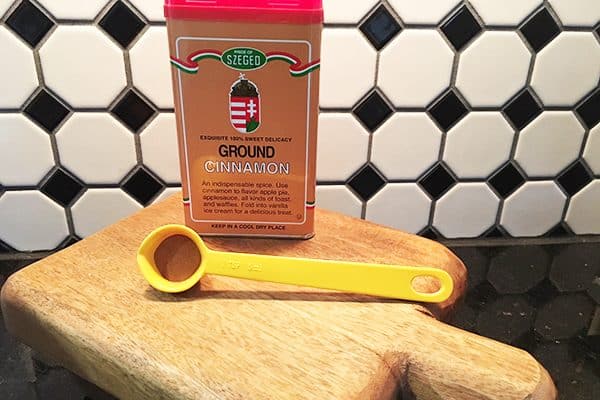
Cinnamon.

Is cinnamon for dogs healthy? Photography courtesy Melissa L. Kauffman.

First — What is cinnamon and where does it come from?

Before we discuss the benefits of cinnamon for dogs, let’s talk about cinnamon itself. Cinnamon is a small tree that grows in India, Sri Lanka, Indonesia, Brazil, Vietnam and Egypt; its bark is dried and rolled into cinnamon sticks (also called quills), then ground into powder.

There are four varieties of cinnamon, but Ceylon cinnamon (its Latin name is Cinnamomum verum) and Cassia cinnamon (Cinnamomum cassia) are the most popular; Ceylon, also called true cinnamon, is sweeter, lighter in color, and more expensive than Cassia, which is the darker type of cinnamon more commonly found in supermarkets and Starbucks. Whichever variety you choose, it’s definitely worth it to spend a bit more on organic cinnamon — it’s even more wonderfully fragrant than its non-organic counterpart.

Traditionally, cinnamon has been used around the world to remedy flatulence, nausea, diarrhea and painful menstrual periods. It’s also believed to boost energy, vitality, circulation, cognitive function and overall brain health, and to improve the digestion of dairy products.

Cinnamon for dogs may help improve brain function

In one study, sniffing cinnamon was shown to result in improved brain function — test subjects performed better at memory and attention after a whiff of this spectacular spice. So, using cinnamon for dogs may help if you’re working with your dog on learning new tricks.

This spice wards off diabetes in dogs

Recent studies have shown that just half a teaspoon of cinnamon a day helps to regulate blood sugar and raise insulin resistance; it actually boosts the body’s ability to use insulin to improve blood glucose levels. This is vital for anyone at risk for diabetes — and that includes senior and overweight dogs. So in addition to feeding a low glycemic index dog food, another good use of cinnamon for dogs is in your pup’s food bowl!

Cinnamon for dogs helps stave off yeast infections

Other studies reveal that cinnamon is anti fungal; it works to combat Candida albicans, the fungus that causes yeast infections. These infections often resist medication, but not cinnamon. (Dogs who have allergies are susceptible to yeast infections).

Keep your dog food fresher for longer with cinnamon

Cinnamon is also antibacterial, and slows down the spoilage of food. When I have to store part of a can of dog food overnight, I’ll sprinkle half a teaspoon of cinnamon over it before refrigerating (on a side note, never refrigerate dog food in the can — to preserve palatability, spoon it into a glass storage container with a plastic top). Researchers at Kansas State University found that cinnamon even prevents the growth of E. Coli bacteria in unpasteurized juices! So for safety’s sake, be sure to add some cinnamon to your raw apple cider.

Cinnamon for dogs helps with arthritis

An anti-inflammatory, cinnamon for dogs is great for senior pups struggling with arthritis. With my K9 seniors, I’ve had great results mixing a half-teaspoon of cinnamon with a tablespoon of honey. This is the recipe used by researchers at Copenhagen University, where arthritis patients were able to walk without pain after just a week of taking cinnamon with honey every day. Yet more studies show that cinnamon can lower blood pressure and LDL cholesterol, and slow the growth of leukemia and lymphomacancer cells.

Words of caution about cinnamon and dogs—

  • Cassia cinnamon (the darker, more common type) contains a compound called coumarin, which can damage the liver at high levels. One more reason to use Ceylon cinnamon instead! But Cassia cinnamon for dogs is safe as long as you don’t overdo it; a teaspoon or so every day with food will still be beneficial in all the ways described above, but won’t give you or your dog nearly as high a dose as the higher concentration found in, say, a cinnamon supplement capsule (which would contain a substantially higher amount of coumarin).
  • Cinnamon has a mild anti-clotting effect on the blood, so too much can cause bleeding problems if a person is on blood-thinning medication such as aspirin. And pregnant women (or dogs) should not take too much cinnamon, as it may have a stimulating effect on the uterus.

But in small amounts — half a teaspoon at every meal — cinnamon for dogs obviously does a lot more good than harm. Enjoy!

Thumbnail: Photography ©chendongshan | Thinkstock.

Read more about the benefits of human foods for dogs on Dogster.com:

The post Can Dogs Have Cinnamon? What to Know About Cinnamon for Dogs by dogedit appeared first on Dogster. Copying over entire articles infringes on copyright laws. You may not be aware of it, but all of these articles were assigned, contracted and paid for, so they aren't considered public domain. However, we appreciate that you like the article and would love it if you continued sharing just the first paragraph of an article, then linking out to the rest of the piece on Dogster.com.

Via Dogster https://www.dogster.com