Monday, July 27, 2020

Meet the Canine Critic of Hotels.com

The post Meet the Canine Critic of Hotels.com by Melissa L. Kauffman appeared first on Dogster. Copying over entire articles infringes on copyright laws. You may not be aware of it, but all of these articles were assigned, contracted and paid for, so they aren't considered public domain. However, we appreciate that you like the article and would love it if you continued sharing just the first paragraph of an article, then linking out to the rest of the piece on Dogster.com.

Lenny, the 7-year-old Boston Terrier, is used to getting noticed. As an AKC Grand Champion, he competed at the Westminster Dog Show twice — his second time he was the oldest Boston at the show as well as being the only Boston that year who also had performance titles. (He has titles in Agility, Rally, Trick Dog, FastCAT, Obedience and is working on his therapy dog certification.) Lenny’s latest achievement? Being named Hotels.com first ever official Canine Critic.

Photo: Courtesy Joe Freni

Owner Joe Freni says the basic job description is visiting various hotels across the country and seeing what they have to offer in terms of pet-friendly amenities and how they truly cater to dogs. Joe says, “Our goal for Lenny being the Hotels.com Canine Critic is to show everyone how much fun it is to travel with your pet, how many pet-friendly hotels there are across the country, as well as giving people who want to travel with their pets a real honest review from Lenny and me, from Lenny’s perspective on how pet friendly each hotel is that we travel to. We also hope to visit many events in conjunction with each Hotels.com stay.”

So, what does this hard-working pup do with his downtime? “Lenny absolutely loves to play frisbee, go for car rides, run and play on the beaches of Cape Cod and travel with his family,” Joe says. Other family members include a French Bulldog, a few English Toy Spaniels, plus his human mom and dad.

Photo: Courtesy Joe Freni

Lenny and Joe also give back by doing various fundraisers through the Lenny The Boston Facebook page as well as working with groups like MIT in raising money for Alzheimer’s Research, plus they helped raise thousands for various charities alongside friends via his Facebook page. Joe says that Lenny, who was a gift from his wife, has been one of the best things to happen in his life.

Follow Lenny on Facebook @LennyTheBoston, Instagram @puppy_kid, on Twitter @LennyTheBoston and soon on Facebook Gaming (gaming with Dad) as “The Super Boston Bros”.

The post Meet the Canine Critic of Hotels.com by Melissa L. Kauffman appeared first on Dogster. Copying over entire articles infringes on copyright laws. You may not be aware of it, but all of these articles were assigned, contracted and paid for, so they aren't considered public domain. However, we appreciate that you like the article and would love it if you continued sharing just the first paragraph of an article, then linking out to the rest of the piece on Dogster.com.

Via Dogster https://www.dogster.com

Friday, July 24, 2020

These Are the Super Seeds Your Dog Needs

The post These Are the Super Seeds Your Dog Needs by Diana Laverdure-Dunetz, MS appeared first on Dogster. Copying over entire articles infringes on copyright laws. You may not be aware of it, but all of these articles were assigned, contracted and paid for, so they aren't considered public domain. However, we appreciate that you like the article and would love it if you continued sharing just the first paragraph of an article, then linking out to the rest of the piece on Dogster.com.

If you think seeds are just for the birds, think again. Seeds are miracles of the plant kingdom, the result of a complex fertilization process that begins when flowers are pollinated. By producing and spreading seeds, plants keep their population alive. Each tiny seed contains the embryo of what will eventually become an entire plant. This embryo is encased within a protective outer coating, along with some food to nourish it. As the embryo grows, roots sprout from one end and stems from the other. A plant is born.

Because seeds contain the building blocks of entire plants, they are nutritional powerhouses. Seeds are rich in fiber, protein, essential fats and many important vitamins, minerals and antioxidants. Adding seeds to your dog’s diet can help supercharge his health. Your dog will love them, and he won’t even know they’re good for him!

Let’s take a closer look at three of my favorite seeds — hemp, flax and chia — their health benefits and some fun feeding tips.

Hemp seed

Remember those braided hemp bracelets you made in camp as a kid? The fiber comes from the cannabis plant, which also produces dietary hemp. Hemp is one of the oldest domesticated crops and a superfood.

While hemp seeds come from the cannabis plant, they are not marijuana. Dietary hemp comes from a different strain of cannabis called Cannabis Sativa L. So, while your dog won’t get high eating hemp seeds, he will get happy from their nutritional benefits.

Because they contain a tough outer shell, hemp seeds are commonly sold hulled as “hemp hearts.” They are soft with a mild, nutty flavor and bursting with nutrition.

Hemp is a protein powerhouse. About 25% of the calories come from protein, compared with about 16% in chia and 18% in flax. The majority — 60% to 80% — comes from edestin, a biologically active plant protein found only in hemp seeds that is similar to the globular proteins found in blood plasma. Edestin is used to make antibodies, which promote a strong immune system, and it can even help repair damage to cellular DNA. It is also highly digestible and anti-allergenic. Score!

Hemp hearts are also rich in two essential fatty acids, linoleic acid (omega-6) and alpha-linolenic acid (omega-3). They also contain gamma linolenic acid (GLA), an anti-inflammatory fatty acid often used to treat chronic skin conditions in dogs.

Hemp’s omega-6 to omega-3 fatty acid ratio is about 3:1, which is rare in nature and optimal for fighting inflammation and protecting against chronic inflammatory diseases like arthritis, autoimmune disorders, heart disease and cancer.

Hemp hearts are also an excellent source of several vitamins and minerals, including Vitamin E, manganese, magnesium, phosphorus, zinc and iron. Good news for dogs with sensitive stomachs: The nutrition in hemp hearts is highly available without crushing, soaking or cooking the seeds.

Flax seeds

Flax is another ancient crop used for thousands of years as both a textile and a superfood. In fact, the word “linen” comes from the flax plant’s Latin name, Linum usitatissimum. First cultivated around 3000 B.C., flax seeds have been prized throughout history for their health benefits.

Flax seeds work their magic mainly due to high levels of alpha-linolenic acid, lignans and fiber. One tablespoon of flax seeds contains a whopping 6.7 grams of alpha linolenic acid, which supports a healthy heart, blocks the growth of tumor cells
and helps prevent chronic inflammatory diseases.

Lignans in flax seeds are natural plant chemicals that act as antioxidants and mimic estrogen in the body. Lignans have been found to protect against a variety of cancers, particularly breast, colon and prostate. Flax lignans are also used as a natural method to lower the hormone estradiol in dogs with Cushing’s disease. Flax seeds contain up to 800 times more lignans than any other food.

The soluble and insoluble fiber in flax helps promote healthy digestion, control weight gain by creating a feeling of fullness, stabilize blood sugar levels and lower cholesterol.

Flax seeds have a tough outer shell that must be broken down to release the nutrients.

Purchase ground flax seeds, also called flax meal, or grind them yourself in a spice or coffee grinder. Store the ground seeds in the refrigerator and replace every couple of months, as they quickly go rancid.

Photo: Whitestorm | Getty Images

Chia seeds

Chia seeds come from Salvia hispanica, a flowering desert plant in the mint family. Chia was first cultivated around 3500 B.C. in Mexico and Guatemala and was an important part of the diet of many ancient cultures, including the Aztecs and Mayans.

The Mayans believed chia seeds contained supernatural powers. In Mayan, chia means “strength.” Like hemp and flax seeds, chia is rich in essential fatty acids, antioxidants and fiber that support optimum health.

Chia seeds are higher in alpha-linolenic acid than any other plant food, beating even flax seed. Combined with high levels of antioxidants, they are a powerful anti-inflammatory food. A Canadian study in people with Type 2 diabetes found that consuming about 37 grams of chia seeds daily reduced C-reactive protein, a blood marker for inflammation, by about 40%.

More than 80% of the carbohydrates in chia seeds are made up of fiber, making them a good choice to help regulate weight and stabilize blood sugar. Chia seeds also have an amazing sponge-like quality — able to soak up about 10 times their weight in water. When mixed with liquid, the seeds expand and form into a gel, providing a feeling of fullness without adding extra calories. Chia seeds are high in several minerals: calcium, copper, iron, magnesium and zinc.

Chia seeds come in black and white varieties. The black seeds are slightly smaller, but there is no significant nutritional difference between the two. Chia seeds do not need to be ground before eating. However, because they expand when mixed with liquid, pre-soak them before giving them to your dog to avoid a choking hazard.

Make a chia seed pudding for your dog

Stir 4 tablespoons chia seeds into 1 cup unsweetened, dog-friendly, plant-based milk (organic hemp, almond, soy, coconut and rice work well).

Add 2 teaspoons maple syrup (optional).

Stir, let rest a few minutes, stir again. Refrigerate covered overnight. Stir again before portioning.

Kick it up with your favorite dog-friendly fruit. Store in a closed container in the refrigerator for up to four days.

Seed essentials

When feeding seeds to your dog, remember not to give too much of a good thing, which could cause gastric upset. Holistic veterinarian Dr. Jean Dodds recommends one teaspoon of hemp, flax or chia seeds per day per 40 pounds of the dog’s body weight.

Opt for organic seeds whenever possible. Conventional seeds may be sprayed with pesticides, herbicides, fungicides, insecticides and chemical fertilizers — all of which you want to avoid giving your dog.

Most of all, have fun adding seeds to your dog’s diet. The nourishment you provide him today can “sow the seeds” of a long, healthy life. And there’s nothing seedy about that.

Read Next: The Ultimate Guide to Clean Eating for Dogs

The post These Are the Super Seeds Your Dog Needs by Diana Laverdure-Dunetz, MS appeared first on Dogster. Copying over entire articles infringes on copyright laws. You may not be aware of it, but all of these articles were assigned, contracted and paid for, so they aren't considered public domain. However, we appreciate that you like the article and would love it if you continued sharing just the first paragraph of an article, then linking out to the rest of the piece on Dogster.com.

Via Dogster https://www.dogster.com

Thursday, July 23, 2020

Why do Puppies Cry and Whine?

The post Why do Puppies Cry and Whine? by Martha M. Everett appeared first on Dogster. Copying over entire articles infringes on copyright laws. You may not be aware of it, but all of these articles were assigned, contracted and paid for, so they aren't considered public domain. However, we appreciate that you like the article and would love it if you continued sharing just the first paragraph of an article, then linking out to the rest of the piece on Dogster.com.

Like babies, puppies cry and whine. It can be both heartbreaking and annoying. Why do puppies cry and whine? The answer is: to call attention to a need. But the needs — and the calls — vary. “Puppies whine and cry for various reasons,” says Lenore Demmin of Payson, Utah, president of the Siberian Husky Club of America Inc. “They can cry when hungry, not feeling well or injured, but potty and being separated are the most common reasons puppies whine, cry or, in many cases, scream.”

Indeed, for a pack animal like a dog, separation can be stressful. “Whining or crying in young puppies specifically is a normal and innate response to being isolated from their mother or caregiver,” says Cheryl Suydam, behavioral rehabilitation manager for the ASPCA in Weaverville, North Carolina.

The behavior, therefore, is not unique to human-canine interaction. “Puppies cry and whine among their littermates and mother, not only with people,” Cheryl says. Some of those cries serve as a form of puppy GPS. “Distress vocalization is an innate behavior that occurs naturally in puppies and serves to alert the mother to their location.”

Adding humans to the equation can alter a pup’s crying and whining behavior. “It is possible for people accidentally to reinforce their dog’s whining or crying,” Cheryl says. “The dog learns to whine to gain access to attention or other rewards, which would not normally occur among other dogs.”

Photo: arlonneke | Getty Images

Pack to pack

Crying and whining is common when a puppy joins your people pack, so don’t take it personally.

“Puppies will almost always cry for the first two or three nights in their new home,” Lenore says. “This is simply an adjustment period: They are switching from a canine pack to a human pack.”

That initial period is pivotal. “Whether [crying and whining] continues will depend on how you handle those first few days,” Lenore advises. “Either you will train the puppy, or the puppy will train you.”

Resist any temptation to put your pup where you can’t hear him. You need to know if he cries for help, and isolation can cause fear and insecurity that increase crying and whining.

The same holds for chastising your puppy for crying and whining. “This is n innate behavior the pup may not be doing voluntarily, so punishment is unlikely to be effective,” Cheryl notes. “It may actually exacerbate the problem by increasing the pup’s anxiety.”

Try to ignore attention-seeking crying and whining as long as you know your pup’s needs are met. “Constant checking on the crying puppy is a reward and encourages more crying,” Lenore explains. “It can be heart-wrenching to the novice, but this is the time to be strong.”

Take heart that some of that early vocalization will diminish. “This behavior usually resolves as the puppy adjusts to the new environment and begins to feel safe and secure,” Cheryl says.

Photo: 101cats | Getty Images

A cry for help

While crying and whining are not harmful to a pup, the cause of the behavior could be.

“If your puppy is whining or crying because of anxiety or distress and her vocalizations continue or escalate over time, this is an important indicator that she is experiencing levels of stress that could be harmful to her quality of life,” Cheryl warns. A certified trainer or behaviorist can help.

Crying and whining also can be symptoms of pain or discomfort. “If there is excessive crying or whining, you should check for a physical problem,” Lenore says. Contact your veterinarian.

Ps and cues

Whining and crying are normal behaviors for dogs of any age. Those vocalizations are vital communication tools that alert you to needs, physical ailments and emotional states. Pay attention, practice patience and use positive reinforcement.

“It is key to try and find the cause of the behavior,” Cheryl says. “Understanding an individual dog’s motivation for vocalizing is important to resolve any potential underlying issues.”

Here are some clues to interpret why your pup might be crying or whining:

Tone: “With practice, it is fairly easy to discern between the different cries,” says
Lenore Demmin, who breeds Siberian Huskies — a breed known for expressive vocalization. “A puppy crying because he is hurting will yelp when touched in the tender spot.

A puppy that is crying because he is separated from his pack (dog or human) will give an angry cry. It’s easy to tell that one — it is more like a scream than a cry.”

Behavior: Crying or whining while scratching a door or crate or turning in a circle usually means the pup needs to go outside.

Nervous behavior: Pacing and licking, accompanied by whining indicate anxiety. Whining along with panting, pacing, destruction (especially around doors and windows) or eliminating indoors when left alone are signs of separation anxiety.

Body language: Whining while exhibiting submissive posture (ears back; tail tucked; avoiding eye contact; turning sideways, crouching or rolling over) can signal appeasement. The puppy is offering conciliation to pacify a perceived threat or aggression, says the ASPCA’s Cheryl Suydam.

Top photograph: enGuy | Getty Images

Read Next: How to Survive a Puppy

The post Why do Puppies Cry and Whine? by Martha M. Everett appeared first on Dogster. Copying over entire articles infringes on copyright laws. You may not be aware of it, but all of these articles were assigned, contracted and paid for, so they aren't considered public domain. However, we appreciate that you like the article and would love it if you continued sharing just the first paragraph of an article, then linking out to the rest of the piece on Dogster.com.

Via Dogster https://www.dogster.com

Should You Try Holistic Dog Food?

The post Should You Try Holistic Dog Food? by Bridget Shirvell appeared first on Dogster. Copying over entire articles infringes on copyright laws. You may not be aware of it, but all of these articles were assigned, contracted and paid for, so they aren't considered public domain. However, we appreciate that you like the article and would love it if you continued sharing just the first paragraph of an article, then linking out to the rest of the piece on Dogster.com.

Holistic is a buzzword in human wellness circles and, like many people-food trends (see: ancient grains), it’s made its way to dog dishes.

But, as is often the case with human-to-dog diet trends, the benefits are anecdotal at best. But Dr. Angie Kraus from I and love and you has had plenty of clients asking about it, and she gave us a primer on what holistic food is, what to look for when choosing a brand and some of her pup clients’ favorites.

Related: The Ultimate Guide to Clean Eating for Dogs

Photo: PeopleImages/Getty Images

What is holistic dog food?

Holistic dog food companies have an informed, ingredient-conscious consumer top-of-mind philosophy. “I would consider holistic pet food being pet food where the company is sensitive to the way the ingredient tag looks, meaning they aren’t using toxic preservatives, corn or wheat,” Dr. Kraus says. “They are following the diet trends and what people are looking for in their own diets.”

They likely don’t use by-products, which Dr.  Kraus admits are probably just as good as what’s in holistic food, but a customer looking for this type of diet for their dog usually prefers their pup’s meals don’t include them.

Signs a holistic food might be right for your dog

Though many dogs do fine on traditional dog food, some do have issues. “I see more food allergies, so chronic ear infections or chronic diarrhea, itchy skin,” Dr. Kraus says. “There’s a chance the dog is allergic to something, like wheat or corn, and a holistic brand might be worth it.”

Photo: Chalabala/Getty Images

What to look for in a holistic dog food

The most important thing to look for on any dog food is the Association of American Feed Control Officials (AAFCO) label. This means it meets industry health standards. But pet parents need to look beyond the packaging to get the full picture of what’s in the dog food and contact the company. Ask who helps formulate the food and if a veterinarian or animal nutritionist consulting is involved. “Anyone can throw together a recipe and put it out there, but it doesn’t mean it’s formulated very well,” Dr. Kraus says. “See who is formulating it and what kind of quality control you have on each batch to know there’s not too much Vitamin D and every batch is balanced.”

How to transition to holistic dog food

Some pups can go cold turkey, but Dr. Kraus says the safest way to transition is over two weeks. “Do 75 percent old food, 25 percent new food and then slowly transition over time,” she says. Look for any red flags, like vomiting, lethargy or diarrhea — they may be signs your pup isn’t taking well to the food. And of course, before making any changes speak to your vet.

Top photograph: fotyma/Getty Images

Read Next: What Vegetables Can Dogs Eat?

The post Should You Try Holistic Dog Food? by Bridget Shirvell appeared first on Dogster. Copying over entire articles infringes on copyright laws. You may not be aware of it, but all of these articles were assigned, contracted and paid for, so they aren't considered public domain. However, we appreciate that you like the article and would love it if you continued sharing just the first paragraph of an article, then linking out to the rest of the piece on Dogster.com.

Via Dogster https://www.dogster.com

Wednesday, July 22, 2020

Wynn —Giving Comfort, Lifting Spirits

The post Wynn —Giving Comfort, Lifting Spirits by Wendy Newell appeared first on Dogster. Copying over entire articles infringes on copyright laws. You may not be aware of it, but all of these articles were assigned, contracted and paid for, so they aren't considered public domain. However, we appreciate that you like the article and would love it if you continued sharing just the first paragraph of an article, then linking out to the rest of the piece on Dogster.com.

The COVID-19 pandemic had recently hit the United States, and Dr. Susan Ryan was getting to the end of her shift in the ER of the Rose Medical Center in Denver, Colorado. This was the beginning, when the United States was just starting to see identified cases, and there were so many unknowns and a lot of fear. No one knew what they were facing.

Dr. Ryan was understandably emotionally drained due to the level of anxiety she was working under, when Wynn, the 11-month-old puppy she was raising to become a service dog walked by. “I just want to sit here with you,” Dr. Ryan remembers saying.

The social worker who looks after the puppy at the hospital snapped a photo — Dr. Ryan sitting on the floor with her face mask and face shield on and her arm wrapped around the back end of a calm Lab puppy proudly wearing her Canine Companions for Independence (CCI) vest. Wynn helped Dr. Ryan get through an exhausting shift, just like our dogs have helped us manage social distancing from family and friends. The picture went viral, and you could find Dr. Ryan and Wynn all over the internet.

Wynn’s beginnings

Now a year old (her birthday was in April), Wynn will most likely be with Dr. Ryan until November. At that time, she will return to a CCI facility to start her service dog training, be matched with a human and officially become a working Canine Companions for Independent Assistance dog.

The CCI’s Labrador, Golden Retriever and Lab/Golden mixes are bred by volunteers before being sent to a volunteer puppy raiser, like Dr. Ryan, to help them socialize and learn basic commands. While Wynn was still at the home of her breeder caretaker there was a live video feed that Dr. Ryan was able to watch. Dr. Ryan knew what kind of dog the puppy was going to be from the very beginning. Wynn was the runt of the litter and the only female. She would climb up on a crate and then do flying squirrel leaps on top of her unsuspecting brothers. Dr. Ryan was able to observe all these shenanigans virtually. “Wynn was so tiny, but she has this fiercest personality,” she says.

With the puppy raisers, it’s important that CCI’s dogs be socialized, which is why Dr. Ryan brings Wynn to the hospital with her. Before the COVID-19 outbreak, Wynn would be walked around to the different nurses’ stations where Dr. Ryan would ask the charge nurse who needed a visit the most. This activity stopped once the hospital started receiving COVID patients.

Much-needed comfort

During the pandemic, Dr. Ryan takes Wynn to the hospital’s social worker’s office. While Dr. Ryan starts her shift, Wynn usually gets to go out for a walk before settling into her shared office on a comfy dog bed. During the day, staff members are welcome to come visit the special pup.

After letting the social worker know that a visit is needed, the guest sanitizes his or her hands. The social worker graciously gives up her office to Wynn but not before turning on meditation music and laying down a warm blanket where the visitor can comfortably snuggle away the stress of working in a hospital during a global crisis. After a guest leaves, she will sanitize her hands again, and Wynn’s coat and vest will be wiped down preparing her for the next person who needs her help.

At publication, we are still learning more about COVID-19 and humans, dogs and cats. At this point we know she can carry the virus on her (like anything else), which is why wiping down her coat and vest is important and why her vest is washed with her mom’s scrubs after every shift. Although Wynn has not been tested for COVID-19, if her health changes or the CCI vets recommend it, Dr. Ryan will have her tested.

Related: How Dog Owners Should Prepare for the Coronavirus

Dr. Ryan knows that Wynn is happy at the hospital. The puppy adores attention. She has her favorite humans at work she’ll pull at to try and get to, which is a habit Dr. Ryan is working on changing!

Wynn’s future career

If all goes as planned in November, Dr. Ryan will take Wynn to a CCI training facility. There Wynn will meet her trainer and learn even more commands, the entire time being evaluated to see what kind of disability she will be trained to support.

When it’s time for Wynn to be matched with the human she’ll spend her working life with, Dr. Ryan will return for a reunion. Wynn will remember Dr. Ryan as her first mom and be excited to see her, but she’ll also be anxious to start her new life and the new job she has been trained to do.

“It’s hard,” Dr. Ryan explains. “But I can also tell you now, having done it, it’s remarkable to know you are doing it for someone and changing their life.”

Working Dogs Are Just Like Us
Q: What type of gear does Wynn use?
A: She uses a Gentle Leader and vest provided by CCI.

Q: Does Wynn have a nickname?
A: Her nickname is Billie goat because she bounces around and jumps on and off things.

Q: If Wynn had a superpower what would it be and why?
A: Her tail. When she is overwhelmed with joy, it quivers side to side. Nothing can keep you from smiling when you experience it.

Q: What is the funniest thing Wynn does?
A: She flying squirrel leaps. She does this to initiate play or pounce on a ball or when she thinks she’s surprising one of my other Labs.

Read Next: 10 Types of Service Dogs and What They Do

The post Wynn —Giving Comfort, Lifting Spirits by Wendy Newell appeared first on Dogster. Copying over entire articles infringes on copyright laws. You may not be aware of it, but all of these articles were assigned, contracted and paid for, so they aren't considered public domain. However, we appreciate that you like the article and would love it if you continued sharing just the first paragraph of an article, then linking out to the rest of the piece on Dogster.com.

Via Dogster https://www.dogster.com

Tuesday, July 21, 2020

What’s Your Dog’s Play Style?

The post What’s Your Dog’s Play Style? by Sassafras Lowrey appeared first on Dogster. Copying over entire articles infringes on copyright laws. You may not be aware of it, but all of these articles were assigned, contracted and paid for, so they aren't considered public domain. However, we appreciate that you like the article and would love it if you continued sharing just the first paragraph of an article, then linking out to the rest of the piece on Dogster.com.

All dogs love to play, but not all dogs play the same way. “Some dogs love to play chase games. Others are ball dogs and are happiest fetching a ball. Some dogs are great at playing by themselves, others need someone else to engage with them. Some dogs like roughhousing, others don’t,” explains Dr. Laurie Bergman, VMD, Diplomate by the American College of Veterinary Behaviorists who works at NorthStar Vets in New Jersey.

Making the most out of playtime with your dog and supporting your dog as they play with other dogs involves learning what type of play your dog enjoys.

Playtime

When you play with your dog, pay attention to how your dog is engaging to make sure your dog is having fun.

“Play should always be mutual, whether it’s with another dog or with a person. Note if the dog isn’t responding to play signals. There’s research that shows that dogs understand if people give play signals like bending at the waist and slapping your hands on your knees while facing or slightly sideways to the dog,” says Dr. Bergman. She advises that if at any point while playing your dog seems uncomfortable or anxious you should stop play.

Related: 4 Creative Play Ideas to Entertain and Educate Your Dog

What’s your dog’s play style? Photo: Ksenia Raykova/ Getty Images

Encouraging play 

Playing with your dog is one of the most important things you can do to foster and maintain a good relationship. Experiment with different games to figure out which activities are fun for your dog, such as hide-and-seek where your dog finds hidden toys or treats or even finds you after being left in one area of the house and then called.

Many dogs enjoy swimming with their guardians as well as games like fetch and even tug. Although some dog trainers used to advise people not to play tug, that is no longer the case.

“The people who say not to play tug with dogs are mainly using the outdated and debunked ‘dominance theory’ of training. They approach canine behavior as stemming from a constant struggle to be the ‘dominant’ or ‘alpha’ dog and view tug games as a battle for possession not as the play that it is,” advises Dr. Bergman.

If you play tug with your dog, do so safely which means keeping the toy level with the dog’s spine and allowing the dog to control how hard they tug instead of you tugging the dog (especially with young dogs). In general, Dr. Bergman notes that “Positive reinforcement training can help people play with their dogs. A dog who has been trained in a way that he enjoys will be happy and playful during training” and the goal should always be to incorporate both play and positive training into your dog’s daily routine.

Fighting vs playing 

Some dogs have a tendency to be vocal and rough while they play and, to the untrained eye, a wrestle and growl in play can sound like the start of a fight. The key is to closely watch the dogs and how they are engaging with each other.

“You want to make sure the play is appropriate at equal times of being chased, on the ground, biting, and/or jumping,” says Khara Schuetzner, MA, CPDT-KSA, CNWI,  Chair of The Association of Professional Dog Trainers (APDT). “You will see some dogs self-handicapping during play to make things equal. Both dogs should have loose body signals, such as open mouth, bouncy movement and play bows.”

That balance in play is extremely important to watch for. Dogs should take turns being chased and chasing. If your dog is playing with another dog and you think the play might be getting too much, Schuetzner advises to gently “hold the dog that seems to be controlling the play back and see if the other dog approaches. If the other dog does not approach the play is too much. If the dog approaches, play is still play,” and can resume.

Play with other dogs

Not all dogs enjoy playing with other dogs and that’s ok, but if you have a dog who does, trust your dog: “don’t talk to them, let them meet and greet without our chatter. This often inhibits healthy play. They are the best at reading other dogs. After all, body language is their first language,” advises dog trainer and developer of the DogDecoder App Jill Breitner.

In all aspects of life, and especially in play, dogs are communicating via body language. Jill notes that as dogs play you should “look for happy wiggly bodies with balance or reciprocal play gestures, play bows, chase, respecting signs the other dog wants a break,they wait it out for that dog to initiate play or they initiate but wait to be accepted.”

Play is an essential part of life for all dogs. It’s up to us to make sure that we foster and give opportunities for healthy play by watching our dog’s body language to make sure play with people and/or dogs remains fun and doesn’t become stressful or unsafe.

Top photograph: Marina Vedernikova/ Getty Images

Read Next: 5 Easy Backyard Games for Dogs

The post What’s Your Dog’s Play Style? by Sassafras Lowrey appeared first on Dogster. Copying over entire articles infringes on copyright laws. You may not be aware of it, but all of these articles were assigned, contracted and paid for, so they aren't considered public domain. However, we appreciate that you like the article and would love it if you continued sharing just the first paragraph of an article, then linking out to the rest of the piece on Dogster.com.

Via Dogster https://www.dogster.com

Monday, July 20, 2020

What Vegetables Can Dogs Eat?

The post What Vegetables Can Dogs Eat? by Melvin Peña appeared first on Dogster. Copying over entire articles infringes on copyright laws. You may not be aware of it, but all of these articles were assigned, contracted and paid for, so they aren't considered public domain. However, we appreciate that you like the article and would love it if you continued sharing just the first paragraph of an article, then linking out to the rest of the piece on Dogster.com.

What vegetables can dogs eat? Can dogs eat tomatoes, celery, cucumbers, corn and other vegetables? This is a question — like “can dogs eat apples, grapes, strawberries and other fruits?” — that I’ve often asked myself while strolling through the local farmers’ market or the produce section of the grocery store. Here at Dogster, let’s answer the question, “What vegetables can dogs eat?” by looking at the dos and don’ts for a few common vegetables:

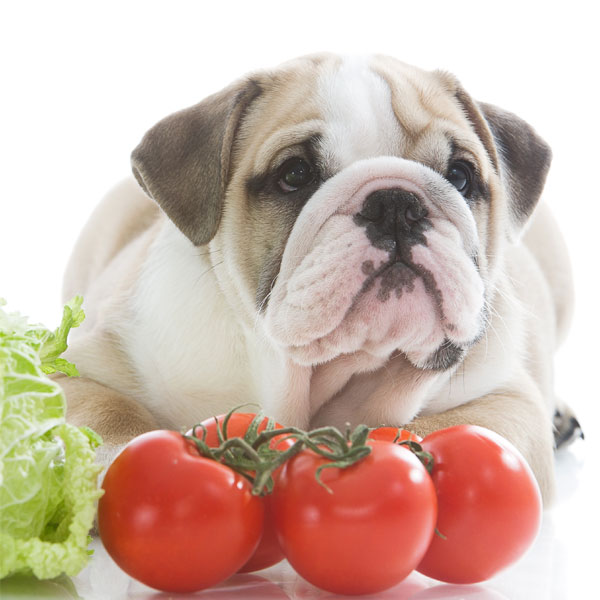
An English bulldog puppy with tomatoes.

Are tomatoes safe for dogs to eat? The answer is it’s complicated. Photography by Tatiana Katsai / Shutterstock.

Can dogs eat tomatoes?

Are tomatoes safe for dogs to eat? Sort of — and be careful. Large quantities of tomato should not be fed to dogs; ingested in great enough volumes, naturally occurring chemicals in the fruit can cause heart and nervous system problems.

However, this may cause some consternation, but in small quantities, the tomato fruit is okay for dogs. There has long been debate on dogs and tomatoes, but the worst a little bit of ripe tomato will do to a dog is cause some stomach upset.

The green parts of the tomato plant — the vine, leaves, stems and unripe fruit — are another matter altogether. Solanine is a chemical found in high concentrations in these parts. One of the tomato’s natural defenses, solanine is found throughout the nightshade family, including the tomato and potato. If you have tomatoes in your garden, you’re better off keeping the dog out.

what vegetables can dogs eat

Can dogs eat carrots? 

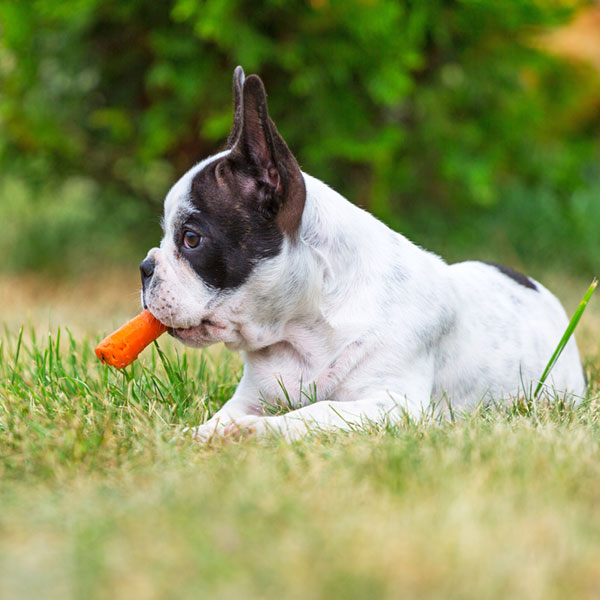
Can dogs eat carrots?

Another common question dog parents have when thinking, “What vegetables can dogs eat?” concerns carrots. Your dog is safe with carrots, preferably cut up into smaller sticks or pieces that they can easily chew on. Read More: Can Dogs Eat Carrots? Are Carrots Good for Dogs?

Can dogs eat celery?

Interestingly enough, too much celery can cause dogs to urinate a great deal more than usual. But cut into small, chewable, digestible pieces — with the leaves removed— celery is okay for dogs in limited amounts.

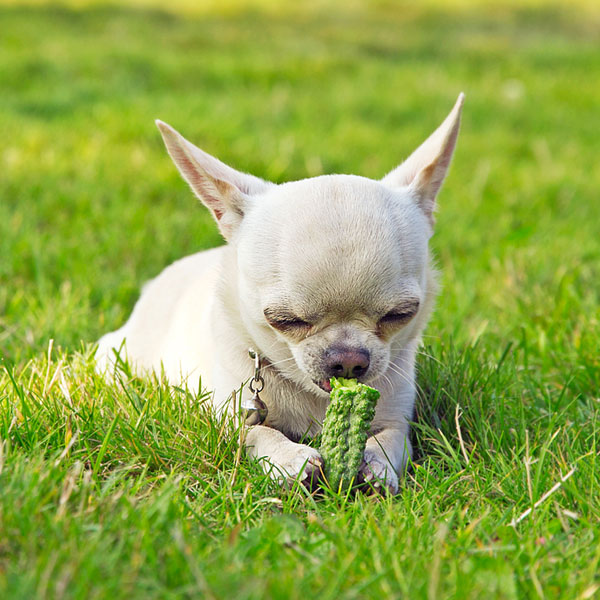
A dog on the grass eating a cucumber.

Cucumbers are safe for dogs to eat. Look at this tiny gentleman gnawing on one! Photography by Little Moon / Shutterstock.

Can dogs eat cucumbers?

Another common vegetable to consider when thinking, “What vegetables can dogs eat?” is cucumbers. Especially if it’s peeled and given in chewable portions, cucumber is fine for dogs. As for pickles, the excess of vinegar and salt in pickles may be a bit more than your dog’s digestive system would appreciate.

Can dogs eat avocado?

Parts of the avocado tree and fruit contain a natural antifungal agent called persin, which is hazardous to dogs when consumed in great enough quantities. Needless to say the pit or seed of an avocado should not be given to a dog; aside from the natural toxins it contains, it can cause intestinal blockages. However, it’s safe for dogs to eat the green, fruit part of an avocado in small amounts.

what vegetables can dogs eat

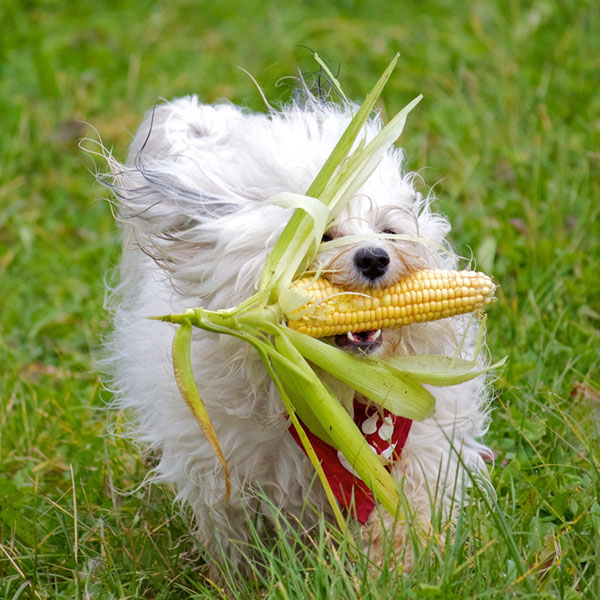
Is corn okay for dogs to eat? What about popcorn for dogs?Photography by Bildagentur Zoonar GmbH / Shutterstock.

Can dogs eat corn? What about popcorn?

While the kernels of ripe corn are okay for dogs, the cob itself is a bit more dangerous. Ingested by a dog, even small pieces of corn cob can tear at and cause damage to the walls of a dog’s digestive tract. As for popcorn, take common-sense precautions. Plain and unadorned — that is to say, air popped, with neither salt nor butter — popcorn can be a nice treat for a dog. Bottom line: served in an appropriate manner, both corn and popcorn are safe for dogs to eat.

Can dogs eat broccoli?

Broccoli is another staple to consider when questioning, “What vegetables can dogs eat?” In very small amounts, the head of broccoli should not present any issues for your dog, but only in very small amounts. Received wisdom across multiple sources suggests that if it accounts for no more than five to 10 percent of a dog’s daily food intake, broccoli is all right for dogs. More than that and you can have a dog with a severely upset stomach. Therefore, broccoli is another yes and no affair; use your best judgement.


what vegetables can dogs eat

Are potatoes safe for dogs to eat? Photography by

As with tomatoes, the leaves, stems and unripened fruit of potato plants contain solanine, which is toxic to dogs. Even ripe, a potato is not a good idea for dog nutrition. Peeled, and then cooked or mashed, on the other hand, your dog may enjoy a bit of potato. Observe the same caution you would with popcorn, and make sure there’s no salt or butter present. The same — no additives — goes for sweet potatoes, even though they are fundamentally different plants.

Can dogs eat onions?

Eaten by dogs, onions cause red blood cells to break down, a condition called hemolytic anemia. The breakdown of red blood cells means that the dog gets less oxygen. The more concentrated the onion, the more quickly it works. Read More: So, Your Dog Ate Onions – Here’s What to Know

Can dogs eat garlic? Your dog should avoid garlic as well for the same reason. If you’re like me and enjoy onion in your guacamole, it’s even more a reason to keep that avocado dip you find delicious well away from your dog. The answer here is definitely no.

Can dogs eat asparagus?

Asparagus is another household veggie that crops up when thinking, “What vegetables can dogs eat?” Well, as long as the amount is small and reasonable, asparagus presents no problems for dogs.

Can dogs eat green beans?

Green beans, in moderation, are fine for dogs. Raw or cooked, as long as you avoid salt and other additives, your dog may enjoy some green beans.

Can dogs eat peas?

If you dog has a taste for peas, then by all means, let them have a few! When it comes to, “What vegetables can dogs eat?” this one is a yes.

In 1816, Richard Lawrence wrote that “parsnips, carrots, cabbages, and, indeed all vegetable matter, will feed dogs sufficiently well for the purposes of their existence.” Fortunately, we know better now to steer our dogs clear of avocado and onion, as well as to keep them from many unripened vegetable plants in the garden.

Tell us: What kinds of vegetables do your dogs seem to enjoy? Have you ever offered a carrot stick to your dog, only to be met with a blank stare? Let us know about your dog’s experiences with veggies in the comments!

Thumbnail: Photography by Helen Hotson / Shutterstock.

Learn more about what dogs can — and can’t eat — on Dogster.com:

Plus, some fruits and vegetables are healthier for humans than others. Find out which fruits and vegetables you should eat  for weight loss— and which you should avoid — here >> 

The post What Vegetables Can Dogs Eat? by Melvin Peña appeared first on Dogster. Copying over entire articles infringes on copyright laws. You may not be aware of it, but all of these articles were assigned, contracted and paid for, so they aren't considered public domain. However, we appreciate that you like the article and would love it if you continued sharing just the first paragraph of an article, then linking out to the rest of the piece on Dogster.com.

Via Dogster https://www.dogster.com