Monday, March 9, 2020

Can Dogs Eat Carrots? Are Carrots Good for Dogs?

The post Can Dogs Eat Carrots? Are Carrots Good for Dogs? by Jessica Pineda appeared first on Dogster. Copying over entire articles infringes on copyright laws. You may not be aware of it, but all of these articles were assigned, contracted and paid for, so they aren't considered public domain. However, we appreciate that you like the article and would love it if you continued sharing just the first paragraph of an article, then linking out to the rest of the piece on Dogster.com.

All pup parents know that there are some vegetables that dogs can eat, and some veggies that are best avoided. Carrots are healthy for humans, but can dogs eat carrots? If dogs can eat carrots, are carrots good for dogs? And is there anything you should keep in mind when feeding carrots to your dog? Let’s find out!

First, Can Dogs Eat Carrots?
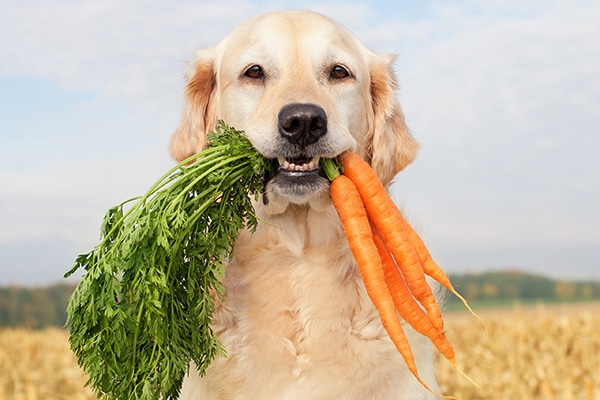
A dog eating carrots.

Can dogs eat carrots? Let’s take a look. Photography ©PK-Photos | E+ / Getty Images.

The short answer to “Can dogs eat carrots?” is good news. The better news is that not only can dogs eat carrots, but carrots are actually very healthy for dogs. Experts everywhere say carrots are amazing, healthy snacks for our canine friends. Dr. Evan Antin of Conejo Valley Veterinary Hospital in Thousand Oaks, California, agrees. “Carrots are great,” he says. “I feed them to my [dog] Henry every day! They offer a low-calorie source of extra food for hungry dogs, are high in fiber and also help to slow down the progression of dental disease.”

Let’s examine some specifics about carrots for dogs next.

Can Dogs Eat Carrots for Health Benefits?

Now that we’ve answered, “Can dogs eat carrots?” let’s look at some of the benefits for dogs eating carrots. Carrots for dogs are a great source of fiber, antioxidants and vitamin A. While everything in carrots is great, vitamin A is crucial in maintaining overall health, for both dogs and humans. For dogs, vitamin A is essential for bone growth, reproduction, cellular differentiation and a good immune response. That’s according to the study “Safety evaluation of vitamin A in growing dogs,” published in the British Journal of Nutrition.

Carrots are also great for keeping a dog’s eyes healthy and his vision sharp. According to the Dogster article, 7 Foods That Will Naturally Support Your Dog’s Vision, when your dog eats carrots, he’s “getting a serious boost of beta-carotene, potassium, niacin, calcium, phosphorus, magnesium, and vitamins A, B, C, D, E and K. Better yet, carrots are loaded with lycopene and lutein — essential phytonutrients that may help protect eyes from free-radical damage and UVB radiation.”

Can Dogs Eat Carrots for Better Dental Health?

Veterinarians recommend you brush your dog’s teeth daily, but that isn’t always easy for pet parents to do. Some dogs just don’t want their teeth touched, so experts recommend you try to brush your dog’s teeth at least once or week, or a minimum of once a month.

However, when you can’t brush your dog’s teeth, carrots will help polish your dog’s pearly whites and combat plaque build-up. As author Julia Szabo writes in the Dogster article, A Dog Dental Care Guide for Lazy Pet Owners, “If your dog will eat veggies (I’m lucky; my health-nut hounds love munching out on veggies), by all means hand out treats of raw or lightly steamed carrots.”

On the plus side, while your dog is chewing on carrots and cleaning his teeth, he’s also eating a food that helps his teeth stay healthy from the inside, too.

Can Dogs Eat Carrots As Treats?

It’s so easy to overdo it on giving out treats to your dog. In fact, you only have to look at the stats. The Association of Pet Obesity Prevention 2016 clinical survey found that 53.9 percent of dogs are overweight or obese. With that extra weight comes a greater risk that your dog will develop certain diseases, such as diabetes or respiratory problems.

That’s why it’s refreshing that your dog can eat carrots as a low-fat alternative to regular dog treats.

How to Feed Carrots to Your Dog
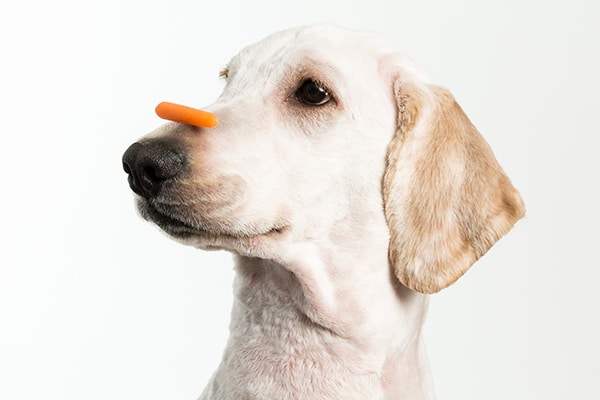
A dog with a carrot veggie treat on his nose.

Does how your dog eats carrots matter? Photography ©bzanchi | iStock / Getty Images Plus.

Now that we’ve established some guidelines and answers for “Can dogs eat carrots?” let’s look at how to feed your dog carrots. How you feed carrots to your dog largely depends on your dog’s breed and your own personal preferences. For smaller dogs, you’ll want to give them sliced or baby carrots, so they can break the carrots apart easily without choking on them. I usually give whole carrots to my German Shepherd Dogs, which they break apart in pieces or wrap their paws around to chew on, like sticks.

Can dogs eat carrots that are cooked or raw? That depends. Dr. Antin recommends feeding raw, peeled carrots to dogs, while other experts recommend feeding cooked carrots so your dog is able to get properly digest the nutrition from them. Studies have shown that humans who eat cooked, pureed carrots better absorb beta-carotene, the precursor of vitamin A.

Tell us: Does your dog like carrots? How does he eat them?

This piece was originally published in 2018.

Find out more answers to your “Can dogs eat…” questions on Dogster.com:

Can dogs eat …

The post Can Dogs Eat Carrots? Are Carrots Good for Dogs? by Jessica Pineda appeared first on Dogster. Copying over entire articles infringes on copyright laws. You may not be aware of it, but all of these articles were assigned, contracted and paid for, so they aren't considered public domain. However, we appreciate that you like the article and would love it if you continued sharing just the first paragraph of an article, then linking out to the rest of the piece on Dogster.com.

Via Dogster https://www.dogster.com
Dog Pacing – Why It Happens and How to Help Your Pacing Dog

The post Dog Pacing – Why It Happens and How to Help Your Pacing Dog by Stephanie Osmanski appeared first on Dogster. Copying over entire articles infringes on copyright laws. You may not be aware of it, but all of these articles were assigned, contracted and paid for, so they aren't considered public domain. However, we appreciate that you like the article and would love it if you continued sharing just the first paragraph of an article, then linking out to the rest of the piece on Dogster.com.

Just how pacing in humans is often associated with restlessness or anxiety, dogs might begin pacing if feeling anxious or experiencing stress. In most cases, dog pacing is not a serious health issue — rather, merely a behavioral response to general nervousness or anxiety.

“When a dog paces they are usually walking back and forth from one spot to another,” says Dr. Sara Ochoa, DVM. “Sometimes they will just be walking around the house without a destination in mind.”

Dogs might pace while waiting for someone or something — like for a family member to come home or waiting for mealtime. Some dogs pace for awhile with a high-value toy or treat in their mouth and may even whine. Because dog pacing isn’t technically a medical issue, “treatment” is all about helping your dog feel more comfortable. The more comfortable a dog is, the less likely he is to feel anxious. If the anxiety is targeted and treated, then the dog might stop pacing.

“It is easy to identify a dog who has a pacing problem. A dog is pacing when she is walking back and forth in a repetitive pattern,” says Amanda Gagnon, certified professional dog trainer and graduate researcher of anthrozoology at Canisius College. “When pacing occurs for a short period of time, it is nothing to worry about. However, if a dog paces for an extended length of time or cannot be deterred from the activity, it may be time to call a professional dog trainer.”

Some kinds of pacing are considered normal and most can be treated with the help of a training specialist, who can provide easy solutions to distract the dog and discourage pacing.

“Normal dog pacing is usually caused by excitement, the need for attention or an alert to something unusual in the environment,” says Kristen Papile-Kranjc, CMDT, of Long Island Canine Class. “This type of pacing can be addressed by a dog trainer or behavioral specialist. Distraction techniques such as giving the dog a high-value toy or bone that he doesn’t see often to keep him busy, playing with your dog or taking him out for a walk are some simple solutions.”

Why does dog pacing happen?

According to Dr. Ochoa, pacing in dogs is generally caused by stress or anxiety. However, sources of anxiety and stress could be a variety of things: trips to the vet, waiting for someone or something to happen, having to pee or poop, or general restlessness.

“Most dogs will pace at home or at the vet clinic,” Dr. Ochoa explains. “At home, they may pace back and forth near the front door waiting for a family member to come home. They may pace near the back door when they need to go out and potty.”

The vet’s office is often a source of stress for dogs — you know, shots and other weird instruments, and whatnot. This can cause some stressed dogs to respond by pacing.

“At the veterinary clinic, dogs will pace when they want to go home,” Dr. Ochoa adds. “I see dogs who do not like to be at the vet. They will pace back and forth in the exam room or the waiting room the whole time they are there.”

The older the dog, the more likely they are to develop pacing behaviors. In older dogs, pacing could be a sign of dementia.

“As some dogs age, they start pacing around the house and act more stressed due to them not always knowing where they are,” Dr. Ochoa adds. “We do see signs similar to dementia in dogs and as they age, they will begin to pace more.”

Pacing can also be an early sign of some medical issues that require immediate treatment. According to Dr. Jason Nicholas, author of 101 Essential Tips: Dog Health & Safety, pacing can indicate a bloating issue.

“If your dog’s stomach is bloated, or if they’re anxious, pacing, or repeatedly trying to vomit with no luck, they are likely suffering from Gastric Dilation and Volvulus (GDV) – also known as dog bloat,” Dr. Nicholas explains. “Dogs affected by bloat will have a difficult time getting comfortable and lying down. Pacing and restless is often one of the most obvious and early signs, so pay attention to it.”

Dogs can pace for a variety of other reasons, too; stress, anxiety, and bloat aren’t the only causes.

“Dogs will also pace because they are bored or carry excessive energy,” says Gagnon. “Less common reasons for pacing are mating behaviors, attention-seeking behaviors and medical issues. Humans can often determine whether a trip to the vet is needed by attending to other accompanying symptoms such as lethargy, mood changes and loss of appetite.”

How to help your pacing dog

Pinpointing the cause of your dog’s pacing is important to helping your pet. If your dog is carrying excess energy or suffering from boredom, Gagnon says it’s an easy fix.

“This is easily fixed by adding exercise and mental stimulation to the dog’s daily routine,” Gagnon explains.

Or if your dog is pacing as a way to patrol their yard, Gagnon recommends limiting their yard time.

“Some dogs, particularly dogs who spend their day in a yard, develop a habit of pacing as a way of patrolling the boundary of their yard,” Gagnon adds. “This behavior is best prevented by limiting the amount of time the dog spends along in the yard without their humans.”

For dogs who pace because of stress and anxiety, Gagnon recommends training classes.

“Stress and anxiety often require the assistance of a professional trainer to remedy,” she says.

Other remedies for treating stress-induced pacing include showing your dog that everything’s okay.

“If your dog is pacing because they are waiting for someone to come home, helping calm them or letting them out to play will help with the pacing at home. If it is due to aging, there are supplements that you can give your dog to help with the anxiety,” says Dr. Ochoa. “At the vet clinic, you can give your pet treats and help show them that it is an okay place to be.”

In all cases though, Dr. Ochoa says knowing your dog’s pacing triggers is the biggest way to help. “If you know what causes your pet to pace, you can avoid the situations. Sometimes you cannot avoid these situations, or the pacing is due to your dog getting older. There are supplements that you can give your dog to help with anxiety and stress.”

Because so many different factors can influence pacing in dogs, Papile-Kranjc says the best advice is knowing your dog’s normal behavior. Anything unusual might warrant a visit to the veterinarian’s office.

“Pacing can also be a symptom of a health issue due to a disorder, advanced age or illness,” Papile-Kranjc explains. “Know your dog. Be familiar with your dog’s behavior and also keep current with his veterinary care. Anything sudden or out of the ordinary to his regular behavior that is not alleviated by training or behavior modification techniques should be addressed by a veterinarian.”

How do you address dog pacing with your pets? Let us know in the comments below!

Top photograph: Vincent Scherer/Getty Images


Learn more about anxiety in dogs on dogster.com:

The post Dog Pacing – Why It Happens and How to Help Your Pacing Dog by Stephanie Osmanski appeared first on Dogster. Copying over entire articles infringes on copyright laws. You may not be aware of it, but all of these articles were assigned, contracted and paid for, so they aren't considered public domain. However, we appreciate that you like the article and would love it if you continued sharing just the first paragraph of an article, then linking out to the rest of the piece on Dogster.com.

Via Dogster https://www.dogster.com

Thursday, March 5, 2020

What Are the Best Farm Dogs?

The post What Are the Best Farm Dogs? by Melvin Peña appeared first on Dogster. Copying over entire articles infringes on copyright laws. You may not be aware of it, but all of these articles were assigned, contracted and paid for, so they aren't considered public domain. However, we appreciate that you like the article and would love it if you continued sharing just the first paragraph of an article, then linking out to the rest of the piece on Dogster.com.

Unless you are a student of agricultural history and trends, you might not know that a substantial number of domestic dog breeds were originally developed as working farm dogs. We tend to think of dogs primarily as friends, companions or family members, and not as essential components of the process by which we obtain our food. Prior to the start of the Industrial Revolution in the 18th century, however, every animal raised in rural and farming communities — including fowls, livestock and dogs — played practical, integral roles in the food system.

When we mention farm dogs, you may think specifically of medium or large canines who herd sheep, cattle, or pigs. During a more agrarian era, dogs of all sizes and breeds found employment on farms. Despite the fact that most of us live at several degrees from farm life, the variety of farm dogs and their functions has not changed. When we try, then, to determine or narrow down the best farm dogs, we need to take under consideration both the range of dog breeds and the tasks required of them. The general categories of working dog jobs include:

  • Guarding livestock
  • Herding farm animals
  • Ratters / pest control
  • Multipurpose dogs
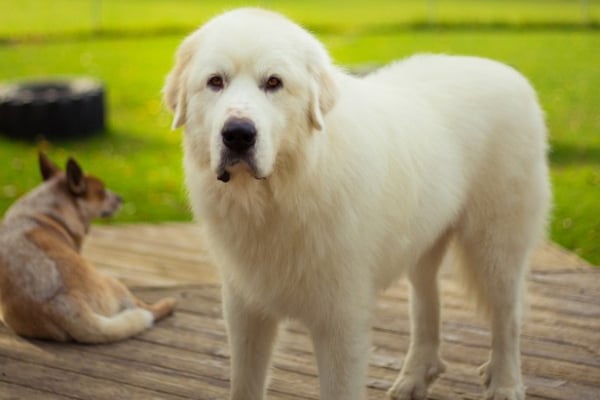
Great Pyrenees.

A Great Pyrenees is among the best farm dogs. Photography by Shutterstock.

Livestock guardians

Thinking of farm dogs may immediately evoke images of our first two categories; specifically large, hardy dogs who monitor and protect vulnerable livestock. Livestock farming encompasses a wide range of birds and beasts raised for the meat, milk, eggs, wool or skin. A farmer or rancher cannot possibly watch flocks or herds while attending to all of their other duties.

For centuries, dogs of all sizes, types, and breeds have dedicated themselves to caring for cattle, sheep and goats. The best guard dogs are those who blend in effectively with their charges, defend them from predators, and be attentive day or night as required. Breeds involved in livestock protection tend to cut a large and imposing figure, possess a stentorian bark, and depend on either intimidation or surprise in their work.

Notable livestock guardians include:

Best Farm Dogs

German Shepherds were bred to be farm dogs, or herding dogs specifically. Photography by smikeymikey1 / Shutterstock.

Herding dogs

Another common type of canine associated with bucolic life is the herding dog. The term may conjure pastoral poems and idyllic landscape paintings that depict a lone shepherd overlooking a field under a summer sky with a trusty dog by his side. It’s a misnomer to associate them exclusively with cattle or sheep, though, since their herds and flocks are just as likely to be populated by chickens, ducks, goats, llamas, and pigs.

Effective herding dogs are capable of leading these farm animals out to pasture in the morning, and back to the safety of the pen or coop in the evening. Highly trained farm dogs respond without hesitation to commands, gestures, and sounds. Dogs who are good herders are both agile and alert, but don’t have to be huge. We may think of Corgis as amusing companions and pets, but they were originally developed in Wales for their skill in herding. They could encourage bulky ungulates to get a move on while their small stature helped avoid the kick of a hoof.

Among the best herding dogs:

Best Farm Dogs

Yorkshire Terriers were originally bred to be farm dogs. Photography by By Yazmin Mellado / Shutterstock.

Rat dogs

As vital as they are to livestock farming, protection and herding are not the only jobs that working farm dogs hold. Dogs are just as important on farms that produce fruits, vegetables, and grains. Even on livestock farms, risks to productivity and inventory are not limited to live animals. Farm dogs can be critical to controlling pest populations. An unwelcome infestation — and really, what kind of infestation is welcome? — might destroy a crop in the field, steal harvested foodstuffs in storage, or devour eggs.

Keeping farm products safe from pests is largely the province of small, energetic, and tenacious dogs. Like the term “cattle dog,” to call these dogs “ratters” is to sell them short. Yes, they are expert at tracking and catching rodents, rats and mice primarily, but also badgers, ferrets, possums, raccoons, stoats, and so forth. Many of the best ratting dogs were developed throughout the United Kingdom in the 18th and 19th centuries, and among them are some of the most popular modern domestic breeds.

The best ratters and pest control dogs include:

Some of the best farm dogs are all-purpose

Some dogs herd, some dogs offer protection, while yet others still are experts at loss-prevention and rodent control. Surely that covers the gamut of what dogs do on farms! Wrong! Many of the best farm dogs, from ancient times to the present, have been capable of handling these tasks and more. Large and giant dog breeds, in particular, have proven adept at herding, guarding, and pest control.

Even tasks we typically associate with pack animals like mules, horses, and oxen, were, in less civilized ages, done by dogs. Fortunately, these days, carting is more of an occasional and specialist sport than a full-time occupation. Dogs who once served as draught animals included Newfoundlands, Saint Bernards, and the Swiss Mountain Dog family (AppenzellBernese, Entelbucher, and Greater Swiss Mountain Dogs).

Urban farms need dogs, too!

Urban farming has taken off in recent decades as organizations and individuals have attempted to address a growing need for fresh produce in cities that doesn’t have to be trucked in over large distances. These farms also serve the demand of restaurateurs to increase their focus on locally sourced fruits and vegetables, and supply community supported agriculture services in delivering food to people interested in circumventing chain grocery stores. Dogs are present on some of these urban farms as well, mostly serving in companion roles.

A further variant, hobby farming, has also exploded in popularity. Hobby farms have sprung up everywhere from small yards in urban areas, where they replace otherwise useless lawns, to rural plots maintained by weekend and part-time gardeners. In places like these, dogs of all sizes are still performing slight variations on their traditional roles, from pest control and crop protection to herding backyard chickens. Dogs have been employed, trusted, and loved on farms as long as there have been farms. Long may it remain so!

Top photograph: Shutterstock

Read more: 


The post What Are the Best Farm Dogs? by Melvin Peña appeared first on Dogster. Copying over entire articles infringes on copyright laws. You may not be aware of it, but all of these articles were assigned, contracted and paid for, so they aren't considered public domain. However, we appreciate that you like the article and would love it if you continued sharing just the first paragraph of an article, then linking out to the rest of the piece on Dogster.com.

Via Dogster https://www.dogster.com

Wednesday, March 4, 2020

5 Wrinkly and Adorable Dog Breeds

The post 5 Wrinkly and Adorable Dog Breeds by Lynn M. Hayner appeared first on Dogster. Copying over entire articles infringes on copyright laws. You may not be aware of it, but all of these articles were assigned, contracted and paid for, so they aren't considered public domain. However, we appreciate that you like the article and would love it if you continued sharing just the first paragraph of an article, then linking out to the rest of the piece on Dogster.com.

For humans, wrinkles are a sign of aging. People will do just about anything to avoid wrinkles, but we sure delight in wrinkly dogs. You’ll notice that many wrinkly dog breeds are short-faced (brachycephalic), too. Some may sport wrinkles as pups, while others mature into their big wrinkles. Let’s meet five wrinkly dog breeds that boast lovable, lifelong folds and furrows.

wrinkly dog breeds

Pug

Our prominent eyes and child-like expressions make us one of the crazy-delightful wrinkly dog breeds. We’ve been around to charm humankind for centuries. Chinese imperials have cherished us since ancient times, even employing guards to keep us safe. We were bred small to be carried in royal sleeves.

Some of our wrinkles were considered more significant than others: the prince mark of three wrinkles on our forehead with a vertical bar (copying the Chinese character for prince) was a favorite trait. These days, our owners love all of our large and deep wrinkles. We suggest you dab our skin folds to keep them fresh and clean; we sure can’t reach them with our tongues!

Mastiff. Photography ©Kerry Rubio | Bark at the Moon

Mastiff

Our lined foreheads draw your gaze to our observant, kindhearted faces. When we’re particularly attentive, our wrinkles are especially distinctive. We’re one of the wrinkly dog breeds that have a long history with humans. Our forefathers worked with Babylonians, Marco Polo, Hannibal, King Henry VIII and Elizabeth I. Developed to guard and fight beside soldiers, we were bred tough and striking.

We’re perhaps more easygoing than our ancestors these days, but we hold to our watchdog role. And at some 200 pounds, our size alone discourages intruders. We consider ourselves peaceful and dignified bodyguards, always loyal to loved ones. And we’ll love your wrinkles too, when someday you’re blessed to own them!

wrinkly dog breeds

French Bulldog looking away, not interested. Photography ©LightFieldStudios | Getty Images.

French Bulldog

Our coats are brilliant, short and smooth. Our soft and loose skin is what lands us on this list of wrinkly dog breeds. And the description “delightful” suits our personalities, too. Developed from English 19th-century bulldogs, our  ancestors followed lace-makers migrating to France after the Industrial Revolution.

Friendly and affable, we soon became popular with Parisians of all economic classes. American tourists in France were enchanted by our forefathers and brought some back to the states. These days, with our laid-back personalities and keen social skills, we top the companion dog list. Come under our wrinkly spell; our furrowed brows shall charm you into dropping extra treats!

Two wrinkled Shar-Pei puppies rest side-by-side.

Two wrinkled Shar-Pei puppies rest side-by-side. Photography ©GlobalP | Getty Images.

Chinese Shar-Pei

If you don’t recognize us for our hippopotamus head shape, you may spot us for the impressive wrinkles that assure our spot in this roundup of wrinkly dog breeds. Slack skin and creases cover my head, neck and withers. We’re one of the oldest dog breeds. Our scowls allegedly frightened off evil spirits, but maybe deterred trespassers (in material form), too.

These days, our wrinkles are attractive, albeit not especially functional. A clean breed, we don’t shed much; our grooming needs are minimal. Simply wipe our wrinkles down on occasion to keep our skin and coats healthy.

wrinkly dog breeds

Dogue by Shutterstock.

Dogue de Bordeaux

A French guardian célèbre, we trace our heritage to Mastiff-types developed to guard castles, hunt and fight. Everything about us is big: we have enormous hearts in our massive body. Our colossal heads are interlaced with wrinkles; our drooping cheeks accentuate our memorable appearance. The deep ropes of wrinkles on our heads are obvious at all times and make us an obvious choice for this list of wrinkly dog breeds — but they aren’t worrying frowns. At our size, what in the world could we be worried about?

Our striking appearance is just one of our attributes. We’re affectionate, wonderful watch dogs who are more agile and speedy than our physique suggests.

Tell us: Do you have a wrinkly dog? What breed(s) is he? What wrinkly dog breeds would you add to this list?

Thumbnail: Photography by Waldemar Dabrowski / Shutterstock.

This piece was originally published in 2018.

Read more about dog breeds on Dogster.com:

The post 5 Wrinkly and Adorable Dog Breeds by Lynn M. Hayner appeared first on Dogster. Copying over entire articles infringes on copyright laws. You may not be aware of it, but all of these articles were assigned, contracted and paid for, so they aren't considered public domain. However, we appreciate that you like the article and would love it if you continued sharing just the first paragraph of an article, then linking out to the rest of the piece on Dogster.com.

Via Dogster https://www.dogster.com

Your Questions About Kennel Cough — Answered

The post Your Questions About Kennel Cough — Answered by Sassafras Lowrey appeared first on Dogster. Copying over entire articles infringes on copyright laws. You may not be aware of it, but all of these articles were assigned, contracted and paid for, so they aren't considered public domain. However, we appreciate that you like the article and would love it if you continued sharing just the first paragraph of an article, then linking out to the rest of the piece on Dogster.com.

Many dog parents have heard about kennel cough — but a lot of us wonder exactly what it is and if the term “kennel” truly has anything to do with it. To get some insight, we turned to an expert, Dr. Richard Ford, who is a Professor of Medicine at North Carolina State University College of Veterinary Medicine.

What exactly is kennel cough?

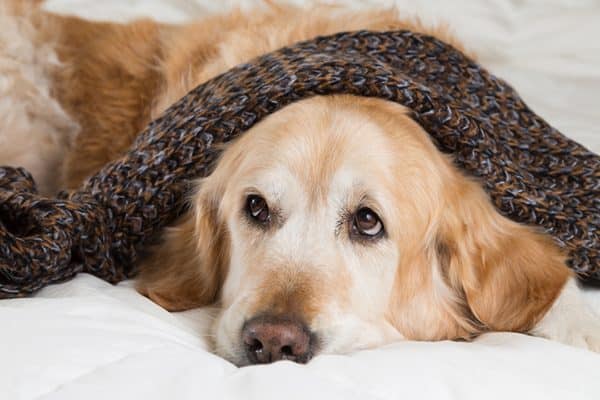
A dog looking sick and sleeping under a blanket.

Concerned about kennel cough — aka CIRD? We’ve got your answers. Photography ©fotoedu | Thinkstock.

Dr. Ford explains that kennel cough is the annoying and sometimes dangerous contagious respiratory infection that characteristically develops shortly after a dog has had contact with other affected dogs — especially following time spent in a kenneled environment, boarding facility, animal shelter and training facility. Other places that tend to be breeding grounds for kennel cough include doggie daycares, dog parks and grooming facilities. Kennel cough is a relatively complex contagious respiratory syndrome. And because it implicates multiple organisms, the proper term for this clinical illness is actually canine infectious respiratory disease, or CIRD.

What are kennel cough symptoms?

Symptoms of CIRD most commonly include: coughing, sneezing, and nose and eye discharge. Untreated, Dr. Ford says that kennel cough may turn into pneumonia and — in rare instances — could even be fatal to dogs.

Most pet parents can manage kennel cough treatments at home with veterinary monitoring. However, Dr. Ford cautions that, “rarely, an infected dog will become so ill — usually with pneumonia — that hospitalization and intravenous treatment is required.”

How is kennel cough spread?

Like the dog flu, CIRD spreads very easily from dog to dog. Social dogs who engage with other dogs at, for example, dog parks, training centers and daycares, are most at risk of contracting kennel cough.

“Typically, the infectious organism, whether bacteria or virus, is transmitted from dog-to-dog following direct contact,” says Dr. Ford. “That’s why kennels are considered to be high-risk environments. Not uncommonly, an infected dog can carry and transmit the infectious bacteria or virus without showing clinical signs of respiratory disease.”

Dogs don’t even have to have direct contact with an infected dog to be at risk, either, Dr. Ford explains. “It is also possible for respiratory secretions from an infected dog to be left behind on a water bowl or food dish or a toy,” he says. “The next dog to take a drink, eat or play with a toy previously used by an infected dog is at considerable risk of becoming infected.”

Dr. Ford offers this important suggestion: “think about those ‘public’ water bowls displayed on sidewalks outside retail stores [as] something your dog should avoid!”

How to treat kennel cough

Dogs of any age can contract CIRD. Dr. Ford has found that, “puppies seem to suffer the most and may be at increased risk for lower respiratory infection (pneumonia).” Some healthy adult dogs are able to recover with at-home kennel cough treatments, but if your dog has a cough that lasts more than 2-3 days, Dr. Ford suggests heading to your vet for an examination and to determine the most appropriate treatment for your dog. “Do not use over-the-counter cough suppressants intended for use in humans,” cautions Dr. Ford.

“Because CIRD is caused by a virus or a bacteria, and sometimes viruses and bacteria in the same dog at the same time, treatment choices will vary,” Dr. Ford explains. There is not one treatment for kennel cough, but “antibiotics are typically prescribed in the event bacteria (which may be serious complicating factors) is present,” he says. “Since there are no drugs capable of eliminating viruses, the infected dog is managed symptomatically with prescription cough suppressants.”

It may seem surprising that your veterinarian likely won’t take diagnostics to determine exactly what’s causing the infection. “Results take too long and any treatment prescribed is typically empirical — based on managing the clinical signs,” says Dr. Ford.

Is there a kennel cough vaccine? How can you prevent kennel cough?  

kennel cough

Is there a kennel cough vaccine? Photography ©EJ_Zet | Thinkstock.

The only way to truly prevent kennel cough is to keep your dog inside and away from any other dogs at all times, which isn’t a very enriching life for your dog or very much fun for you! The next best way to protect your dog from CIRD is to vaccinate your dog.

I’d always thought Bordetella vaccines protected my dogs against kennel cough, but Dr. Ford explains that kennel cough is more complicated than that. “Vaccines are available for many, although not all, of the organisms that cause CIRD. Vaccines used to prevent infection caused by Bordetella bronchiseptica and parainfluenza virus are among the most important,” Dr. Ford advises.

Your veterinarian will advise on which vaccines and at what frequencies are best for your dog. Where I live in New York City, dogs must have Bordetella vaccines every six months, and it’s against the law for boarding kennels, training centers or groomers to have dogs on site without written proof of Bordetella (amongst other) vaccines from a veterinarian.

Read more about dog health on Dogster.com:


The post Your Questions About Kennel Cough — Answered by Sassafras Lowrey appeared first on Dogster. Copying over entire articles infringes on copyright laws. You may not be aware of it, but all of these articles were assigned, contracted and paid for, so they aren't considered public domain. However, we appreciate that you like the article and would love it if you continued sharing just the first paragraph of an article, then linking out to the rest of the piece on Dogster.com.

Via Dogster https://www.dogster.com

Tuesday, March 3, 2020

4 Books to Add to Your Reading List

The post 4 Books to Add to Your Reading List by Annie Butler Shirreffs appeared first on Dogster. Copying over entire articles infringes on copyright laws. You may not be aware of it, but all of these articles were assigned, contracted and paid for, so they aren't considered public domain. However, we appreciate that you like the article and would love it if you continued sharing just the first paragraph of an article, then linking out to the rest of the piece on Dogster.com.

Books get your tail wagging? Here are some great reads we hope you enjoy!

books for dog lovers

Please Don’t Feed the Mayor

Author Sue Pethick’s fourth romantic comedy is a heartwarming tale about a special dog who brings together a town desperately in need of a fresh start. When the lumber mill closes, Melanie MacDonald is heartbroken that her beloved hometown of Fossett, Oregon, is on the decline. She comes up with a brilliant plan to bring tourists (and hopefully more residents) to town — running her Border Collie, Shep, in Fossett’s mayoral race. Unfortunately, she knows nothing about running a campaign.

Enter her ex-husband, Bryce, now a big-city lawyer, who agrees to help. Of course, Shep wins by a landslide, making him and Melanie media darlings. But the attention is a little more than she bargained for, and she unwittingly puts herself in danger. She has to deal with the malcontent who lost the election and a charismatic (and somewhat shifty) TV reporter. Not only that, an escaped convict is coming after Bryce for revenge. But Shep saves the day with the help of a herd of fainting goats (I must admit — this was my favorite part), proving his loyalty to not only his faithful human but to his new political career. Published by Kensington Books

books for dog lovers

The Dog Log

Comedian and playwright Richard Lucas shares the incredible story of how the incessant barking of his neighbor’s dogs drove him into — and then pulled him out of — a miserable phase of his life. He’s tortured in his own home by the constant barking of the Yorkies belonging to his elderly neighbor, Irene (who ignored his pleading). Eventually, the daily stress, along with his struggles to make it in Hollywood and the aftermath of a recent breakup, nearly causes him to have a breakdown. When he sought help from the West Hollywood Sheriff’s department, the solution was to maintain a log of each individual bark for six months. And the Dog Log was born.

It starts as a series of hilarious and curmudgeonly rants, but the story takes quite a turn when an ambulance rushes Irene to the hospital. With nobody to look after the Yorkies, Lucas enters Irene’s home and discovers a hidden life of squalor and two neglected animals. Before long, the Dog Log turns into a diary of self-reflection and transformation. As he works out his issues with the Yorkies, Lucas also works on his own flaws, learning about the joy of helping others and how a change in perspective can transform your life. Published by Chicago Review Press

books for dog lovers

What I Lick Before Your Face (and Other Haikus by Dogs)

The perfect book for dog lovers everywhere, this heartwarming and laugh-out-loud funny collection of haikus by Jamie Coleman is a fun and loving celebration of the canine spirit. Written from a dog’s perspective ­— from the perks of face licking to considering what constitutes a good boy — these charming (and hilarious) haikus take us into the minds of our beloved canines. Haikus like “Walkies,” “The Ball” and “The Tail That Wags” capture our dogs’ quirky personalities and the unique bond we have with them. Illustrated throughout with beautiful color photographs of adorable dogs of all shapes and sizes, this collection is the perfect celebration of our best friend. Published by Simon and Schuster

books for dog lovers

The Ultimate Guide to Raising a Puppy

World-renowned pet behavior expert, star of Animal Planet’s It’s Me or the Dog and Dogster columnist Victoria Stilwell reveals everything you need to raise the perfect pet. This fun and informative guide takes you through each stage of growth, from the first weeks through adolescence, and is filled with information on puppy-proofing your home, potty training, building leash-walking and play skills, preventing problem behaviors like nipping and excessive barking, caring for your puppy’s health and much more. Victoria is committed to promoting progressive, pain- and force-free training tools and methods, and everything in this book provides puppy parents with the latest in science-based, positive training advice. Published by Ten Speed Press/The Crown Publishing Group

Tell us about your favorite dog books! Email us at dogstermag@belvoir.com.

READ NEXT: 4 Books for Dog Lovers to Check Out Right Now

The post 4 Books to Add to Your Reading List by Annie Butler Shirreffs appeared first on Dogster. Copying over entire articles infringes on copyright laws. You may not be aware of it, but all of these articles were assigned, contracted and paid for, so they aren't considered public domain. However, we appreciate that you like the article and would love it if you continued sharing just the first paragraph of an article, then linking out to the rest of the piece on Dogster.com.

Via Dogster https://www.dogster.com

Monday, March 2, 2020

Does My Dog Need Braces?

The post Does My Dog Need Braces? by Dr. Ernie Ward appeared first on Dogster. Copying over entire articles infringes on copyright laws. You may not be aware of it, but all of these articles were assigned, contracted and paid for, so they aren't considered public domain. However, we appreciate that you like the article and would love it if you continued sharing just the first paragraph of an article, then linking out to the rest of the piece on Dogster.com.

So that’s why we named him Jaws.” Staring up at me was a 1-year-old, neutered Bichon whose name required no explanation. A row of meandering incisors framed by two oversized canines jutted from his chin, giving Jaws a decidedly alpha-dog appearance with a hint of defiance. It also made him irresistibly cute.

“I just don’t understand why he won’t eat anymore. He used to gobble everything and now he barely picks his kibble.”

does my dog need braces

Photo: Getty Images

The underbite

Boxers, Bulldogs, Shih Tzus and Lhasa Apsos were “designed” to have an underbite, however misguided that was. These breeds have adapted over generations to make the most of this malocclusion, but other dogs with an underbite, including Jaws, will often experience severe problems. As I began my examination, I noted that Jaws flinched each time I touched his lower jaw. Mandibular pain is common in these patients due to the upper incisors (the smaller middle teeth) digging into the teeth and gums below. My initial impression was that poor little Jaws wasn’t eating due to pain.

“But he never cries or whimpers. I can’t stand the thought of him hurting! What can we do?”

The first step was to take a complete set of oral radiographs. This would require brief anesthesia, so we’d need to do some blood tests prior to the procedure. Once we had a better understanding of what was happening beneath the gums, we would consult with a veterinary dental specialist to determine the best treatment to make Jawsy (yes, I said that) more comfortable for the rest of his long life. We got to work.

Photo: Deyana Robova | Alamy Stock Photo

Fixing the problem

Jawsy’s dental X-rays revealed the problem was bone deep. The upper canines had failed to completely erupt and were being pushed backward due to the overlapping lower teeth. Several teeth in the mandible were being forced into odd angles, likely causing additional jaw pain. After consulting a veterinary dentist, we decided to refer Jaws for the extraction of several teeth and orthodontics. Doggie braces should only be used in dogs not used for breeding. Because Jaws was neutered, he wouldn’t perpetuate this genetic malady to future pups. While the initial estimate for his care was more than his owner had planned for, she realized she was saving Jaws from a lifetime of pain and suffering.

I saw Jaws two weeks later. He bounded in to see me, beaming his braces as he pranced through the lobby.

“I can tell he’s feeling much better! We’re still feeding him wet food, but his whole attitude has brightened!”

It would take another six to 12 months before Jaws’ bite would fully heal. His smile might not be

“Hollywood perfect,” but he’d be able to nosh comfortably for the rest of his life.

Don’t ignore teeth problems

If your dog has any oral abnormality, have your veterinarian check it out. Too often dog owners forget that bite abnormalities, crooked teeth and even “bad breath” are often accompanied by chronic pain. Just because a snaggletooth pup doesn’t cry and wolfs down his food doesn’t mean he doesn’t hurt. Advances in veterinary dentistry now allow dog owners to provide better care than ever. And Jaws has a new nickname these days: Smiley

Photo: dima_sidelnikov | Getty Images

Must-have dental work

The majority of dogs with an underbite or overbite will need some form of dental intervention. If your dog has an underbite or overbite, know that:

  • Extraction of the teeth interfering with the bite is the most common treatment, followed by orthodontics or “braces.”
  • Teeth permanently exposed to air may become discolored and have damage to enamel,
    resulting in discomfort.
  • Daily brushing is incredibly important in any dog with exposed teeth, crowded mouth or malocclusion.

The post Does My Dog Need Braces? by Dr. Ernie Ward appeared first on Dogster. Copying over entire articles infringes on copyright laws. You may not be aware of it, but all of these articles were assigned, contracted and paid for, so they aren't considered public domain. However, we appreciate that you like the article and would love it if you continued sharing just the first paragraph of an article, then linking out to the rest of the piece on Dogster.com.

Via Dogster https://www.dogster.com